


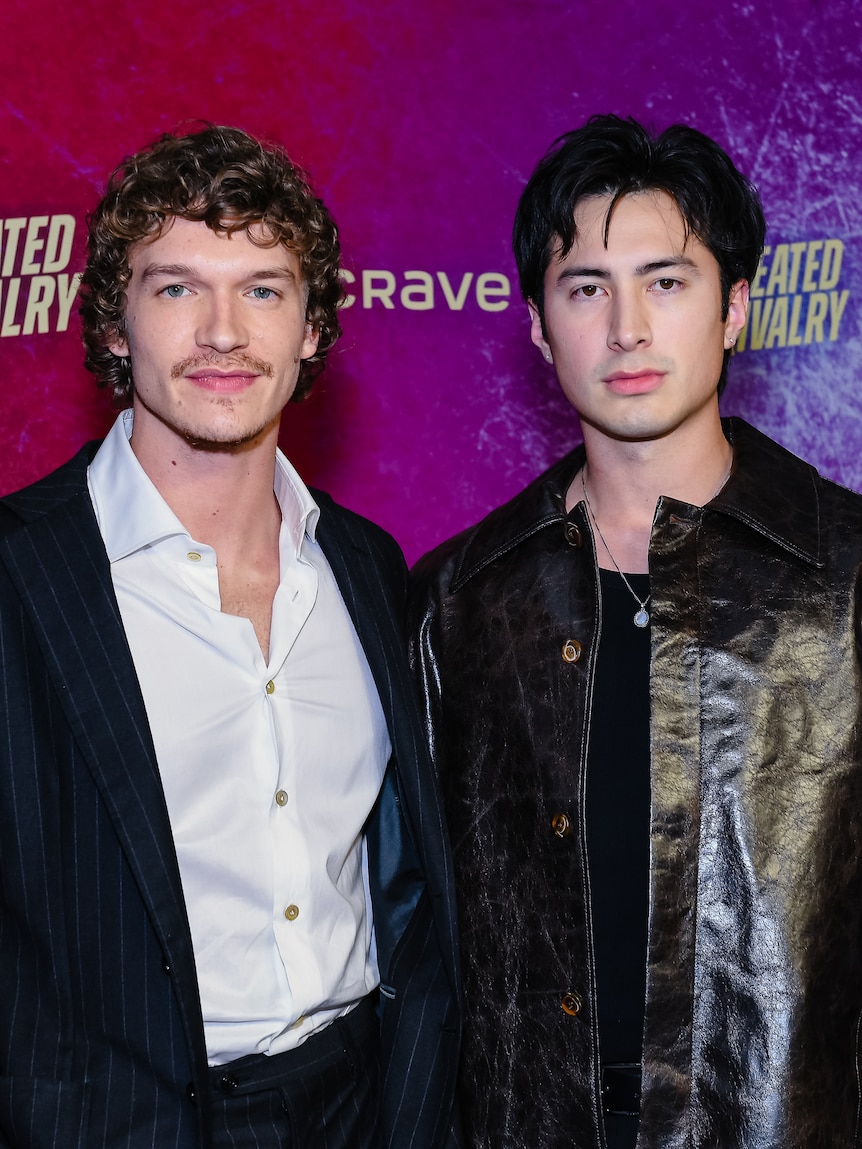
Canada’s Heated Rivalry has become a global sensation since it was released in November, with audiences connecting to the steamy six-part ice hockey romance, which has already been renewed for a second season.
Adapted from author Rachel Reid’s Game Changers series, the show portrays fictional queer love stories of male athletes in an imagined professional hockey league, akin to the NHL.
With ice hockey not exactly the most common sport in Australia, it is interesting to see the show, and books, becoming so popular with Australian audiences.
The audience love affair with Heated Rivalry is not unusual, considering growing trends in the romance fiction genre in Australia.
Sales are up, with an average growth rate of 49 per cent over the past three years.
Dedicated romance bookstores are popping up across the country.
Sports romance is playing a strong role, with the genre’s resurgence having gained significant popularity in the past few years, predominantly through ice hockey titles.

Heated Rivalry explores character Scott Hunter becoming the first out gay player in professional ice hockey. (Supplied)
While many titles replicate stereotypical and heteronormative tropes and relationships common to romance, there is a strong sub-genre of queer sports romance that depicts different sports narratives.
Australian authors are also contributing new sports stories and providing diverse representation to the genre to highlight voices not often heard in traditional sports writing.
Tackling true love in AFL
In 2025, author Darcy Green released After the Siren, a novel depicting the coming out story of two queer men playing on the same fictional AFL men’s team.
For Green, it was exploring what it would look like to have active male AFL players coming out as queer in an environment where AFLW players were leading the way in queer inclusion.
Portraying a love story between two queer men playing in one of the country’s biggest sports allowed many readers to re-imagine the sport as they wished it were.

After the Siren is a romance novel exploring the relationship between two male AFL players. (Supplied)
“I am honestly floored by how many beautiful messages I’ve received,” Green said.
“A lot of people have said I made them cry (in a good way).
“I’ve also had some wonderful messages from footy fans.”
Green said they included messages from footy fans disenchanted with the AFL who said they had enjoyed being immersed in the world of the story, and it had made them more hopeful about the future of footy.
Fiction can offer an alternative reality, an aspect of fandom not often considered in sport, as sports are rooted in realism, and have cultures that don’t always welcome everyone in.
“Stories are such an integral part of sports culture and being a sports fan,” Green said.
“I think queer sports romance can be a platform for challenging some of the assumptions that often underpin the way sport is talked and thought about.
“They can also give some hope and escapism to people who might be excluded from sports environments they’d like to participate in, or who are exhausted from the work of trying to make things better.”
After the Siren’s release came just after Mitch Brown became the first former or current male AFL player to come out as bisexual, speaking to the need for more diverse sports storytelling to bring more visibility to queer sporting culture.
Women’s sport leading the way
Author Clare Fletcher published Love Match in 2023, which portrays a Sapphic romance between women playing community rugby in regional Queensland.

Clare Fletcher loves the increased visibility of professional sportswomen. (Supplied: James Alcock)
“Love Match is not really your standard sports romance because I was looking more at amateur sport,” Fletcher said.
“I liked the idea of a young woman finding strength and community through a rough contact sport, and that physicality leading her to a kind of awakening to herself.
“As women, there are so few outlets for us to be angry or rough.”
Fletcher believes the rise of women’s sport has a role to play in the growing interest in sports romance fiction.
“Women’s sport should also get a lot of credit for disrupting traditional storytelling around sport,” she said.
“Particularly in football codes which have professionalised generations later than those for men, like the AFLW and NRLW, queer players are out, proud and unapologetic.

Pride Round has become a fixture on the AFLW calendar. (Getty Images: Mark Metcalfe)
“I love that now that professional sportswomen are more visible, we’re seeing more Sapphic sports romance — Meryl Wilsner’s Cleat Cute, set in US women’s soccer, for example.”
While many titles still feature men as athletes and heteronormative relationships, Fletcher is excited that the genre is also “converting a lot of female readers who traditionally haven’t been interested in sport, into fans”.
Alternate realities provide celebratory spaces
The romance genre has long been stigmatised as not serious, not literary and not realistic.
But that is exactly why it works within the context of the recent boom of sports romance fiction.
“I think part of the fun of romance (and fiction) is that you can tweak the things you don’t like about the real world while still keeping the story grounded in the real sport,” Green said.
“Where that diversity might be lacking (or invisible) in reality, you can bring it to the foreground of the story — and, unlike real people, your characters don’t bear the real-life cost of being trailblazers or role models.”

The Swans are the only AFL men’s club to host a Pride game each year. (Getty Images: Mark Evans)
Fletcher agrees.
“To me what’s groundbreaking when I read a book like [Australian author] Abra Pressler’s Love And Other Scores or Darcy Green’s After The Siren, is that they show us a world where professional sportsmen can fall in love publicly with other men,” Fletcher said.
She said it was not something seen in the real-world tennis tour or men’s AFL.
“Sure, these characters live in a kinder, gentler world than our own, but the stakes are still high for them in coming out,” Fletcher said.
“And in doing so, I genuinely think these stories help us visualise how we can get closer to that inclusion in the real world.”
While the critiques of sports romance continue to come through as the stories not being based in reality, what should be critiqued is why queer representation, in men’s sport particularly, is indeed not “realistic” and what we can do to make it so.
Celebrating queer joy in sport
Green says that when queer stories are told in a sporting context, they are often situated around experiences of homophobia and can reduce the queer experience to only being one of trauma.
Celebrating queer culture and lived experiences can sometimes be missing in sports storytelling.
“The unfortunate reality is that many out queer athletes have not had an easy journey and continue to face a lot of negativity,” Green said.

Josh Cavallo was the first openly gay top-flight professional footballer. (Getty Images: Maya Thompson)
“It’s vital to recognise and tell those stories, but I think it’s very difficult to keep fighting for fairness and representation without a sense of joy and optimism.
“Sports romance might not always be perfectly realistic, but I think it can capture and imbue a real sense of hope, joy [and/or] wonder.
“It can tackle serious topics while still essentially asking — what if the world was a little kinder? What if it were a bit more rainbow?”
The question we need to consider is if these stories can drive change in sport.
Will shows like Heated Rivalry and more diverse sports novels bring more people to sport and allow sporting organisations to reflect on the barriers for some communities to connect to sport?

It’s hoped Heated Rivalry and other sports romance fiction can create change in the real world. (Supplied)
“It certainly can’t hurt,” Fletcher said.
“I hope sports organisations see the value of having more women and queer people engaging with their leagues and athletes, and that a more diverse audience encourages a broader cultural shift within men’s sport where more athletes are supported to be their authentic selves.”
Green also sees opportunity for change through storytelling, however, acknowledges a lot of work is still needed in the space.
“I think these stories can help to start conversations about what is currently missing, and what we can do to make sports environments more inclusive,” Green said.
“With that said, transforming those conversations into action will take a lot of work, and genuine commitment from sports organisations and leaders to change.
“I do hope the popularity of these stories will show sports organisations that there are many, many people who want to see diversity at all levels, and might encourage a shift away from appeasement of the conservative (and sometimes very vocal) portions of fanbases.”
Hopefully, an understanding around the genre continues to develop to show that while it is bringing together non-traditional fans and new fans whose entry to sport might be romance first, it doesn’t diminish their fandom.
As Green says:
“You can be both very serious about sports and love a sports romance.”
Dr Kasey Symons is a Lecturer of Communication — Sports Media at Deakin University and a co-founder of Siren: A Women in Sport Collective.
dan