


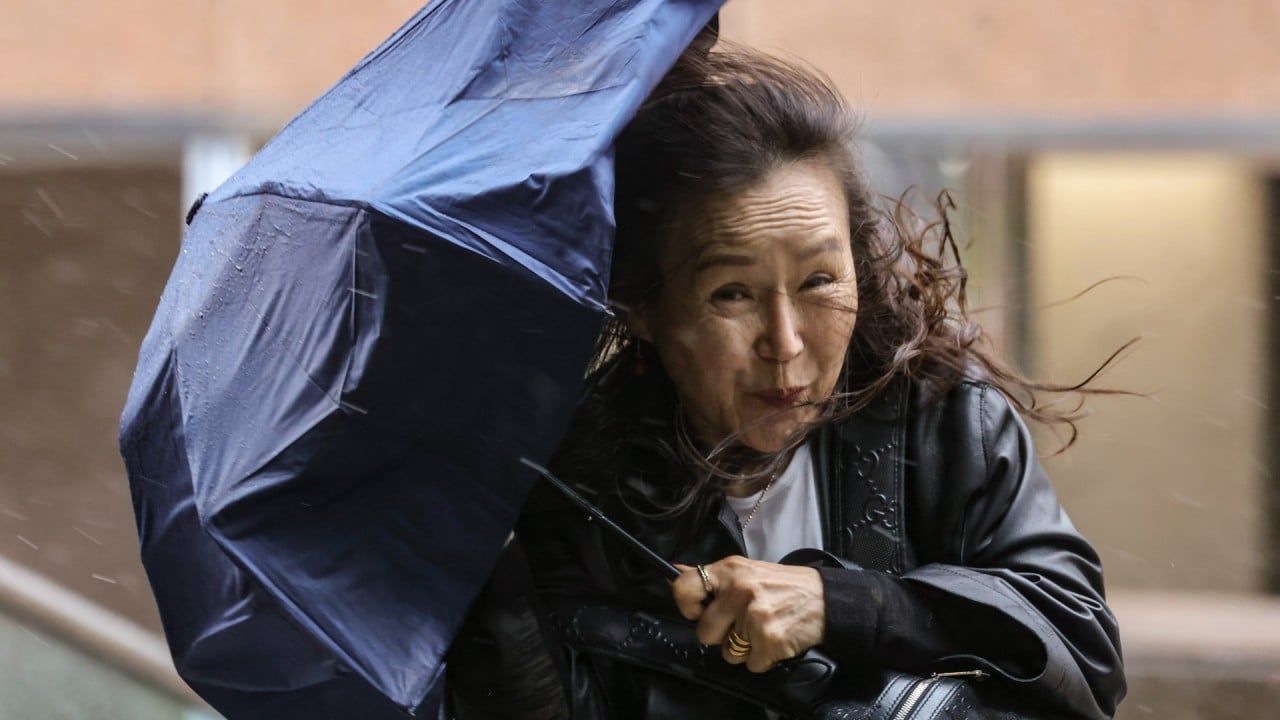
At 1pm, the Post observed residents forming long queues to board trains bound for Admiralty on the East Rail line at Tai Wai station. Commuters filled more than half of the platform space at one point.
Some residents missed one to two trains as the carriages were packed, while others were seen running between platforms to catch a ride.
Typhoon Koinu: Hong Kong downgrades No 3 alert to No 1 as storm departs
Typhoon Koinu: Hong Kong downgrades No 3 alert to No 1 as storm departs
Christy Lau, who was departing from Ma On Shan station, said she managed to transfer at Tai Wai and take the train to Admiralty at about 12.40pm, without a long wait.
“The trip has been quite smooth. I feel like there are fewer people and the trains come quite frequently,” the 28-year-old nurse said.
A hotel manager, who only gave his name as Wong, was among commuters who had left home early to avoid crowds. He said he was able to catch a train to Quarry Bay at 11.30am, despite being asked to return to the office by 1.40pm, two hours after the lowering of the No 8 alert.
“There will be more people once the typhoon signal is downgraded. I can use less time to commute,” Wong said, adding that Tai Wai as an interchange platform had drawn more commuters than other stations.
“I think I will just start working when I arrive. I have a meeting in the afternoon.”
03:02
Typhoon Koinu brushes past city, leaving trail of damage
Typhoon Koinu brushes past city, leaving trail of damage
A law firm administrative worker surnamed Lau, said she woke up at around 7am to check the weather and decided to head to her office in Sheung Wan earlier than usual.
“In my past experience, the platform is filled with people. I have had to wait for several trains before I was able to get on one,” the 50-year-old woman said.
Lau added that she was prepared to head back to work, since the Observatory had issued prior notices on their plans to lower the typhoon warnings.
A clerk, who only gave the surname Wong, said he had not left home early to head to work as MTR services had returned to normal at the time.
Hong Kong’s Airport Express rail service to be reviewed after Typhoon Koinu chaos
Hong Kong’s Airport Express rail service to be reviewed after Typhoon Koinu chaos
Wong said he had no complaints about Monday’s transport arrangements, but felt the No 9 warning signal, which came into force on Sunday with only 15 minutes’ prior notice, was issued suddenly.
“The train service just halted all of a sudden on Sunday and it was the only available public transport. I was forced to walk back home,” he said. “It took me an hour to get home.”
The clerk added that he was unable to catch a taxi as many people were trying to get one.
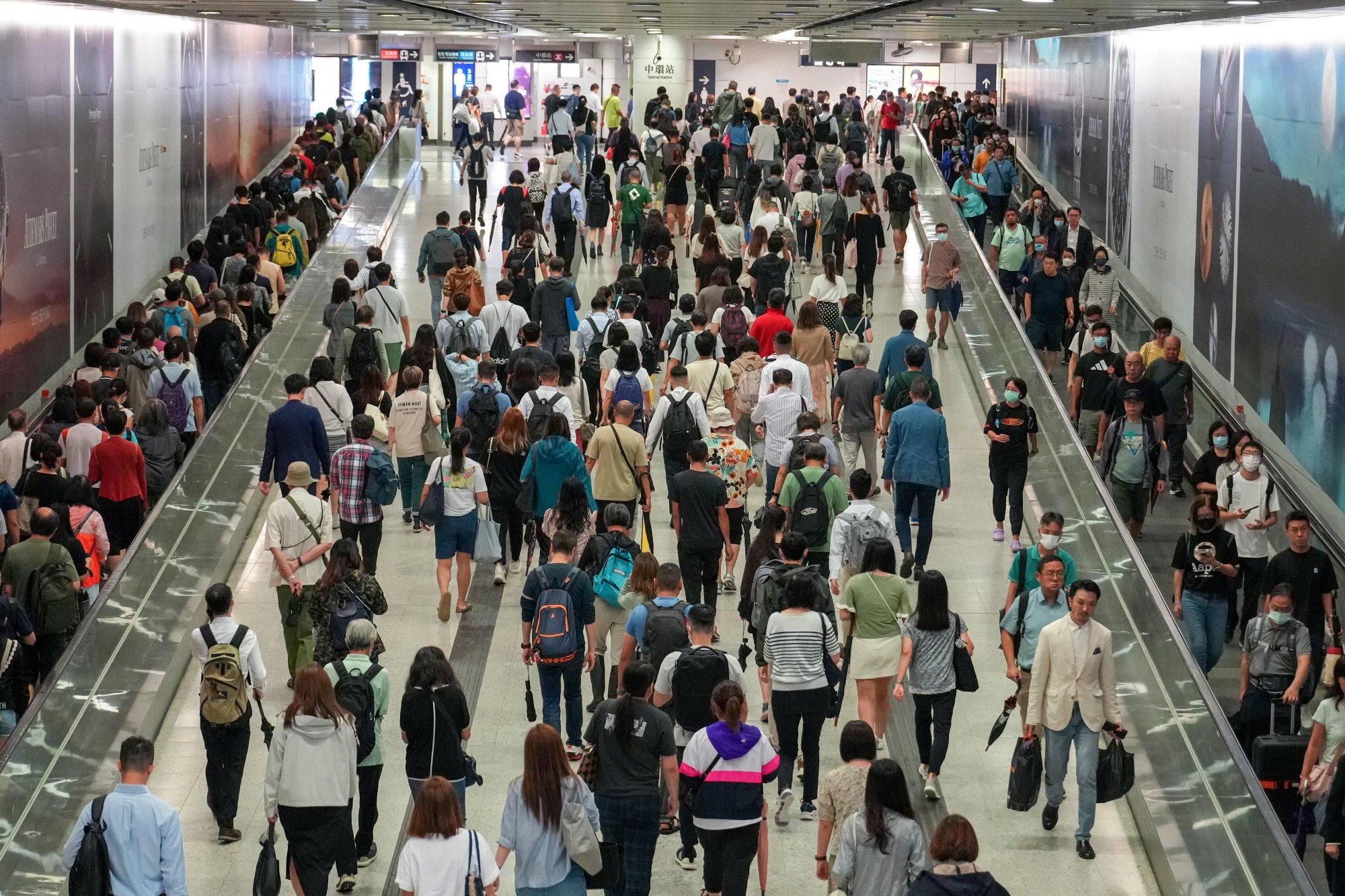
A Transport and Logistics Bureau spokesman on Monday described traffic in the city as “generally smooth” as public bus and rail services, as well as other means of transport, gradually returned to normal levels.
“At present, although a few roads may experience minor flooding or fallen trees due to the typhoon, the traffic in various districts is generally smooth and the departments will continue to monitor the situation and take appropriate follow-up actions,” he said.
Transport services between Hong Kong and Macau also resumed, following the reopening of the two piers in Sheung Wan and Tsim Sha Tsui, alongside the Hong Kong-Zhuhai-Macau Bridge.
Hong Kong Disneyland and the Palace Museum also reopened on Monday afternoon, with the former running limited operations.
Hong Kong halts morning stock trading for Typhoon Koinu, black rainstorm alert
Hong Kong halts morning stock trading for Typhoon Koinu, black rainstorm alert
The Hong Kong Exchanges and Clearing Limited (HKEX) resumed trading at 2pm after suspending a session on Monday morning.
The Home Affairs Department opened 29 temporary shelters across the city, with 294 people seeking refuge during the typhoon.
There have been a total of 44 reports of fallen trees, two reported landslides and seven confirmed flooding cases as of 11.40am.
As of 10am, 29 people, comprising 16 men and 13 women, were injured during the typhoon and sought medical treatment at public hospitals, according to the Hospital Authority.