


“Char” for Borderland Beat
This article was translated EL OCCIDENTAL
Fuel theft in the different municipalities is changing but not decreasing.
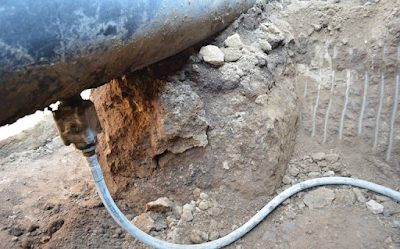
“The most serious was this last one that happened in Tonalá because of the amount of spillage. We do not want it to continue happening”.
He assured that in the whole stretch of the polyduct is where there is the greatest problem of illegal “milking” and affirmed that they are being fought daily.
Dr. Ruben Ortega Montes, member of the Observatory of Security and Justice of the University of Guadalajara, when interviewed on the subject assured that far from diminishing the problem of hydrocarbon theft, it is on the rise.
“These gangs have grown in states such as Puebla, Guanajuato, Jalisco itself, we have just seen a huge phenomenon that endangered the population in Tonala and we see this in several points where gasoline and diesel pipelines pass. It is a super business, both for all the authorities who are involved in not seeing, not hearing, as well as for the people who work within the state oil company itself”.
He pointed out that the lack of operation means that oil pipelines continue to operate unchecked on dirt roads and from warehouses with total impunity.
“The same routes of the authorities in which not even the National Guard is operating, not even Pemex’s own security is operating, not even the militia is operating as it should be and there we have the results: the huachicoleo”.
For the security specialist, fuel theft is now higher in the municipality of Degollado due to its border with the states of Michoacán and Guanajuato, respectively, which makes it very attractive for organized crime.
“Degollado is a remote town, it has large areas and I imagine there is little that the municipal police can do. It comes from the refineries and the pipelines that come from Celaya, from these parts of Guanajuato, from different points of Guanajuato and pass through Degollado, through Atotonilco, through Tototlán, Zapotlanejo, Tonalá, Tlajomulco and Tala towards there”.
He considers that in order to eradicate this illicit activity, there is a lack of political and governmental will and not lying about the fact that the illicit activity has been eradicated, in addition to affecting the finances of criminal organizations.
50 seizures reported
In eight months, 50 clandestine outlets have been seized, only those that have been publicly reported by the Attorney General’s Office. However, there are others that have not yet been disclosed so as not to hinder the corresponding investigations.
Degollado
February 19: 2 outlets and 4,500 liters.
February 13: 2 intakes and 5 thousand liters kilometer 113.
February 12: 4 intakes and 12,300 liters, kilometer 123, Degollado Turimoro stretch and in Ejido Las Limas,
January 29: 2 intakes and more than 1,000 liters, at kilometer 128+366.
January 23: 2 intakes and 9,000 liters, at kilometer 118, Degollado-Tototlán stretch.
January 9: 2 intakes and 9,000 liters at kilometer 117+500.
December 13: 2 hydrocarbon intakes and 2,700 liters of hydrocarbons at kilometer 124.
November 29: 2 intakes and 6,300 liters.
November 19: 2 hydrocarbon intakes and 18 thousand liters in a search of a property.
August 17: 2 hydrocarbon intakes 144+266, in the community of El Edén June 23: 2 hydrocarbon intakes at kilometer 117+235, on Mariano Azuela street.
Tlajomulco
September 7: 2 intakes at kilometer 275+239 and 275+239 in the town of Los Ocotes.
August 15: 3 intakes at kilometer 246+673, in El Zapote.
Tonalá
January 7: 2 intakes at kilometer