


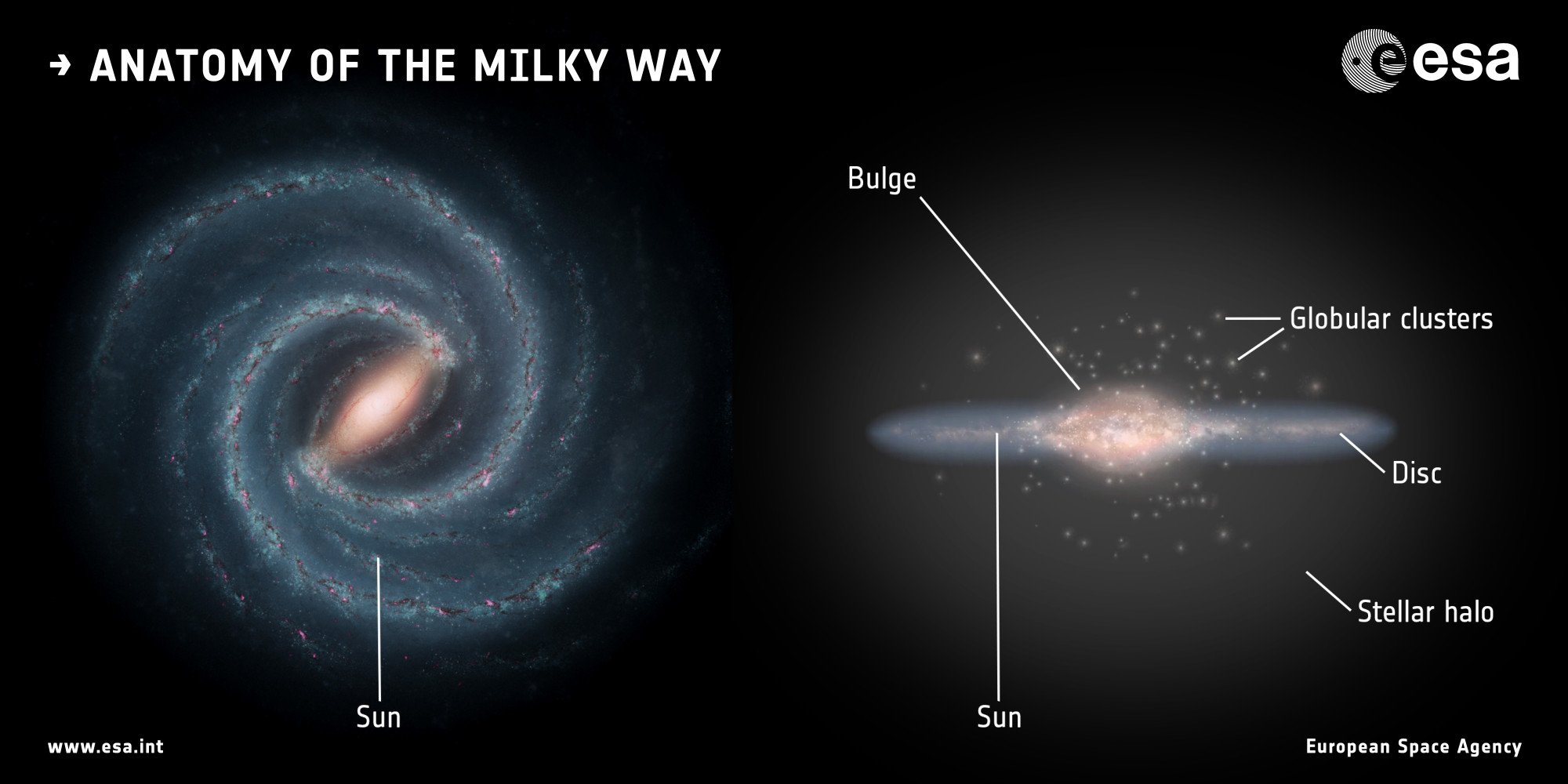

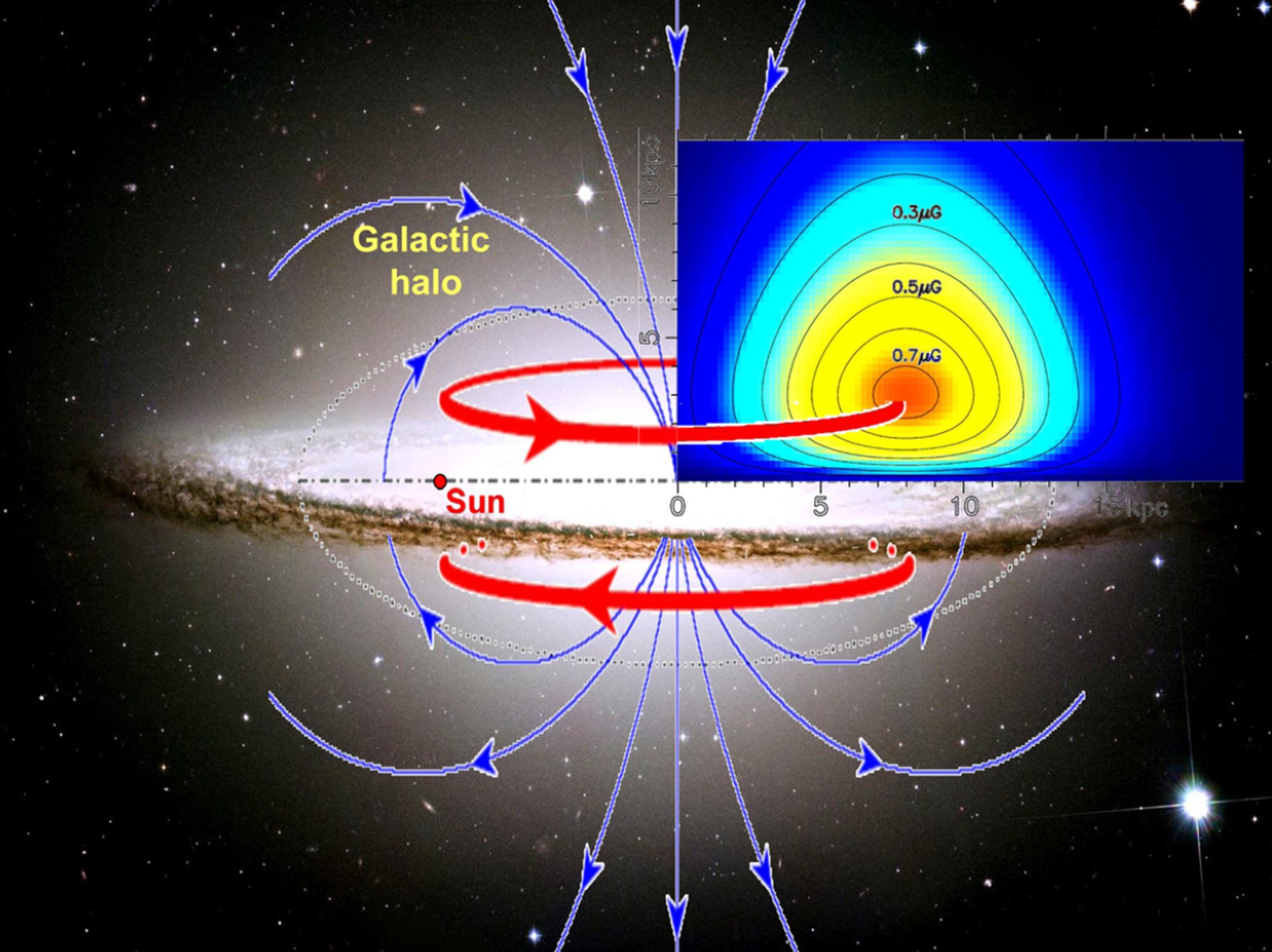
Measuring 12,000 to 100,000 light-years across, these invisible magnetic doughnuts sit inside the vast gas clouds that envelop the galaxy’s bright, spinning disk, with the galaxy’s heart at their centre, according to researchers from the National Astronomical Observatories of China (NAOC) in Beijing.
“Magnetic fields are ubiquitous in our Milky Way and play a significant role in the evolution of molecular clouds, star formation and the transport of cosmic rays,” the team wrote in the paper.
Magnetism is vital to physical processes in the universe. For instance, during the birth of new stars, magnetic forces fight gravity to slow down the gathering of hot, dense gases, so that they can form stars and do not collapse under gravity too quickly.
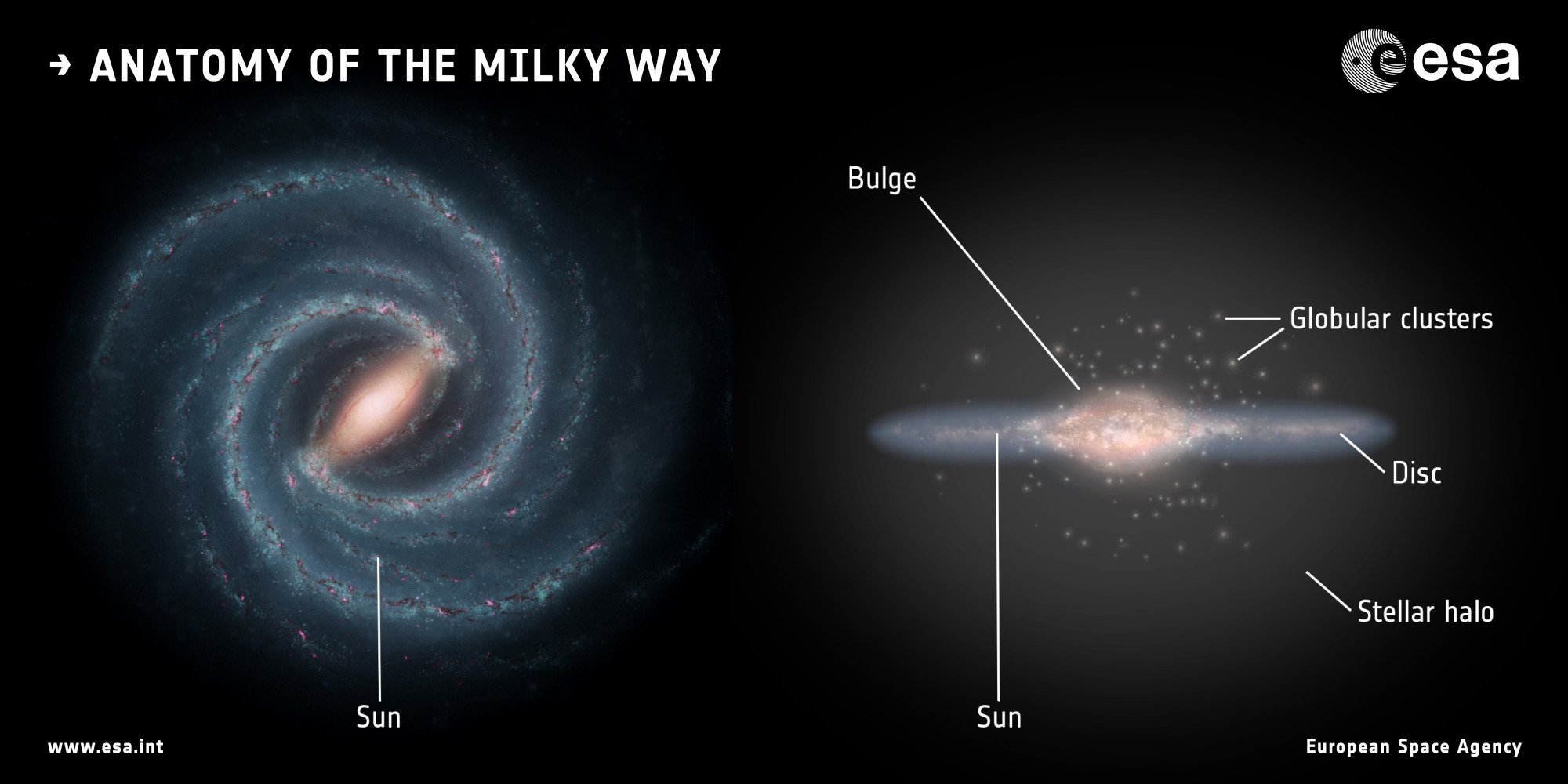
Scientists already knew that the magnetic fields in the Milky Way’s disk are mostly horizontal. They distribute along the galaxy’s spiral arms, with each arm resembling a huge, curved bar magnet stretching all the way from the galactic centre to its outer tip.
In the new study, the NAOC researchers used an indirect method known as Faraday rotation to determine the exact shape and size of magnetic fields in the galactic halo.
It works on the idea that when radio waves from distant galaxies travel through the universe, including the gas and dust between stars, the waves will change orientation because of magnetism.
By using radio telescopes on Earth, scientists can measure the direction and degree of the rotation, and work out the size and strength of the magnetic fields along the way.
Then the researchers subtracted the latter measurements from the former to make sure that the results reflected the true magnetic structure of the Milky Way halo.
They found that the magnetic fields extended surprisingly far into the outer part of the halo, to at least 50,000 light-years from the galactic centre. In comparison, the distance between Earth and the galactic centre is about 30,000 light years.
One of the SKA’s top science goals is to use its unprecedented sensitivity to study the nature of cosmic magnetism. China is a founding member of and major contributor to the SKA project.