




He asked for her contact details and the pair bonded through hours of online chatting. Eventually, they decided to move in together and have now been together for two years.
The tale of Wong and Lun’s encounter may have been what Secretary for Health Lo Chung-mau had in mind when he floated the idea of organising events to get more young people to get married sooner on Thursday, citing matchmaking corners such as those in mainland China.
But Hong Kong operators of matchmaking interest classes said the private market had already offered plenty of such events to the city’s singles, with the industry and participants doubtful about the government’s ability to organise such events.
The Post spoke to two operators of matchmaking events in the city offering interest-based classes for singles between their mid-twenties and thirties.
“This sector is becoming more lucrative as more organisers join in. I originally have been [hosting] interest classes, but now there’s a new way around these classes by marketing that they enable participants to meet [potential matches],” said Raymond Lam, founder of Feijai Sketches, which organises matchmaking interest classes.
These classes span from painting to kayaking and camping, with plenty of socialising and ice-breaking activities often included alongside the marketed activity.

The Feijai Sketches founder had written on his studio’s Instagram account that classes for singles had attracted 1,506 participants in just over a year after the launch of his first class in July 2021.
Lam, who has since expanded his offerings to pottery and coffee brewing last year, said most of his clients were introverts who were slow to warm up to new friends, or feared awkwardness in social settings.
He pointed out that while genders were balanced among his clients, most of the men were in their mid-twenties, whereas the women tended to cluster around the thirties.
Tony Lam, a 30-year-old founder of Camping Guides, which offers matchmaking camping trips, also said his clients were mostly men and women in their late twenties or early thirties who were looking beyond their social circles for a partner.
“It’s not that they are disadvantaged by their personalities or appearance, but rather that most of their close friends were met at school and they didn’t manage to make new friends after entering the workforce,” Lam said.
Participants to these interest classes also wanted to seek potential long-term partners without having to worry about encountering scammers or discrepancies in expectation from dating apps.
Wong said she preferred meeting new people in-person before getting to know them online, rather than meeting them after chatting online.
“It’s because you might look forward to meeting this person after developing feelings for them online, but when there’s a discrepancy with your imagination, the disappointment is larger than not being able to meet them at all,” Wong explained.
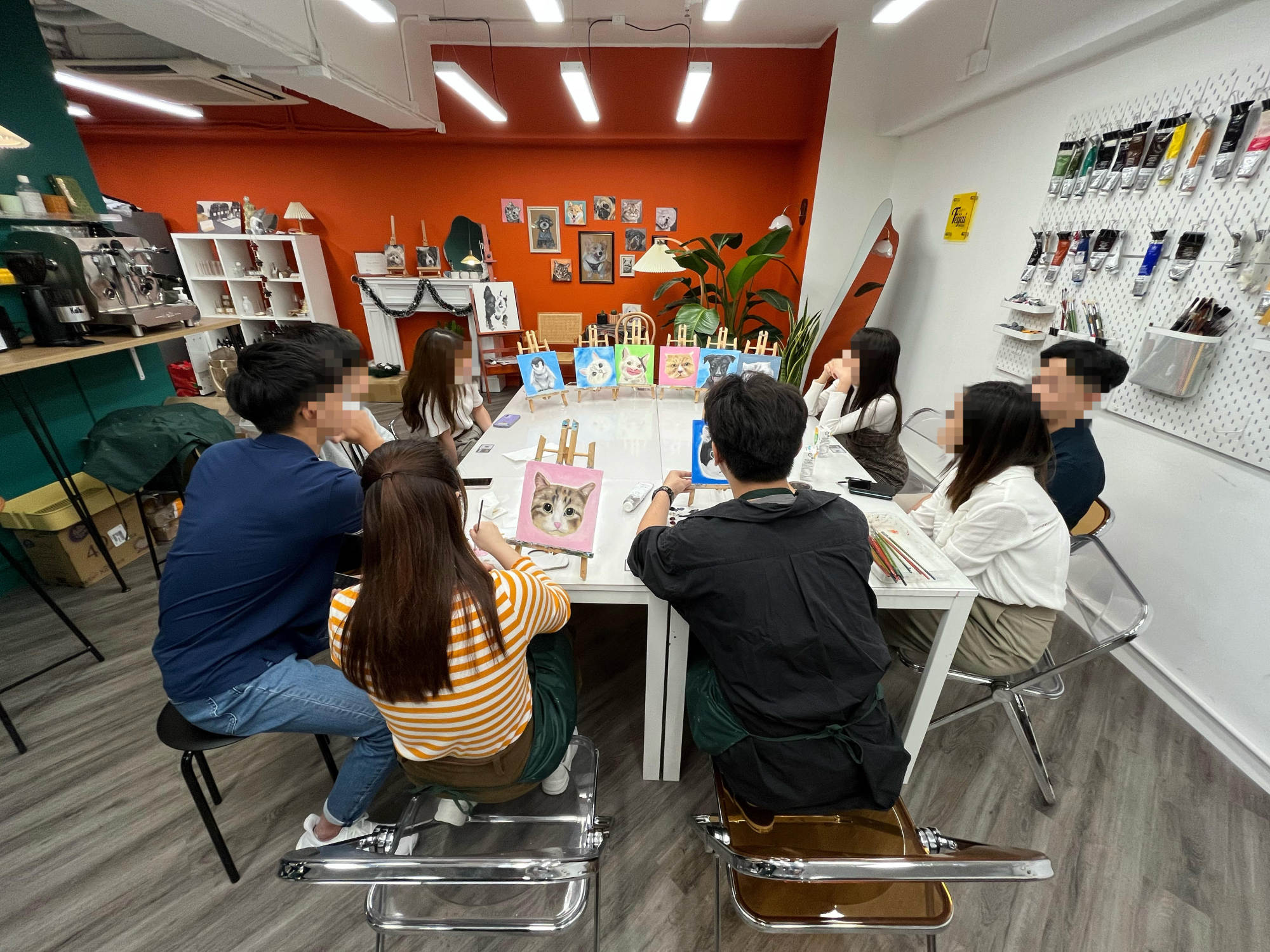
Jacky Mo, a renovation worker who met his current girlfriend at a painting class last year, said he enjoyed the relaxed atmosphere.
“Besides a simple self-introduction, there wasn’t any pressure on me to talk to other people. To me, it was just a usual painting class besides the fact that you know everyone is single,” Mo said.
However, participants of these classes told the Post that they might not join the same activity if they were organised by the government.
“If it’s government-organised, it would be open to the public. I don’t know what selection criteria they have, or whether they would open it up to anyone interested. On the other hand, private interest classes would have selected potential partners of a similar calibre as you before matching,” Wong said.
Mo was also unconvinced whether a bureaucratic organisation, such as the government, could organise “humanised” matchmaking events.
Meanwhile, Lun said he was worried the atmosphere would become awkward “like joint-school balls back in secondary school”.
Both operators said the private market had already offered plenty of choices to interested singles, but Raymond Lam cautioned that it would be difficult for the government to establish matchmaking criteria among participants without attracting intense criticism.
Paul Yip Siu-fai, chair professor of population health at the University of Hong Kong, said the government district offices could organise matchmaking activities to give singles more choices to find their loved ones.
“Some people may be reluctant to join those private events due to economic factors or because they are too shy,” he said, adding that government-organised events should be affordable and cater to young people’s needs.
But Yip said other societal issues such as housing shortage, financial problems, and long working hours also discourage young people from finding a partner or getting married, citing a study conducted by The Family Planning Association of Hong Kong in 2022.
“Not being married accounted for two-thirds of the reasons behind the decrease in birth rate,” he said.
He said the government should provide housing and financial support, and create a family-friendly environment to increase birth rate.
Lun told the Post that he saw the fateful drawing class back in 2021 as an opportunity to meet Wong, but the couple said their relationship deepened because of their matching values.
An incident where Lun took care of Wong when she was hospitalised for four days from a concussion also brought them closer.
“That [incident] was the foundation of our decision to live together,” Lun said.
Additional reporting by Sammy Heung