


International relations has long measured power through familiar instruments: military capability, territory, energy, capital and control of trade. The digital revolution added information to that equation. Artificial intelligence (AI) is taking the transformation further by turning information into a strategic capability that can shape economies, governments and societies.
For the Association of Southeast Asian Nations (Asean), the central question is no longer whether Southeast Asia will participate in the AI revolution. The more consequential question is whether Asean will possess enough control over the infrastructure, knowledge and systems behind AI to shape its own future or whether it will have to rent intelligence from others.
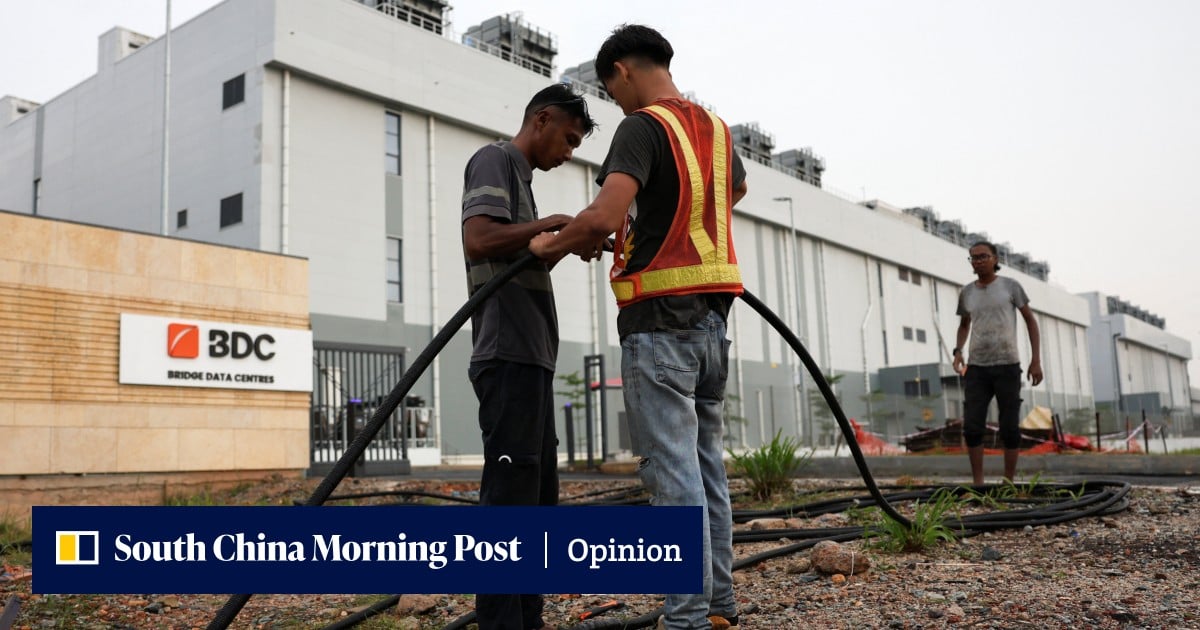
Southeast Asia is rapidly becoming an important physical centre of the AI economy. Data centres are expanding and investment is flowing into digital infrastructure. The International Energy Agency expects electricity demand from data centres in Southeast Asia to more than double by 2030.
Malaysia and Singapore are emerging as major regional hubs, while Indonesia and Thailand seek to capture a larger share of the digital infrastructure boom. However, beneath this expansion lies a strategic paradox: Asean might provide the land, electricity, connectivity, markets and physical infrastructure for the AI economy while depending on external powers for advanced chips, foundational models, cloud platforms and technological standards.
This marks a subtler dependency: states retain sovereignty while increasingly relying on foreign AI systems to run critical functions. This matters because Asean’s traditional concept of strategic autonomy was developed in a world where states could diversify their economic and diplomatic relationships without necessarily having to choose their technological architecture.
That assumption is becoming less secure. The United States and China are developing competing technology ecosystems. Reuters reported earlier this month that Washington was preparing to encourage countries taking part in its Pax Silica initiative to choose between competing US and Chinese AI frameworks. Meanwhile, China is expanding AI engagement with Southeast Asia through training, infrastructure, research and industrial applications.