



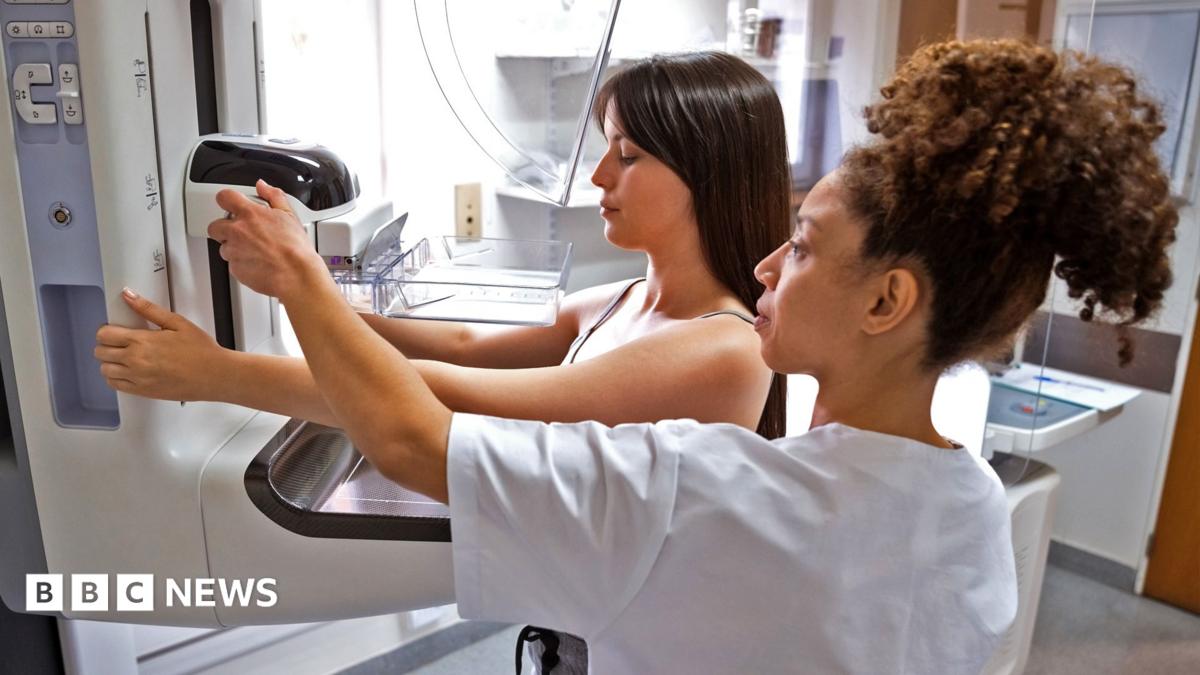
Breast cancer is a leading cause of death in women under 50 in the UK.
Most cases – 96% – are in women over 40, while 25% are in women over 75.
Men can get breast cancer too, with about 420 new cases every year in the UK.
Natasha Finch was diagnosed with an aggressive breast cancer at just 23 despite having no known risk factors.
She has since become an advocate for breast cancer awareness and wants young women to take symptoms seriously.
“I’m six years on and still here, still winning. Going to the GP was scary, but I’m so glad I went when I did — because if I hadn’t, who knows?”
“I just want to advocate for girls.”
This study, by a team from Cambridge University and the Institute of Cancer Research, looks at how to predict breast cancer risk in younger women.
They used a risk calculator called Boadicea that combines factors such as family history, lifestyle, reproductive history and genetic information to give a risk score.
If all women under 50 were to have this done, they estimate about a quarter (26.5%) would be categorised as at above-average risk and referred for further assessment.
This would include a third of women under 50 (34.8%) who develop breast cancer within 10 years.
By comparison, the current Nice criteria would result in 1.4% of women under 50 being referred for further assessment, which would include just 4.4% of those women who develop breast cancer.
A main reason for the disparity, the researchers say, is because three-quarters of women (73%) under 50 who develop breast cancer within a decade have no family history of breast cancer – the key criterion in the Nice guidelines.