


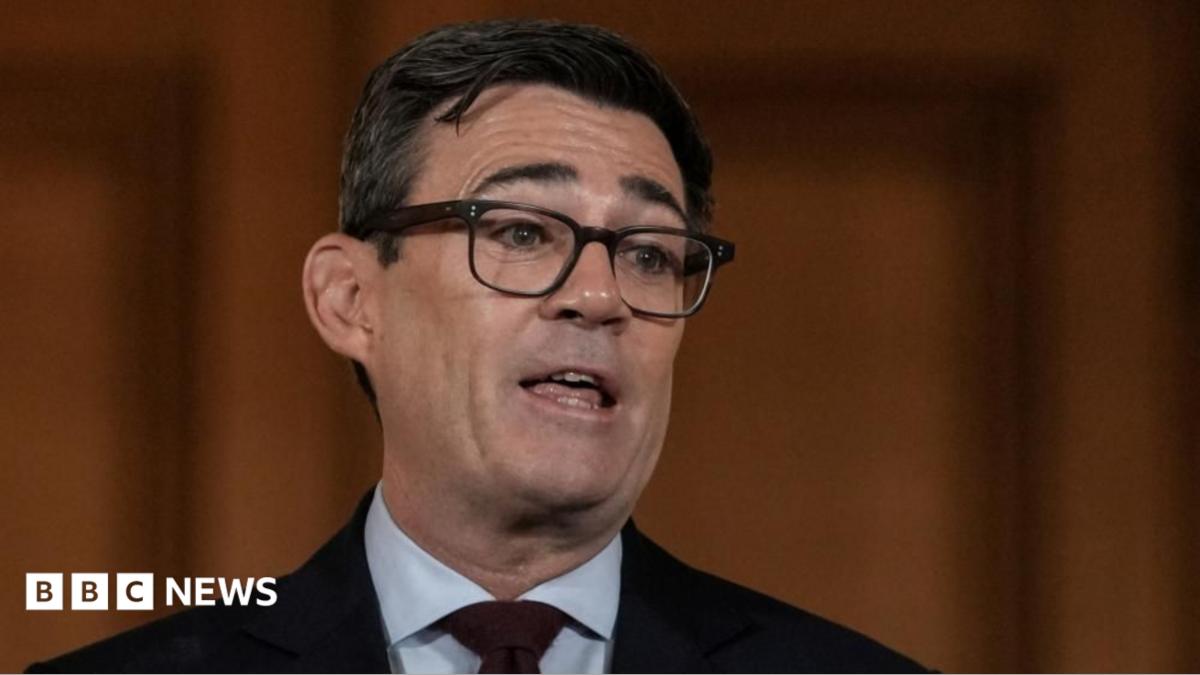
Prime Minister Andy Burnham says he is “open” to the possibility of the UK formally apologising for its role in the transatlantic slave trade, but has ruled out financial reparations.
He said he wanted a “dialogue with those affected” and was open to “calls for an apology”, but said reparations were “not the right answer”.
The statement was welcomed by the All-Party Parliamentary Group (APPG) for Afrikan Reparations, with its chairwoman Bell Ribeiro-Adday telling BBC Radio 4’s Today programme the issue was not just about money.
It comes ahead of next week’s Commonwealth leaders summit in the Caribbean. As King Charles III tours the region, there have been renewed calls for an apology.
During the first leg of his tour in the Bahamas, the King made reference to the “suffering of the past”. Later, in Guyana, he visited the site of a rebellion of enslaved people against British authorities.
On Saturday, Burnham described the transatlantic slave trade, when Africans were trafficked to the Americas, as a “brutal and barbaric violation” and said Britain must “face up to the past”.
The British government has never formally apologised for slavery or offered to pay reparations. Burnham has stuck with the policy of his predecessors, and has stopped short of offering any consideration of reparation payments.
“I do not think that British people today can be held liable for historical wrongs, however heinous, that happened in a different age under different laws and in which they played no personal part,” Burnham wrote in a piece for the Guardian, external.
He said Commonwealth countries had for years been asking for an “honest conversation”.
He said he wanted to offer a “structured dialogue”, adding: “Listening to calls for a formal apology on behalf of the British state will form an important part of this process. I am open to them.”
Chancellor John Healey told the BBC that Burnham was “open to a discussion” about an apology because it was “the right thing, particularly ahead of the Commonwealth heads conference”.
The Commonwealth Heads of Government Meeting starts on 1 November in Antigua, and will be opened by the King as part of his tour.
Speaking to Laura Kuenssberg, Healey said the prime minister does not think reparations are the right approach.
He added that a formal apology doesn’t mean British people should now “accept the financial liability for any part in things that happened hundreds of years ago in which they had no role”.
Conservative leader Kemi Badenoch said there was “no reason British taxpayers today should be held financially responsible for things that happened generations before any of us were born.”
In a post on X, Badenoch wrote that Labour was “already spending too much on Britain’s welfare state, now is not the time for Andy Burnham to be providing global welfare.”
Liberal Democrat leader Ed Davey said: “I do think we have a duty there and saying sorry is always quite a good thing.”
Bell Ribeiro-Addy said that while her parliamentary group welcomed the government’s acceptance of the role it played, it had “still fallen short of a formal state apology and that actually costs nothing”.
“Acknowledgement is not the same as understanding,” she told Today, adding: “Until we apologise, we are never going to be on equal footing… it’s meant to be a family of nations – a Commonwealth – and it’s simply not the case.”
Ribeiro-Addy, who is MP for Clapham and Brixton Hill, said that, to her knowledge, an invoice for financial reparations has not been given to the UK, and so discussing “reparative justice” on those ends, was missing the point.
“My worry is the focus on financial reparations, and I think that is deeply problematic and has not quite listened to what people have said,” Ribeiro-Addy said.
Downing Street believes it is in the UK’s interest to strengthen the Commonwealth, in a world where China and Russia are seeking to exert influence.
Only this week, President Vladimir Putin hosted a Russia-Africa summit in Moscow.