


The TB-A can carry as many as 24 silver iodide rods and 200 smoke grenades – both rain-inducing agents – and has been equipped with cloud particle detection and wind radar equipment for the trial, according to Xinhua.
The same model was also flown in June off the coast of Amami Oshima in Japan’s Kagoshima prefecture – making it the first Chinese unmanned aerial vehicle to operate in the area.
01:14
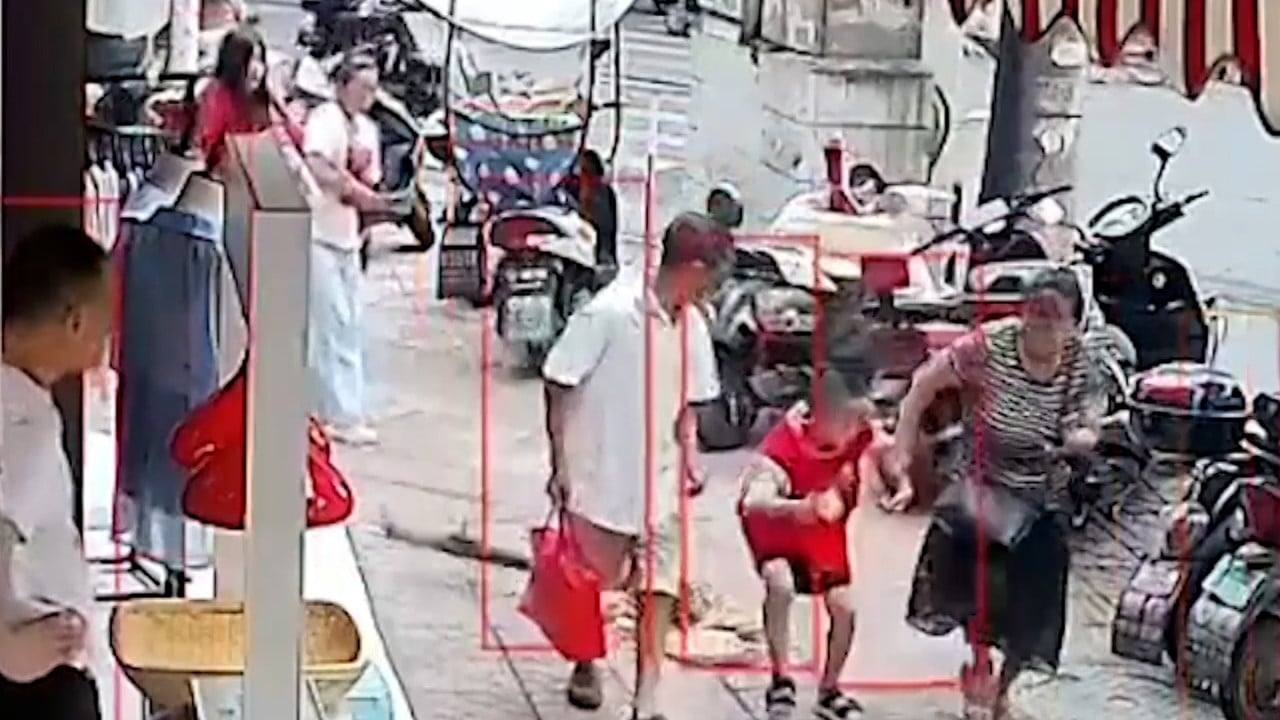
Cloud-seeding rocket nearly hits pedestrians in China as it falls on pavement
Cloud-seeding rocket nearly hits pedestrians in China as it falls on pavement
The TB-A has three engines, compared to the two-engine TB-001, and has a higher maximum take off weight of 3,250kg (7,165lbs), higher endurance of 40 hours, and longer range of 8,000km (4,971 miles), according to the company.
While the trial was the first to take place in Xinjiang, it was not the first time for a TB-A to be used to induce rain.
The southwestern province of Yunnan also began its first cloud-seeding trial in October of last year by using a TB-A to ease droughts caused by decreased summer precipitation.
China is a leader in cloud seeding, a technology that has been controversial because of its unintended consequences, including increased pollution and excessive precipitation. Some scientists have also questioned its effectiveness.
The country launched a programme for “quality development of weather modification” in 2020 and pledged to achieve a developed weather modification system by 2025.
The National Meteorological Centre unveiled a “cloud-seeding disaster relief” action plan last year aimed at promoting the use of drones for weather modification.
China’s Wing Loong 2H, another dual-use long-endurance drone, has also been used for weather modification operations, including in the southern province of Guizhou in March.