


Limits and objectives of the Chinese Role
On the other hand, China’s new role in the region is constrained by several factors. Unlike the United States, China lacks the leverage to impose its options on key players like Israel. This limits its ability to broker comprehensive deals that could end the current conflict, as outlined in China’s position paper.
Additionally, China does not have a military presence in the Arabian Gulf, unlike the U.S., which restricts its ability to offer defense guarantees to the Gulf states in exchange for political agreements.
Due to these limitations, there are questions about the viability of China’s proposed roadmap for the region unless there is positive cooperation with other international players, particularly the United States.
This also explains why Chinese officials have repeatedly emphasized that they do not seek to fill any vacuum in the region, nor to replace the American role in the Middle East. Instead, China seems to be carving out a unique role or space for itself without directly challenging traditional American spheres of influence.
In this context, it’s important to recognize that China’s interest in the region is driven by clear, strategic interests. Chinese industries rely on oil from the Arabian Gulf to meet about half of their energy needs, making their energy security closely tied to the stability of the Middle East.
Simply put, the stability of Beijing’s oil supply chains hinges on the stability of the region and avoiding scenarios of widespread conflict that could disrupt energy flows.
In addition, China is acutely aware of the strategic importance of the Middle East’s geographical location, which has a significant impact on international maritime trade routes. This is particularly sensitive for China, as it is deeply concerned with the security of its export corridors from East Asia to Europe and North America.
Beyond these concerns, China is also invested in the safety of its substantial investments in the Middle East and North Africa, which exceeded $318 billion between 2005 and 2023.
Thus, China’s political interest in the region is a direct reflection of its clearly defined strategic interests. The scope of this interest aligns with the limits of China’s role, especially when compared to the influence of the United States and other major regional players.
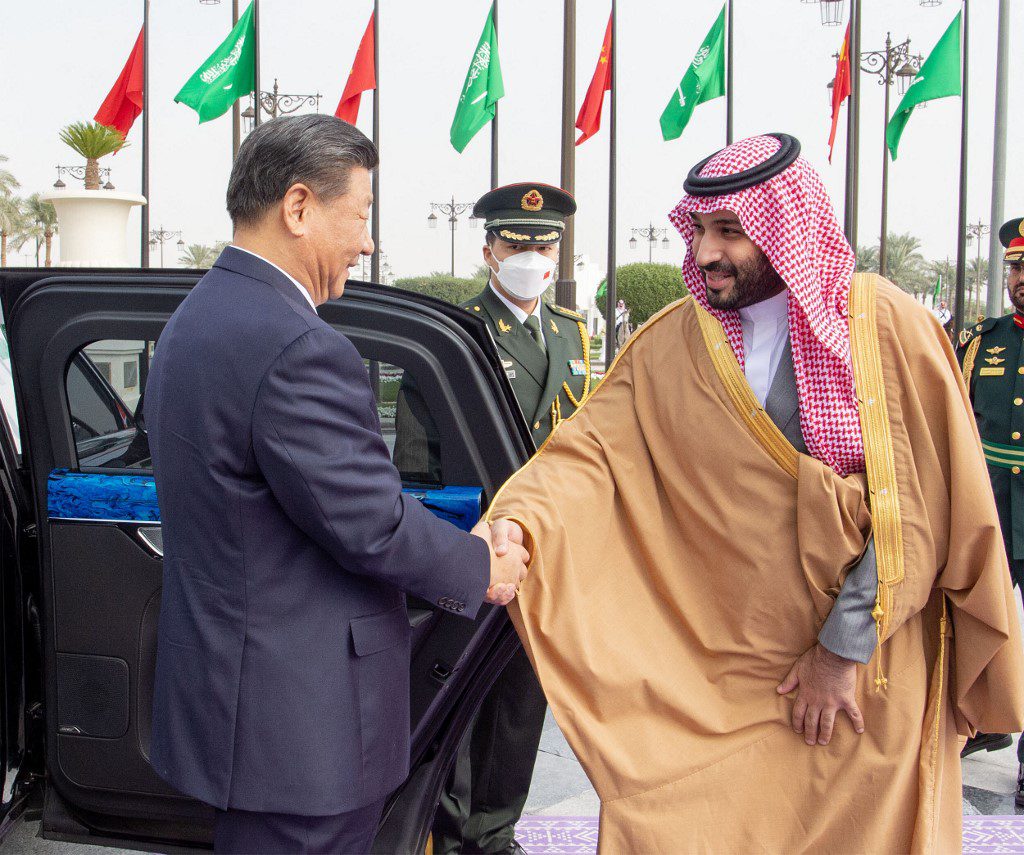
However, despite these constraints, many Arab powers and Middle Eastern countries, including U.S. allies, see value in China playing a role in diversifying political relations and achieving a measure of balance in the region. This does not imply abandoning existing partnerships with the West or replacing them, but rather complementing them with a more balanced approach.