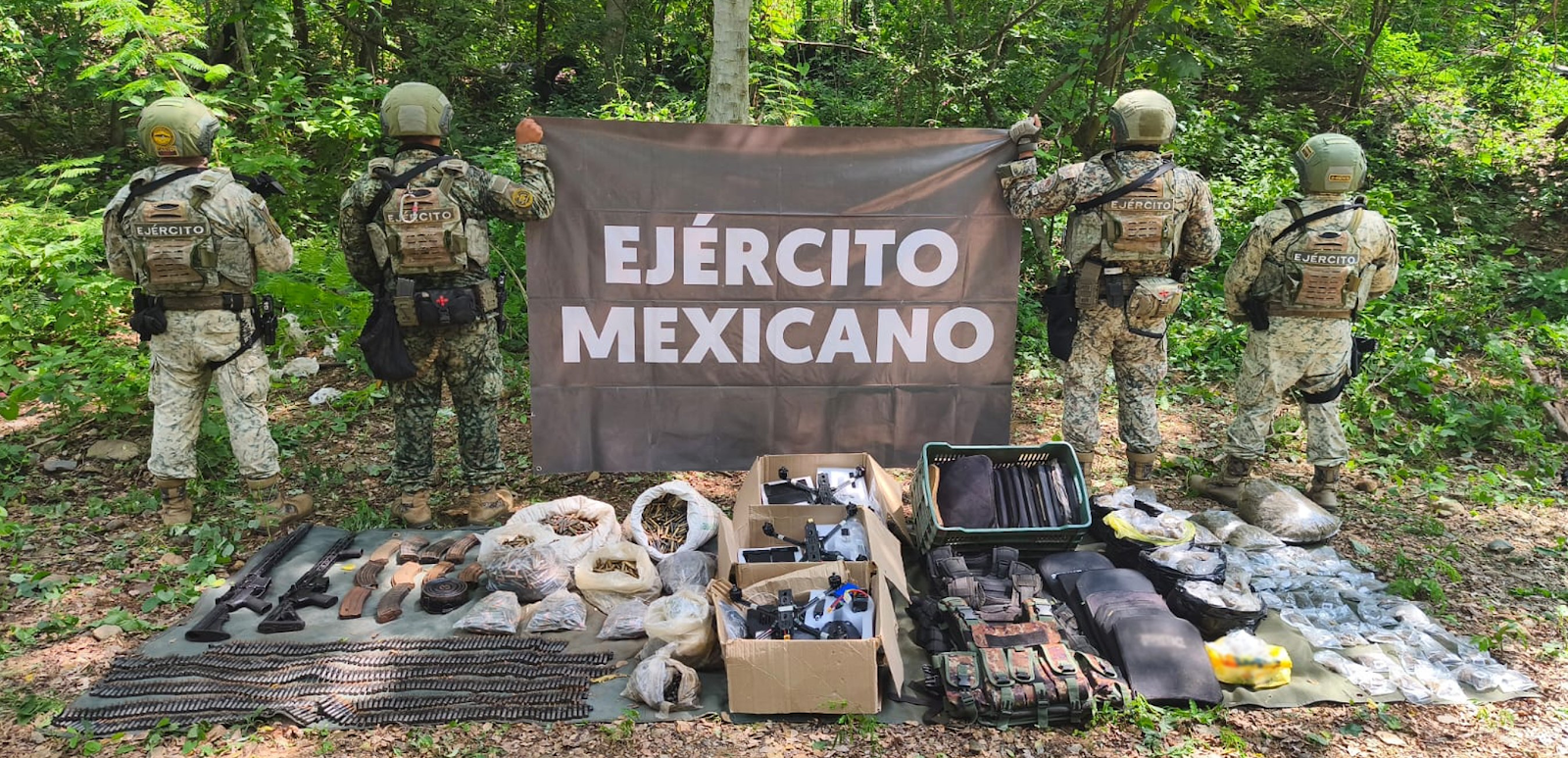
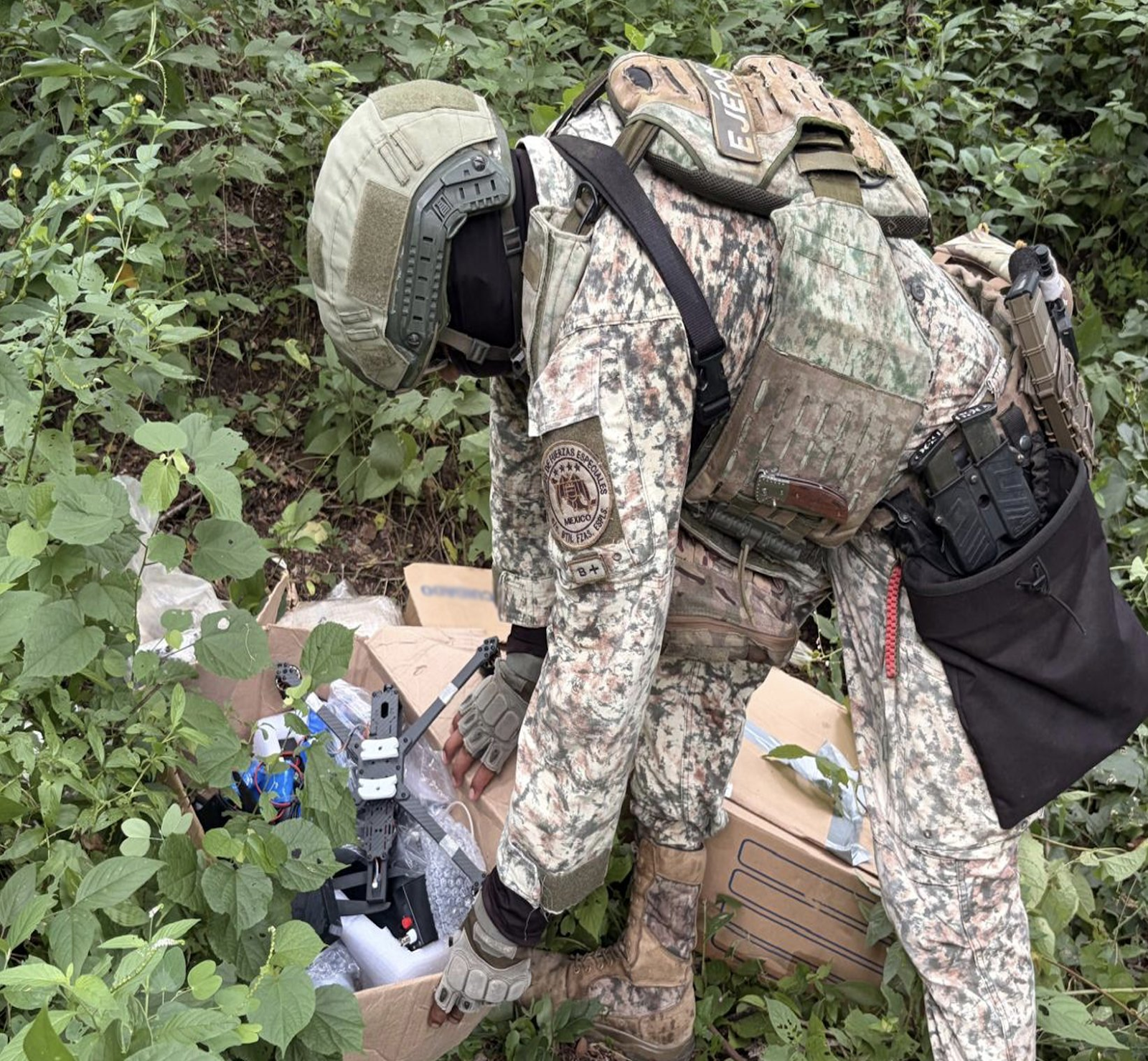
The Mexican Army seized several First Person View (FPV) drones along with 12,000 cartridges, long guns, magazines, and tactical equipment during two operations carried out in the rural area of the municipality of Concordia, Sinaloa on September 28.
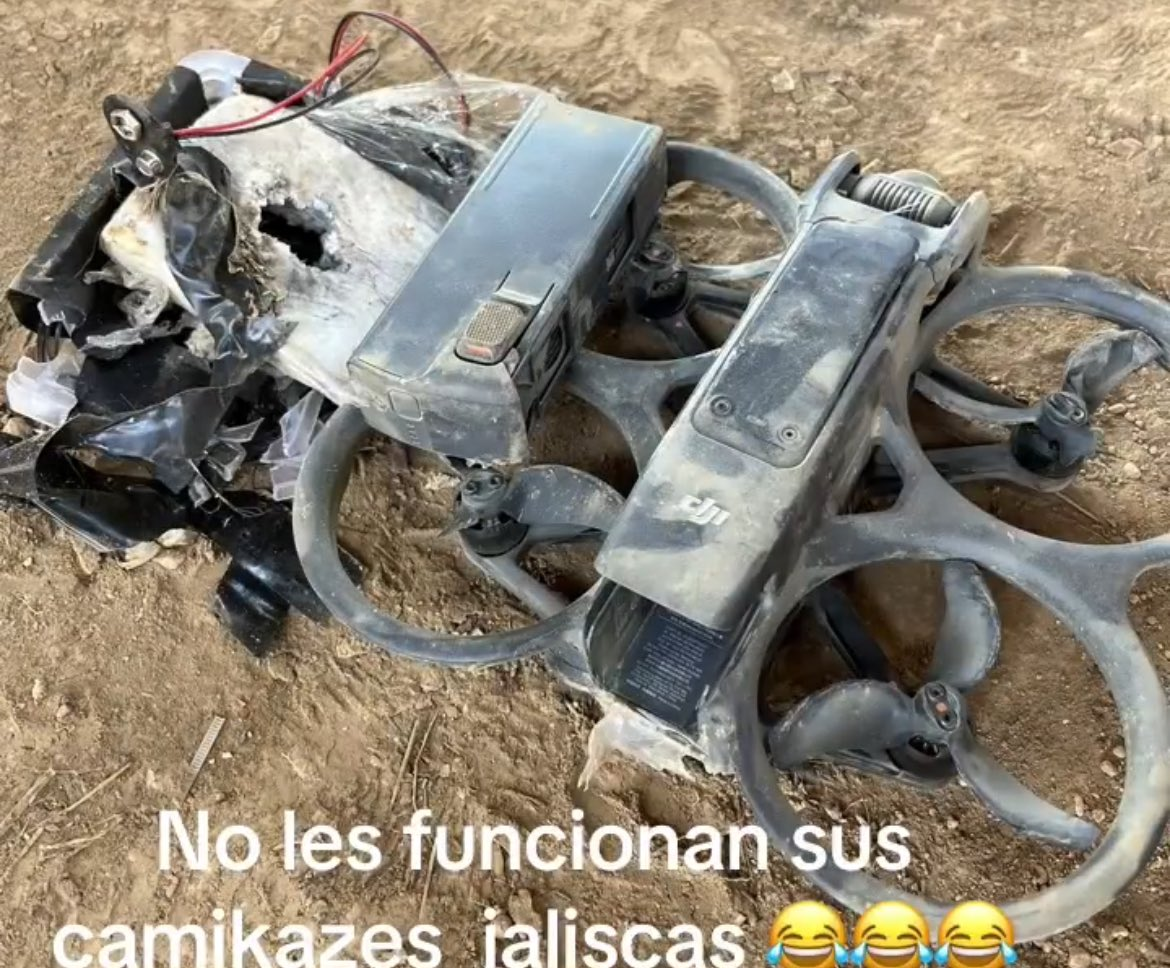
While drone usage has exploded in Mexico over the last five years, virtually all drones used in combat are DJI drones outfitted to drop improvised explosive devices over their targets. These DJI style drones rely on jammable digital “link” to connect the pilot to the drone, with the pilot using a small tablet screen streaming from the drones camera.
Fiber optic FPV drones typically fly faster, and rely on a spool of thin fiber optic cable to connect the pilot to the drone. This fiber optic cable means that they are unjammable, but are vulnerable to entanglement in trees or other obstacles. The use of FPV drones, which are typically loaded with explosives to explode on impact, is exceedingly rare in Mexico. Their use would represent a tactical innovation by organized groups, shifting from drone dropped explosives to faster and potentially more deadly kamikaze style attacks.
Security researchers Pernicious Propaganda, who cover the use of drones in combat, told Borderland Beat that FPV drones are unlikely to entirely replace the commonly used DJI drones, which are easy to control while still being effective. The researchers said “if FPVs become more widely used you likely will see more strikes on ranches and other fixed positions.”
In a 2025 report, C/O Futures, a research and consultancy group, wrote that FPV drones were first popularized in combat in Spring 2024 in the Russia-Ukraine war, first by Russian forces, before being adopted by both sides. In the Russia-Ukraine war their use has expanded to be the primary cause of deaths and injuries, accounting for 70-80%, according to Latvian security services.
According to Pernicious Propaganda, the first appearance of an FPV drone in Mexico was around April 2025, by the CJNG members of Los Mayos.