


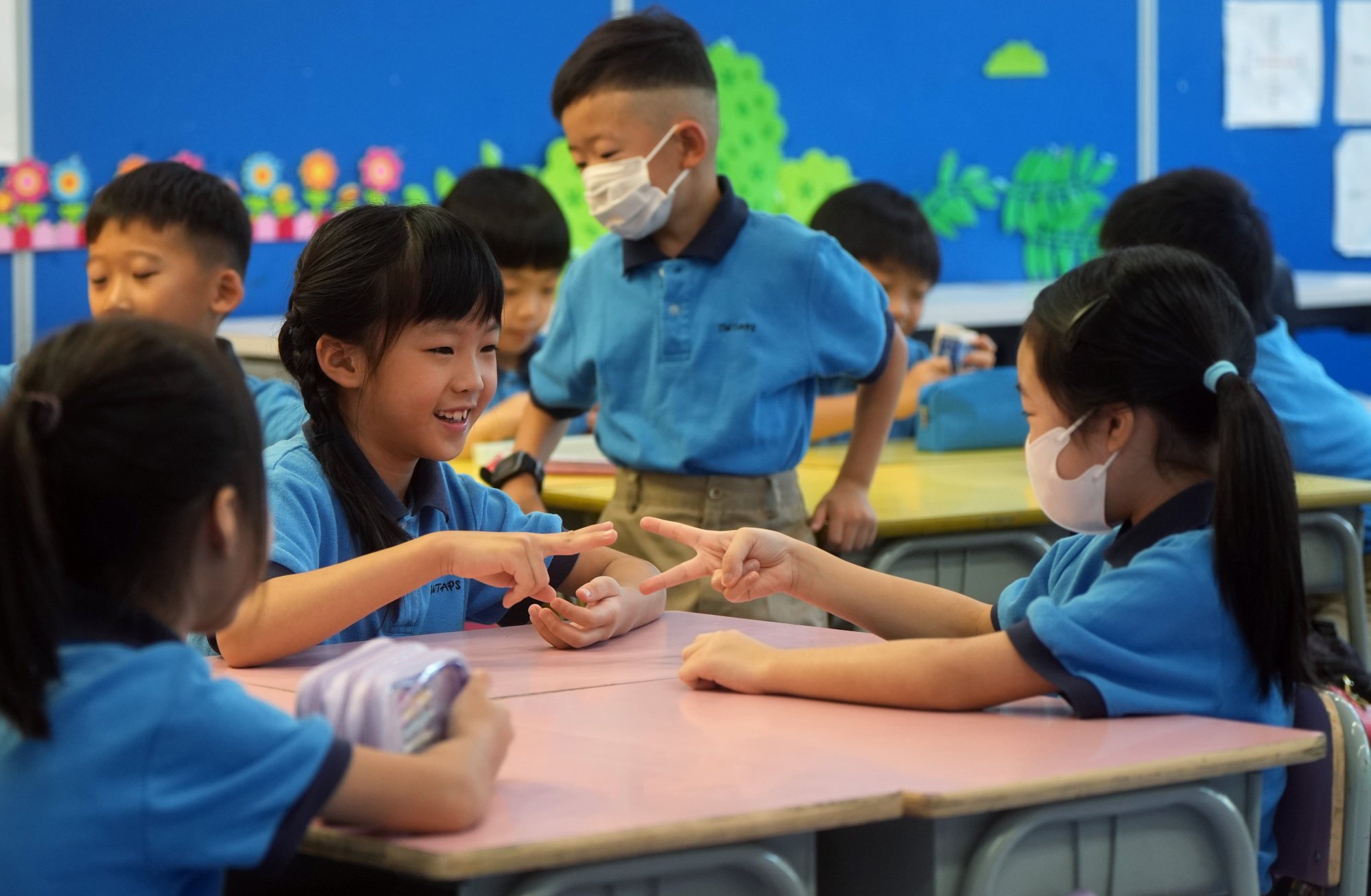
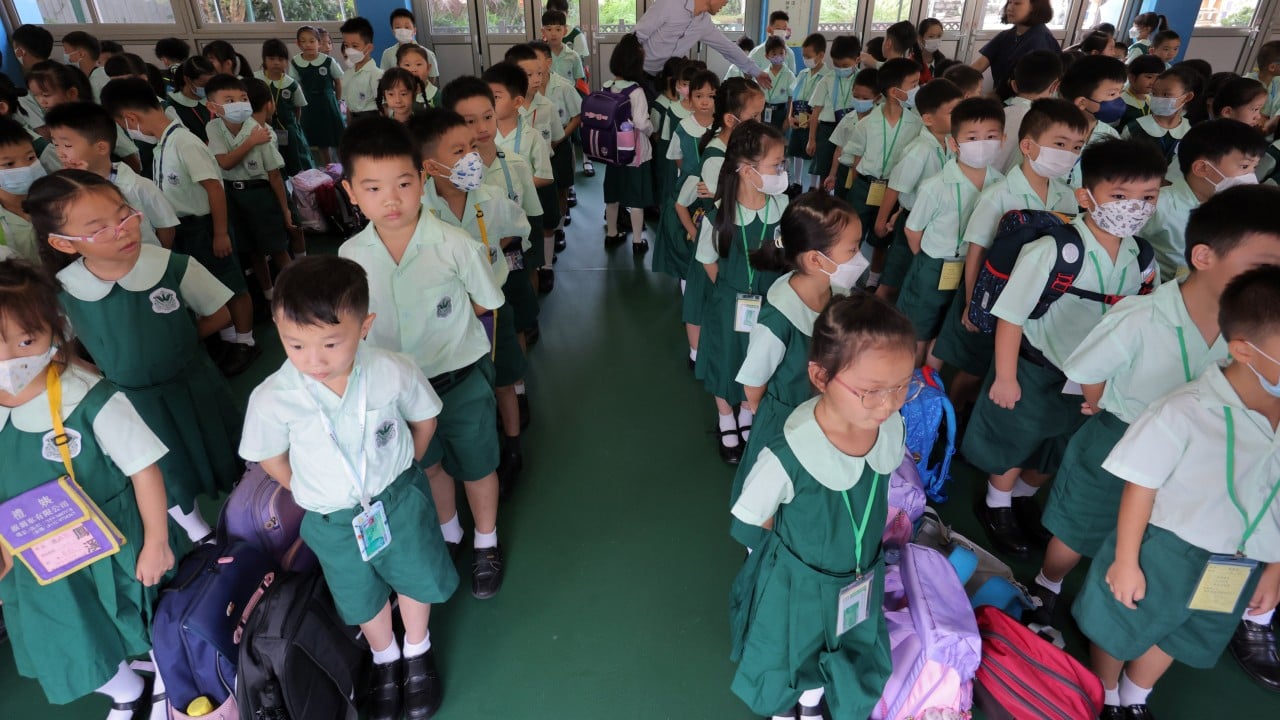
The government last Thursday announced the cancellation of all kindergarten, primary and secondary classes for Friday, the initial first day of the new school term, with Saola, then a super typhoon, looming and the city facing a No 8 warning signal.
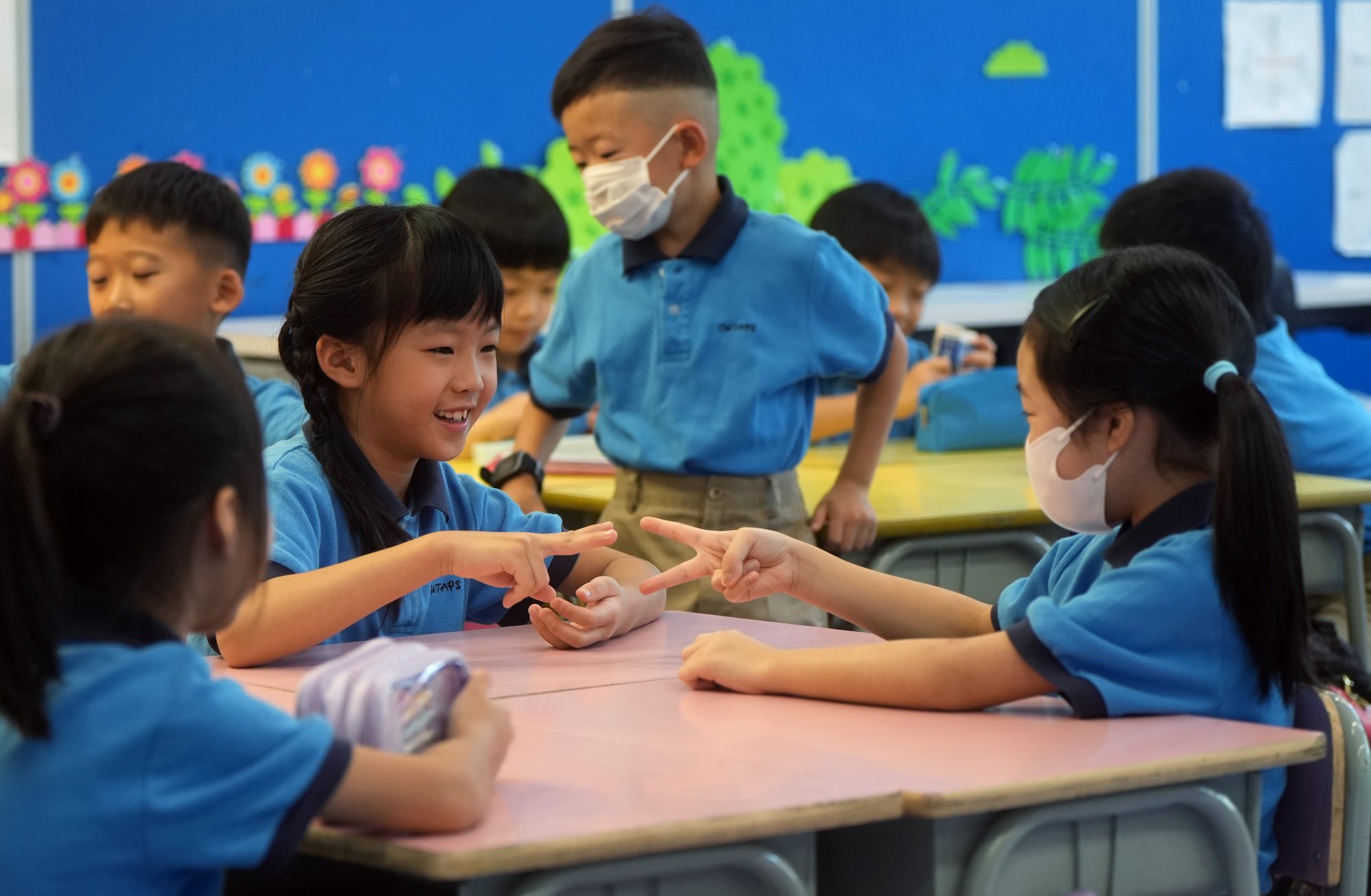
Education authorities earlier projected the number of children in Hong Kong aged six would fall to 50,000 in 2029 from 57,300 recorded this year, while those aged 12 would drop from 71,600 to 60,100 over the same period.
Advertisement
More than 80 P1 classes in the current academic year were cut, according to the Primary School School Profiles published last Friday.
Choi on Monday said the reasons for the reduction in P1 classes was to make good use of public resources, adding the dwindling student numbers were structural but expected.
“We hope our students’ learning quality would not be affected by the decline and that we can ensure public money is well used,” she said.
2 Hong Kong primary schools to merge as shrinking student population takes toll
2 Hong Kong primary schools to merge as shrinking student population takes toll
Chu Wai-lam, vice-chairman of the New Territories School Heads Association and headmaster of Fung Kai No 1 Primary School in Sheung Shui, said his school this year admitted a class of about 20 cross-border students, fewer than last year’s mark of 30.
Chu attributed the reduced class size to the decrease in the number of births and the fact that some parents preferred their children to study in mainland China for better opportunities in the Greater Bay Area.
Advertisement
“Realistically it is a matter of demographics. When there aren’t enough students, cutting classes is only natural. In the coming years authorities should attract more students – especially those with a Hongkonger parent – to pursue their studies in the city,” he said.
Hong Kong secondary schools latest slated for cuts to ‘door-knocking’ places
Hong Kong secondary schools latest slated for cuts to ‘door-knocking’ places
Additionally, he suggested that Hong Kong’s primary schools should maintain a class size of 24 instead of increasing this to 30 or 36.
Advertisement
“I suggest not opening any more Hong Kong schools on the mainland. Apart from Hong Kong students, the authorities can also invite non-Hongkongers to come to the city to study through talent schemes, which will help increase our talent pool,” he added.
But he noted his school was able to manage without reducing classes. Chu voiced optimism that schools in the North district “would not be cut” due to potential advantages brought by the Northern Metropolis development.
Hong Kong has ‘soft landing’ approach for shrinking student population: John Lee
Hong Kong has ‘soft landing’ approach for shrinking student population: John Lee
Among the school’s cross-border students is Jacky Mak, 11, who passed the Futian checkpoint in the morning and travelled to his campus by shuttle bus.
Advertisement
“I was happy that we didn’t have to attend school on Friday, so that we can just resume classes on Monday. If we had to go to school and had a break in between, it could have been harder to re-adjust,” he said.
“I woke up at 5am because my home is far from the checkpoint. I had breakfast and left home at around 6.20 am,” the Primary Six student said. “There were many people but it was smooth overall,” he noted, adding he spent only about 15 minutes crossing the border.
The student noted his goal for the new year was to get into a Band Two school in Hong Kong.
Advertisement
This year, Fung Kai No 1 Primary School also admitted about 15 transfer students for Primary Two to Five. Its principal said that after the pandemic, some parents made the decision to enrol their children back into Hong Kong schools for a better education.
Nicole Cheung, who enrolled her daughter for Primary Two classes at the school, said she believed studying in Hong Kong would guarantee “a more promising future” for her child.
It was her daughter’s first day at the school as a transfer student. However, the mother said she was not too worried about her child’s ability to adjust because the girl had spent a year at an affiliated kindergarten before the pandemic.
“I believe that after all, she has to live in Hong Kong since the culture and education here are better, especially English learning,” Cheung said.
Both mother and daughter waited 35 minutes for transport to the school, with about 200 people in line for minibuses and buses into the city.
Cheung, after arriving at the school 15 minutes late, urged authorities to open the Heung Yuen Wai checkpoint earlier than 7am and implement better measures to avoid traffic congestion.
Advertisement