





There has been evidence of Tren de Aragua operating in Brazil since at least 2018, with the Venezuelan gang making inroads from in the border state of Roraima. But when a series of recent reports suggested the organization could be expanding to other parts of the country, we started digging deeper.
We began investigating after a police operation in June targeted a Tren de Aragua cell in Roraima. Unlike in previous operations, police also carried out raids in the states of Amazonas, São Paulo, Rio de Janeiro, Minas Gerais, and Paraná. According to official statements, the cell allegedly trafficked weapons to Red Command members in Amazonas and Rio, often swapping guns for cocaine. This modus operandi is a marked departure from Tren de Aragua’s operations in other countries, such as Chile, Peru, and Colombia.
Tren de Aragua typically established itself in a new country by exploiting Venezuelan migrant communities before aggressively expanding into new territories by violently confronting any local rivals. However, in Brazil, the police investigation suggests it was functioning more as a service provider working in cooperation with local criminal networks.
One of the challenges in working on this issue was finding reliable information on Tren de Aragua in Brazil—so we turned to Nelson, an AI research companion designed for in-depth research on Latin America, to help us gather information.
Nelson on Tren de Aragua’s operation in Brazil
We used Nelson AI to develop a more structured outline of the available information on Tren de Aragua in Brazil. Its curated database brings together news, analysis, and reporting from a range of trusted sources, which helped us identify and organize relevant information while keeping track of the sources it was using to come to its conclusions.
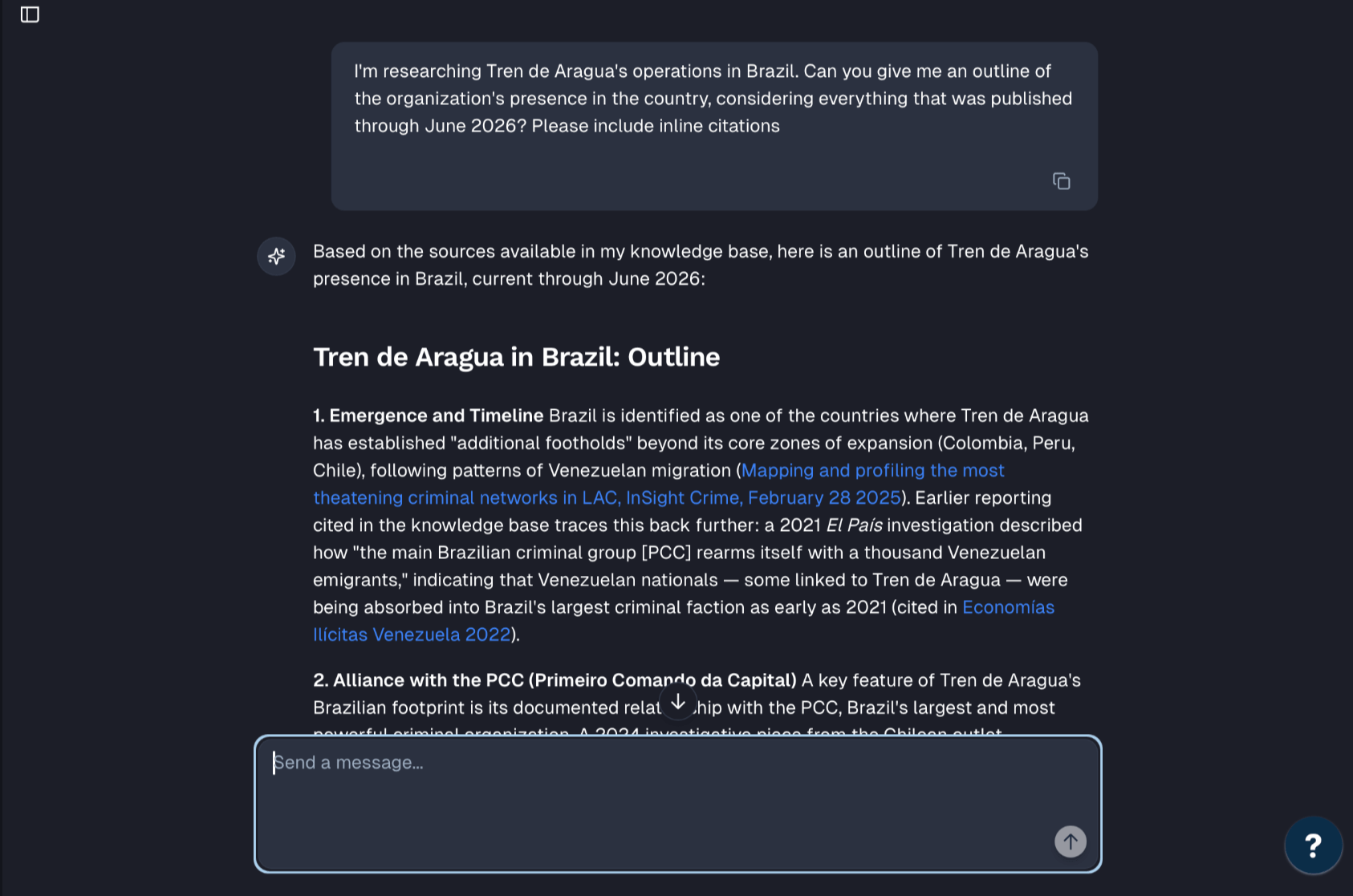
Nelson laid out the main information on the Tren de Aragua’s presence in Brazil, including a timeline and key details about its alliances with Brazilian gangs and its modus operandi. The response included inline citations—some from InSight Crime itself—which helped us check sources and verify data. Nelson also highlighted the gaps in its knowledge base and suggested follow-up questions.
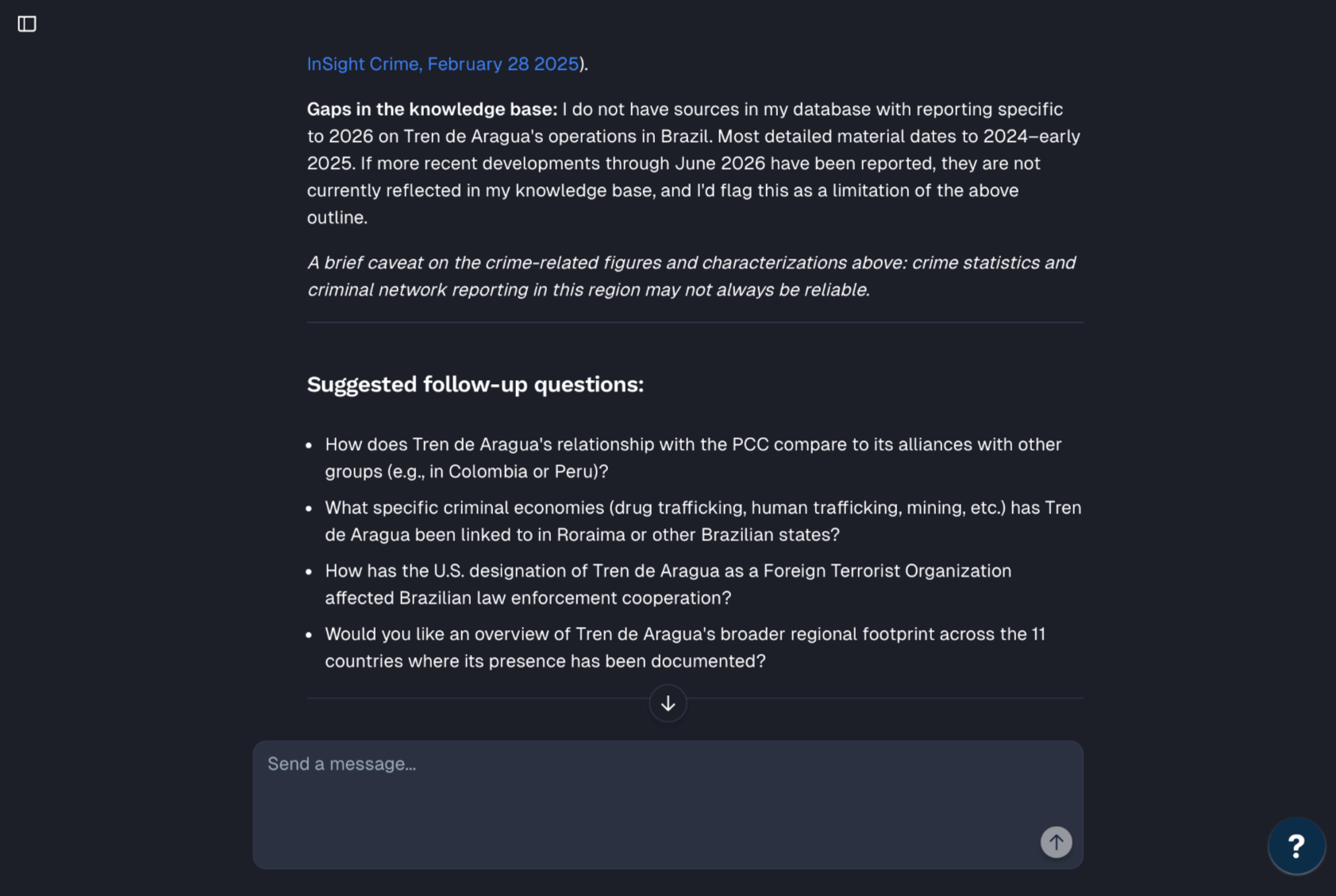
To better understand what makes Tren de Aragua’s presence in Brazil different, we then looked to contrast its activities there with how it acts in other countries.
Using this prompt, Nelson produced a briefing contrasting these countries with Brazil, based on the information it had while once again flagging its limitations.
The final result helped us produce an article that not only questioned Tren de Aragua’s actions in Brazil but also demonstrated how the organization adapts its strategies according to different criminal landscapes.
InSight Crime’s collaboration with Nelson is new and experimental and an effort to expand our audience as well as serve Nelson users with the best organized crime information out there. If you’re interested in giving Nelson a try, use our discount code INSIGHTCRIME25OFF.