


On August 19, Mexican national Arturo Carrera Loaiza was arrested by Nigeria’s National Drug Law Enforcement Agency while allegedly trying to flee the country through Murtala Muhammed International Airport in Lagos. He was the fifth Mexican drug-trafficking suspect arrested in Nigeria this year.
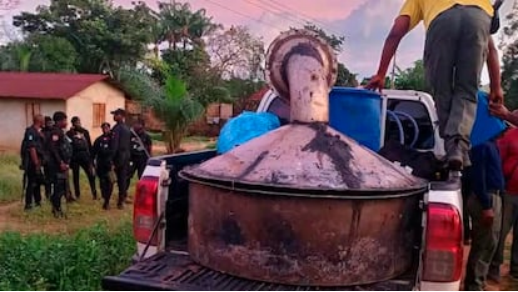
The arrest followed another case involving a Mexican national. In June, Nigerian authorities arrested José Villa Ochoa along with four African accomplices at another drug laboratory busted by national security forces with the support of AFRICOM. According to AFRICOM Commander Dagvin Anderson, Mexican cartel members were found at 11 of 12 drug laboratories intercepted across the continent over the previous 18 to 24 months.
The growing number of detained Mexican nationals points to a possible transfer of methamphetamine-production expertise from Mexican criminal actors to African criminal networks. According to Nigeria’s National Drug Law Enforcement Agency (NDLEA), José Villa Ochoa was brought to Nigeria as a methamphetamine expert to provide technical expertise for large-scale production. The agency also identified Carrera Loaiza as the man who recruited and brought Ochoa into the country.
Such production does not necessarily require trained chemists; criminal groups can rely on “cooks,” as methamphetamine-production methods can be taught and learned, reducing dependence on highly specialized personnel.
Methamphetamine “cooks” can use dual-use chemicals—substances that have legitimate industrial or commercial purposes—to produce drug precursors. Rather than importing the highly controlled precursor P2P directly, producers can use less-regulated chemicals to synthesize P2P locally. P2P can then be combined with other precursor chemicals, particularly methylamine, and converted into methamphetamine.
The presence of Mexican methamphetamine “cooks” in Nigeria could therefore represent more than the movement of individual traffickers, potentially indicating deeper cooperation between Mexican and West African criminal networks.
Such cooperation could offer criminal organizations access to new markets while allowing them to share operational risks with African criminal actors. Producing methamphetamine in West Africa could also facilitate access to European markets. However, the expansion of synthetic-drug production in the region could have broader security implications, particularly if drug proceeds are financing terrorist organizations on the continent.
Source: ElPais