


Payton McNabb knows firsthand what happens when biological males are allowed to compete in women’s sports.
The former North Carolina high school volleyball player suffered a concussion, neck injury, and two black eyes after being struck by a male athlete on the court. It left her with long-term physical and mental effects, including impaired vision, partial paralysis on her right side, and anxiety and depression.
Advertisement
It was an experience that turned her into one of the more consistent voices defending female-only competition.
In an exclusive interview with RedState, McNabb discussed the backlash Indiana Fever star Sophie Cunningham has received for speaking out in support of girls’ sports, the risks many people still prefer to ignore when it comes to the infiltration of biological males in female competitions, and the private conversations she’s had with athletes who agree but remain silent.
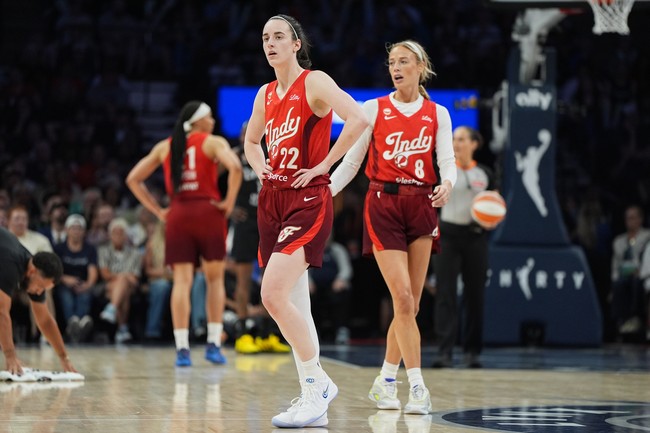
She also addressed Caitlin Clark’s decision not to publicly back her teammate on the matter, describing the silence as a missed opportunity that would have meant something very important to the young girls who look up to her.
Sophie Cunningham Spoke Up — and Immediately Paid for It
Cunningham, who was traded to the Fever in 2025 and immediately made waves as an “enforcer” type of player to help protect Clark, recently dunked on the woke sports world by daring to state the obvious. That men don’t belong in women’s sports. That boys don’t belong in girls’ locker rooms.
“I want to protect young girls in a locker room, or young girls in sport who shouldn’t have to go against biological men,” she said.
That very reasonable take left her soaking in hot water, considering she plays in a league obsessed with extremist progressive ideology, and hits the road in some very deep blue cities that entertain the mental illness involved in men playing dress up in fantasy, but with real-world consequences.
Advertisement
McNabb, an Independent Women sports ambassador, said she wasn’t surprised by the volume of criticism directed at Cunningham. In her experience, the response follows a predictable pattern.
“Honestly, I wasn’t shocked at all. That’s become the playbook,” she explained. “The moment someone says something that goes against the narrative, the goal is to make an example out of them so everyone else stays quiet.”
“The difference,” McNabb tells RedState, “is Sophie doesn’t seem interested in playing that game.”
“She knew there would be backlash, and she spoke anyway. That takes courage, and I think a lot of people respect that.”
Why McNabb Says This Fight Is Personal
For McNabb, the issue is not theoretical. She still carries the physical consequences of what happened on the volleyball court as a teenage girl. Separate categories exist for a reason, she argued, and ignoring biological differences puts the safety of women and girls at risk.
“People are ignoring why separate men’s and women’s sports exist in the first place. None of these rules were created randomly. Different equipment standards, different performance standards, different physical expectations – they all exist because of biological differences,” she said. “I learned that in the hardest way possible.”
What makes Cunningham’s comments especially significant, McNabb added, is that they come from an active high-profile player rather than a politician. Young girls watch Sophie. They wear her jersey. When she takes the heat for drawing a clear line, it carries a different kind of weight than when a lawmaker suddenly latches on in an attempt to fire up the base.
Advertisement
“Honestly, little girls aren’t growing up wanting to be politicians — they’re growing up wanting to be Sophie Cunningham,” she continued.
With today’s SCOTUS ruling, girls like Payton McNabb are finally protected.
Payton took a ball to the head from a biological male during a high school volleyball match. She walked off with a severe head injury and partial paralysis on her right side.
No girl should be forced to… pic.twitter.com/IpG8UyvHhU
— Jenn Pellegrino 🇺🇸 (@JennPellegrino) June 30, 2026
Embedded tweet continues:
… sacrifice her safety, her future, or her dreams to satisfy the far left’s political agenda.
McNabb said a number of female athletes have reached out to her privately over the years. Many say they agree that men do not belong in women’s categories, but they are afraid of the professional and social consequences of saying so out loud. Not to mention the financial impact.
“They’re worried about losing teammates, scholarships, or future opportunities. That’s why someone like Sophie speaking publicly matters so much,” the former volleyball player revealed. “Courage is contagious, and every athlete who speaks up makes it a little easier for the next one.”
McNabb on Caitlin Clark’s Silence
Unfortunately, Clark doesn’t appear to have caught the courage. When asked by reporters to address the heat her teammate has been receiving and the very topic itself, Clark deflected.
“It’s not really a discussion we really have in our locker room,” she told reporters following Sunday’s loss to the Minnesota Lynx. “It’s for the leagues and the governing bodies to work with their athletes to find solutions, but our focus is on basketball.”
Advertisement
“That’s what we talk about and how we can get wins, and, obviously, we didn’t do that tonight.”
Caitlin Clark dodges question on protecting women’s sports.
“It’s for the leagues and governing bodies to work with their athletes to find solutions.” pic.twitter.com/LZSx91D4XX
— Jackson Thompson (@JackThompsonFOX) August 2, 2026
That’s the same kind of appeasement Clark has become known for in her short WNBA career. Whether it’s trying to keep the peace with a league that outwardly attacks her due to jealousy issues, or even when she tries to downplay her own achievements by suggesting she’s the recipient of “white privilege,” the face of the league rarely summons the bravery to take a firm stance against the outside noise.
McNabb tells RedState that she understands why the league’s biggest star might have preferred to stay out of the controversy. At the same time, she argued that silence is not the way to go here.
“I understand why she probably wanted to avoid the controversy, but eventually staying silent becomes a statement too,” said McNabb. “She’s one of the biggest names in women’s basketball, and whether she likes it or not, people look to her.”
“So while I understand why she stayed out of it, I do think it was a missed opportunity. It would’ve meant a lot to the young girls wearing No. 22 in the stands to hear her support her teammate and stand up for fairness.”
Silence becomes a statement too. No truer words have been uttered. Silence doesn’t earn you favor with a rabid left-wing-dominated league like the WNBA. They won’t stop attacking Sophie. They’re not going to stop physically attacking Clark on the court. The only play here is to stand up for what you believe in. For others. For yourself.
Advertisement
Cunningham has done that. We’re still waiting on Clark.
How sad for all the little girls in the stands wearing #22 https://t.co/NXoBtPitid
— Payton McNabb (@paytonmcnabb_) August 3, 2026
And Her Advice to Sophie?
McNabb says if she had any advice for Sophie, it’d be to keep going. To “absolutely” keep speaking up to empower women and girls. No matter the heat she is getting, or if the league and/or sponsors start shunning, or worse, punishing her.
“If athletes are punished simply for expressing their beliefs, that’s a problem in itself. Trying to shame or intimidate women into silence isn’t healthy for the conversation,” she suggests. “Whether people agree with Sophie or not, athletes should be able to speak honestly without fearing they’ll be ostracized for it.”
In today’s environment, especially in the sports world where news and analysis are dominated by liberal media personalities, that seems like wishful thinking. Will Sophie be able to start a movement that properly flips the script on “trans” participation in sports? For now, McNabb is at least optimistic that she’s kept the conversation going. And she’d like to see more people step it up.
“I do think there’s reason for hope because more people are willing to have this conversation publicly,” she said. “Every athlete, parent, coach, or advocate who speaks up helps ensure there’s a future for women’s sports.”
“If no one was willing to defend female-only competition, there wouldn’t be much left to protect.”
Advertisement
Editor’s Note: Do you enjoy RedState’s conservative reporting that takes on the radical Left and woke media? Support our work so that we can continue to bring you the truth.
Join RedState VIP and use promo code FIGHT to receive 60% off your membership.