


“However, the solar cells are not generating power and data acquisition from the lunar surface is given priority,” it added.

02:35
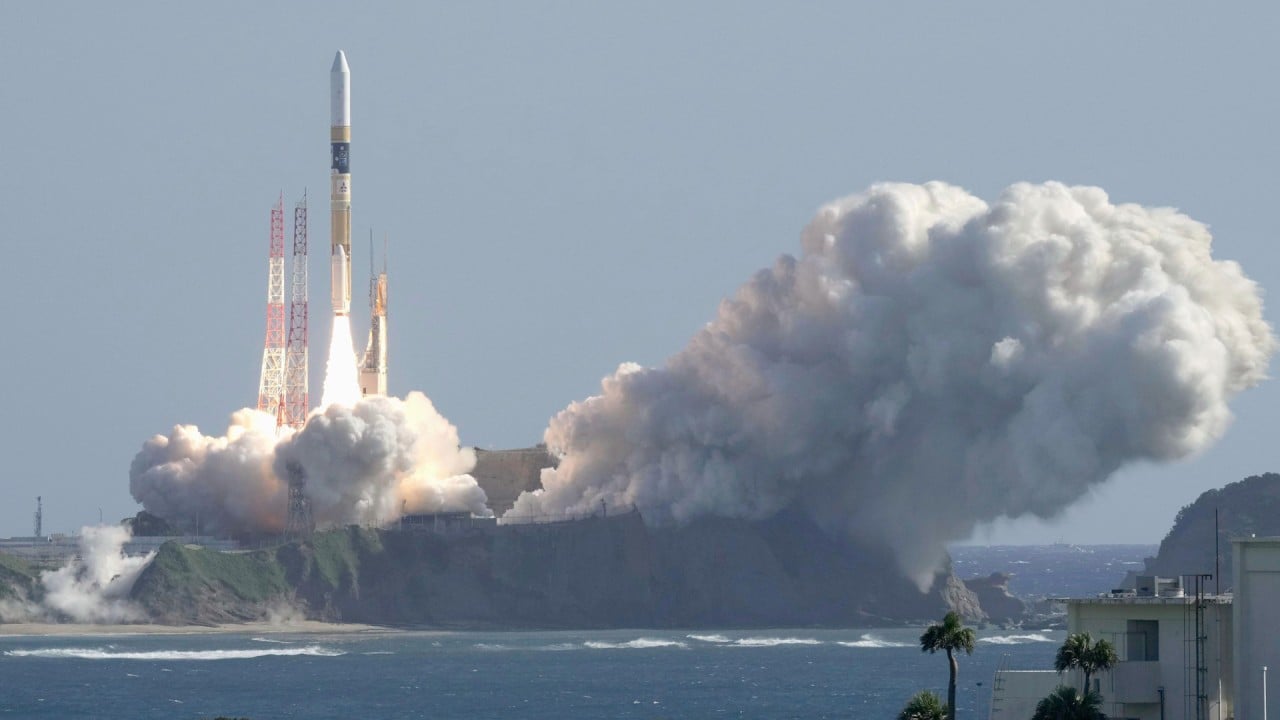
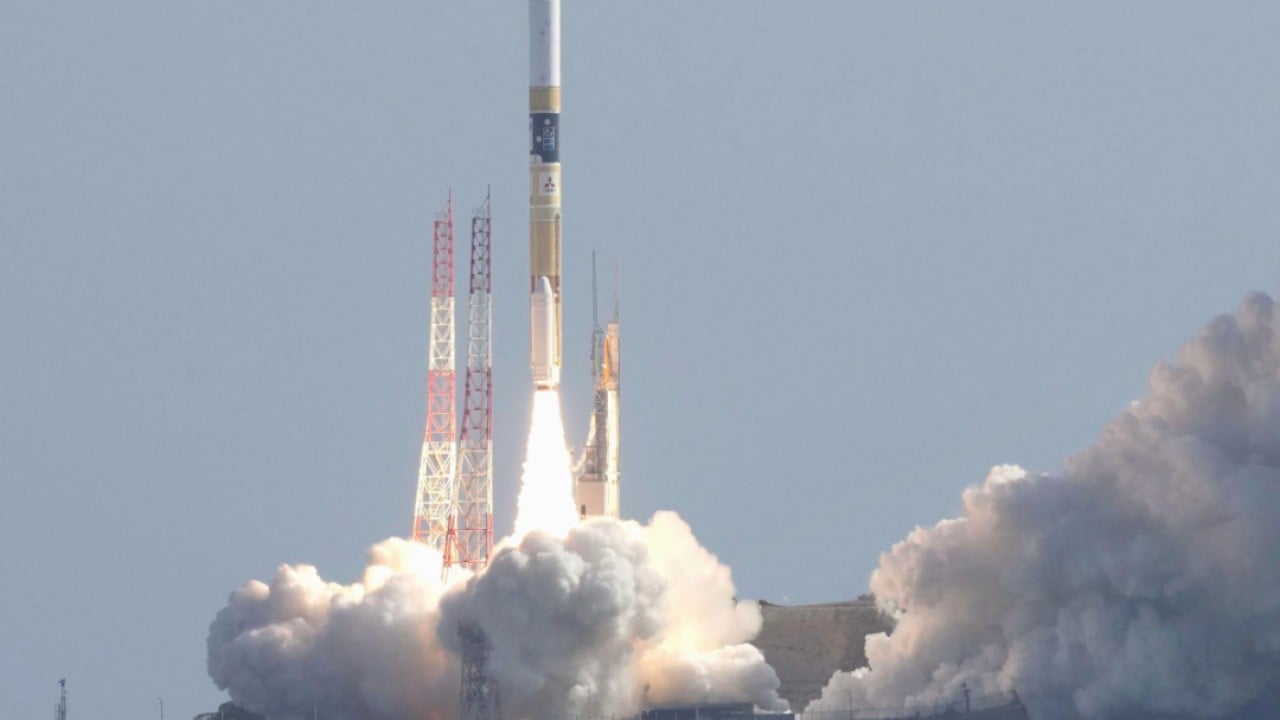
Japan launches rocket carrying moon lander to explore origins of the universe
Japan launches rocket carrying moon lander to explore origins of the universe
“The SLIM is operated with on-board batteries. The data acquired on landing is stored in the spacecraft, and we are currently working to maximise the scientific results by first transmitting this data back to Earth,” said JAXA official Hitoshi Kuninaka.
Japan’s mission is one of a string of new projects launched in recent years on the back of renewed interest in Earth’s natural satellite.
The Japanese craft – equipped with a shape-shifting mini-rover co-developed by the firm behind Transformer toys – has been designed to land with unprecedented precision.
If all went to plan, it will have landed within a target area just 100 metres (yards) across, far tighter than the usual landing zone of several kilometres (miles).
India rover completes moon walk as scientists look for signs of frozen water
India rover completes moon walk as scientists look for signs of frozen water
Success would restore hi-tech Japan’s reputation in space after two failed lunar missions and recent rocket failures, including explosions after take-off.
It would also echo the triumph of India’s low-cost space programme in August, when it became the first to land an uncrewed craft near the Moon’s largely unexplored south pole.
Japan’s space agency JAXA has already made a pinpoint landing on an asteroid, but the challenge is greater on the Moon, where gravity is stronger.
SLIM was meant to try to reach a crater where the moon’s mantle – the usually deep inner layer beneath its crust – is believed to be accessible at the surface.

“The rocks exposed here are crucial in the search for the origins of the moon and the Earth,” said Tomokatsu Morota, associate professor at the University of Tokyo specialising in lunar and planetary exploration.
This includes shedding light on the mystery of the Moon’s possible water resources, which will also be key to building bases there one day as possible stopovers on the way to Mars.
“The possibility of lunar commercialisation depends on whether there is water at the poles,” Morota said.
More than 50 years after the first human moon landing, many countries and private companies are attempting to make the trip anew. But crash-landings, communication failures and other technical problems are rife.
Moon landing attempt by US firm appears doomed after ‘critical’ fuel leak
Moon landing attempt by US firm appears doomed after ‘critical’ fuel leak
This month, US private firm Astrobotic’s Peregrine lunar lander began leaking fuel after take-off, dooming its mission.
On Thursday, contact with the spaceship was lost over a remote area of the South Pacific after it likely burned up in the Earth’s atmosphere on its return.
Nasa has also postponed plans for crewed lunar missions under its Artemis programme.
Russia, China and other countries from South Korea to the United Arab Emirates are also trying their luck.

03:10
India makes historic landing on the lunar south pole, becoming the 4th country to land on the moon
India makes historic landing on the lunar south pole, becoming the 4th country to land on the moon
Previous Japanese lunar missions have failed twice – one public and one private.
In 2022, the country unsuccessfully sent a lunar probe named Omotenashi as part of the United States’ Artemis 1 mission.
In April, Japanese start-up ispace tried in vain to become the first private company to land on the Moon, losing communication with its craft after what it described as a “hard landing”.
US-China space race fuelled by lunar landings and orbital ‘parking spots’
US-China space race fuelled by lunar landings and orbital ‘parking spots’
SLIM’s spherical metal probe, slightly bigger than a tennis ball and weighing the same as a large potato, is meant to pop open like a Transformer toy.
Equipped with two cameras, the two halves of the SORA-Q sphere are designed to slot out and propel the gadget around either in “butterfly” or “crawl” mode, JAXA says.
Back on Earth, a toy version costs 21,190 yen (US$140) and, according to its promotional video, can roll around a living room taking pictures – for example, of a buyer’s cat.