


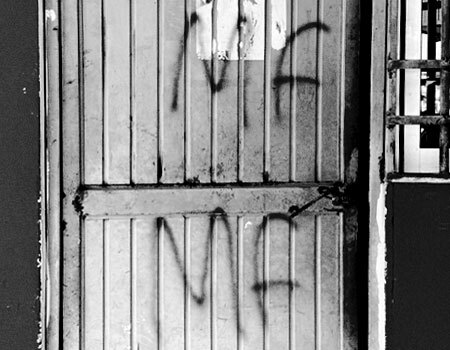
The Mayiza, also known as the Mayos, is a faction of the Sinaloa Cartel that is associated with Ismael Zamabda García, alias “El Mayo,” one of the group’s most storied leaders. The cell is currently led by one of his sons, Ismael Zambada Sicairos, alias “Mayito Flaco,” who reportedly operates out of the city of Culiacán, in the northwestern state of Sinaloa.
After El Mayo’s controversial arrest in July 2024 by US authorities, the Mayiza has been engaged in an ongoing war with another Sinaloa Cartel faction called the Chapitos, which is led by the sons of Joaquín Guzmán Loera, alias “El Chapo,” formerly El Mayo’s primary criminal associate.
The Mayiza have accused the Chapitos of being behind El Mayo’s arrest. The resulting fighting has sparked a wave of violence primarily in Culiacán, where homicides, forced disappearances, and armed confrontations have increased.
History
Between the end of the 1980s and the beginning of the 1990s, El Mayo formed an alliance with El Chapo, the Beltrán Leyva brothers, and several other Sinaloa-based drug traffickers to establish controls on drug production and trafficking, share infrastructure, and secure protection. This would eventually lead to the creation of the Sinaloa Cartel.
Despite banding together, each faction was primarily composed of family members and other close contacts, and was left in charge of managing its own operations. Other traffickers and local authorities later started referring to El Mayo’s faction as the Mayiza.
While El Mayo was in charge of directing his faction’s operations, for many years he largely stayed out of the crosshairs of authorities even as several of his sons were arrested and jailed.
In 2009, for example, one of his oldest sons, Vicente Zambada Niebla, alias “El Vicentillo,” was arrested in Mexico City and then extradited to the United States the following year. At the time, it was suspected that Vicentillo was preparing to become the heir to his father’s criminal empire. During his US trial, his defense team argued that he was actually operating as an undercover informant for the Drug Enforcement Administration (DEA), although US authorities denied that. In 2015, a judge sentenced him to 15 years in prison.
Some of El Mayo’s other sons have also been jailed. US anti-drug agents arrested Serafín Zambada Ortíz, alias “El Sera,” alongside his wife in November 2013 at a border crossing in the state of Arizona. The next year, El Sera pled guilty to drug trafficking charges. He was originally sentenced to 10 years in prison, but after negotiating a deal with US authorities, his sentence was reduced to five years. He was released from prison in 2018.
Mexican authorities captured another son, Ismael Zambada Imperial, alias “Mayito Gordo,” in 2014 and extradited him to the United States in 2019. He was convicted of drug trafficking charges and originally sentenced to nine years in prison. But in 2022, Mayito Gordo negotiated a plea deal with US prosecutors that led to his release.
Meanwhile in Sinaloa, the sons of El Chapo Guzmán reportedly started looking for a larger role for themselves within the Sinaloa Cartel after their father’s 2014 capture. This led to several disputes with the Mayiza.
Between 2017 and 2021, a number of events further strained that relationship. In 2019, for example, Vicentillo was one of the main witnesses to testify against El Chapo during his trial, which resulted in El Chapo’s conviction and sentence of life in prison without the possibility of parole plus an additional 30 years. For his part, Vicentillo was released from prison in April 2021, according to the US Federal Bureau of Prisons (BOP).
The armed wings of the Chapitos and Mayiza also started to wage war against one another along strategic drug trafficking corridors on the US-Mexico border. This caused violence to spike in places like the Valley of Mexicali and several cities in the northern state of Sonora. In June 2021, for example, a group associated with the Chapitos assassinated a Mayiza operator known as “Morgan.” At the scene, a message was left threatening Martin Elenes Araujo, a member of the Rusos, the main enforcement wing of the Mayiza.
While subsequent years saw a period of fragile peace between these and other Sinaloa Cartel factions, that all came crashing down following El Mayo’s capture in 2024.
One of the leading theories surrounding El Mayo’s arrest was that he was deceived and taken against his will by Joaquín Guzmán López, another of El Chapo’s sons and a member of the Chapitos. Since then, both sides have waged an increasingly bloody war motivated by revenge and retaliation.
Criminal Activities
The Mayiza’s main criminal activity is drug trafficking. The group supervises production and trafficking of marijuana, heroin, methamphetamine, and fentanyl from northwest Mexico and traffic cocaine from South America through Mexico. At the same time, US authorities have linked the group to sophisticated money laundering operations involving businesses across the country.
Some other allied factions and armed cells, such as the Rusos, are also involved in small-scale drug trafficking and charge fees to human smuggling networks operating in the areas they control.
Geography
The Mayiza’s presence is concentrated primarily in the south side of the city of Culiacán and in the historic drug production region known as the Golden Triangle, which is composed of municipalities stretching through the states of Sinaloa, Durango, and Chihuahua. The group also maintains contact with different allies, clients, and suppliers across North America; several countries in Europe; and parts of Asia, Africa, and Oceania.
Its main armed wing, the Rusos, operates mostly in the states of Baja California and Sonora along the US-Mexico border, as well as in the Pacific port of Acapulco.
Allies and Enemies
Despite current and past moments of intense conflict, the Mayiza had for many years formed an alliance with the Chapitos to regulate certain criminal economies in Sinaloa. That changed in July 2024 following the Chapitos’ alleged betrayal of El Mayo.
The Mayiza’s rupture with the Chapitos also exacerbated tensions with other smaller groups loyal to the Chapitos, such as the Chimales and the Ninis. However, there are other internal Sinaloa Cartel factions that continue to operate with the Mayiza.
In May 2025, local media reported that alleged Guasave Cartel leader Fausto Isidro Meza Flores, alias “Chapo Isidro,” had formed an alliance with the Mayiza to remove the Chapitos from the area.
Since El Mayo’s capture, the Rusos have also actively engaged in protecting areas under the Mayiza’s control. The Rusos reportedly broke off their ties to the Chapitos after deciding not to participate in the effort to free Ovidio Guzmán in 2019 after his brief arrest, which became known as the Culiacanazo.
Among the other local allies of Mayito Flaco are the Flecha MZ, the Sombreiza, the Rugrats, and the Cazadores, led by Isaías Valentín Orona Armador, alias “El Comanche,” according to local media reports.
Prospects
Since the arrest of El Mayo, the Mayiza has confronted one of the greatest threats to its survival. The different factions and allies associated with the group have become increasingly vulnerable due to the exposure provoked by the ongoing war with the Chapitos. This has allowed Mexican authorities to capture several key operators and associates.
The conflict has also led to growing social rejection of the criminal group, which broke social ties that the group spent decades constructing in certain communities. Still, the decentralized nature of the drug trade suggests that the Mayiza’s criminal operations will survive the current conflict.