


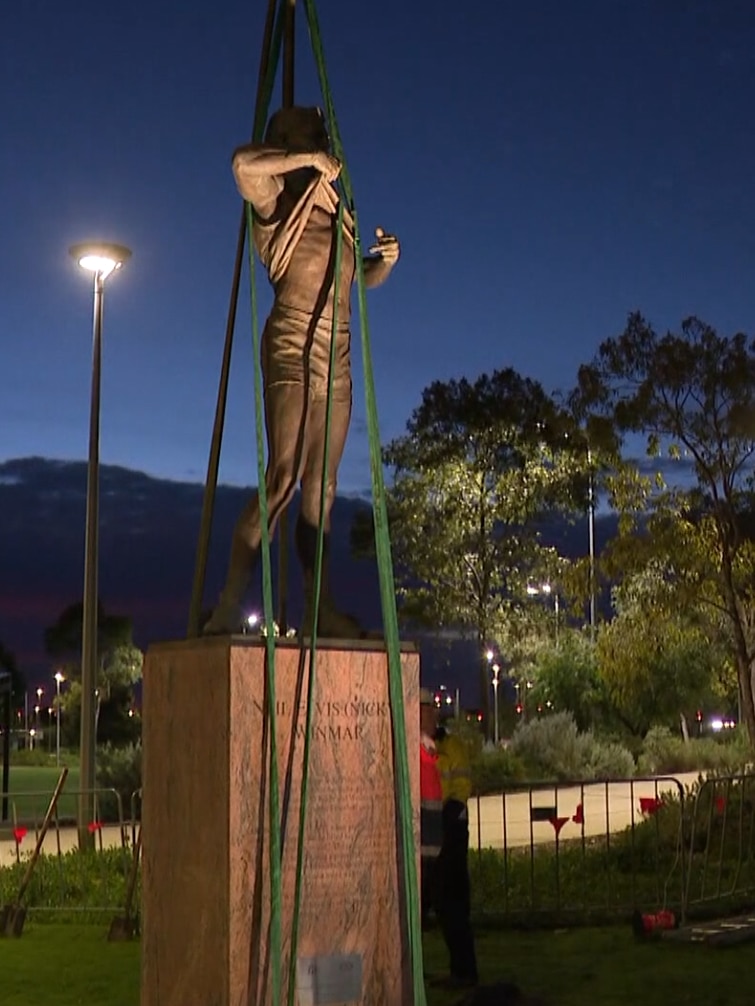
The statue of former AFL player Neil Elvis “Nicky” Winmar has been taken down at Perth Stadium less than two days after a Victorian court found him guilty of assaulting a woman.
The bronze statue was unveiled in July 2019, in the lead-up to NAIDOC Week and as a symbol against racism in the AFL — seven years later, it was removed on the first day of NAIDOC Week.
The bronze statue was taken down by a crane, and a crew of roughly six people around 6:45am on Sunday local time after WA Premier Roger Cook ordered its removal on Friday.
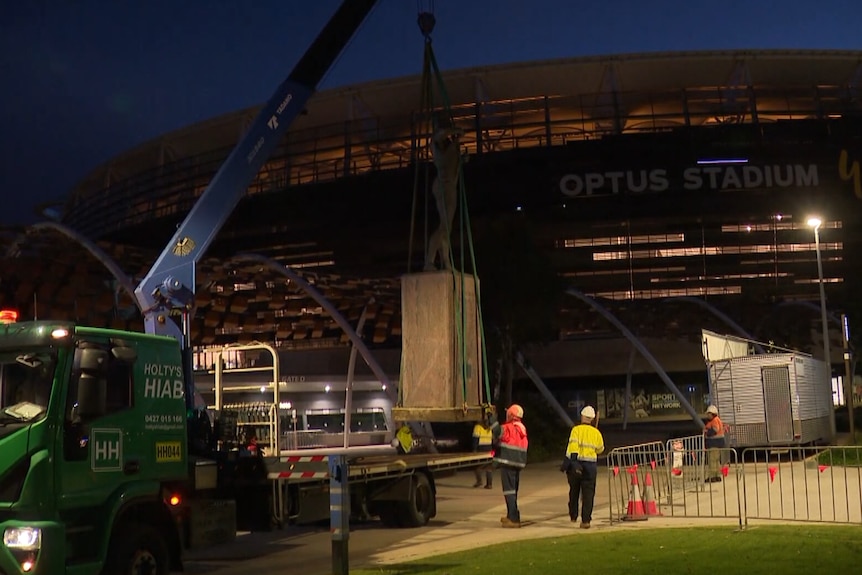
A crane removed the statue this morning. (Supplied)
A spokesperson for VenuesWest — which owns and manages sport venues on behalf of the state government — said a decision on what would happen with the statue hadn’t been made.
“The statue will be securely stored while its future is considered,” they said.
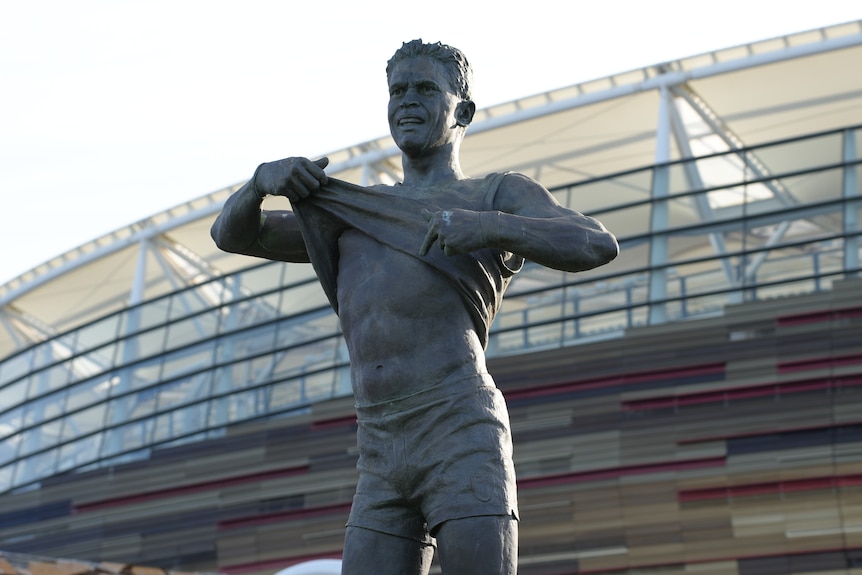
A VenuesWest spokesperson says a decision on the future of the stature hasn’t been made. (ABC News: Lauren Smith)
“As per the premier’s direction and in consultation with the AFL, VenuesWest can confirm that the Nicky Winmar statue has been removed.”
On Friday, a Bendigo Magistrate found Winmar guilty of assaulting a woman in northern Victoria in 2025.
The court heard the woman, who cannot be identified for legal reasons, was “fearful” for her life, as Winmar dragged her by the hair and smashed her head against a wooden door four times.
‘Never acceptable’
In response, Mr Cook directed VenuesWest to remove the statue, stating violence against women was “never acceptable” and it was “important we send a strong message to the community”.
On Sunday, WA cabinet minister John Carey said the statue’s withdrawal had nothing to do with the start of NAIDOC Week, or the former player’s actions against racism in the AFL.

John Carey thinks most West Australians support the statue being taken down. (ABC News: Courtney Withers)
“It is not about race, it is about the fact that he was found guilty … of violence against a woman,” he said.
“This was violence, it’s unacceptable … the premier has made it a very clear message and I think the majority of West Australians will support this decision.”
Male leaders speaking out
Centre for Women’s Safety and Wellbeing chief executive Alison Evans welcomed the premier’s decision, saying it was “heartening” to see a male leader speaking out against violence.
“It sets a standard that says violence against women and children in our communities is not acceptable,” Ms Evans said.
“It really helps to shift those community attitudes, and it demonstrates those values of empathy, and care and accountability, which we really want our young men and boys to see as well.

Alison Evans hopes discussion around the situation can shift attitudes in young men. (ABC News: Keane Bourke)
“Hopefully, when it’s our male leaders speaking out, it does encourage other men in our community to speak out as well.”
The sculpture was unveiled in 2019, immortalising the moment the Noongar man raised his St Kilda guernsey and pointed to his skin after facing racial abuse from spectators during an AFL match against Collingwood at Victoria Park in 1993.
The unveiling ceremony took place before the 50th Western Derby and in the lead-up to NAIDOC Week.
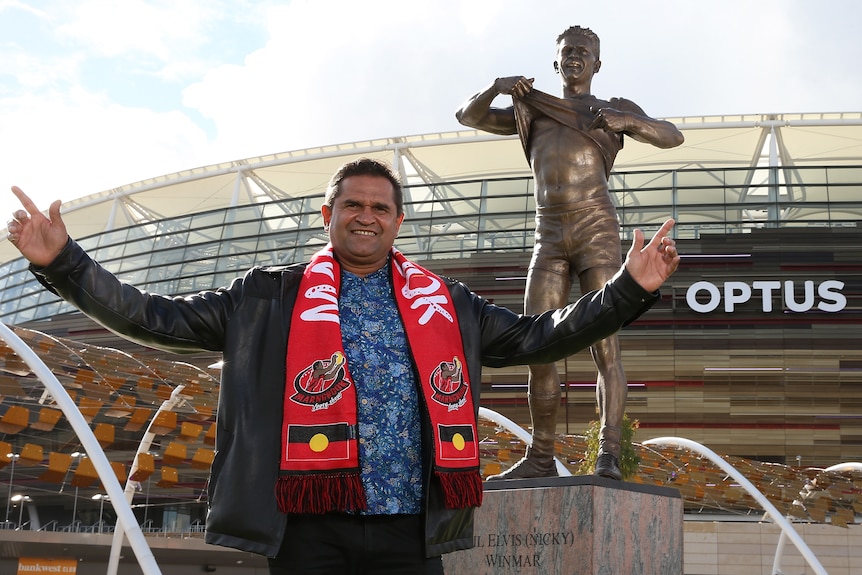
Winmar at the public unveiling of the statue in 2019. (Getty Images: Paul Kane)
When the statue was erected, then-premier Mark McGowan said it would “serve as a reminder that racism has no place in sport, or in society generally”.
At the time, the WA government described it as a “powerful symbol of Aboriginal pride and opposition to racism in Australian sport”.
The statue was commissioned by the AFL and produced by Melbourne sculptor Louis Laumen with the help of a crowdfunding campaign.
The interaction the statue depicts was considered to be one of the most important moments in the AFL’s history, which partially contributed to the introduction of the code’s anti-vilification laws.
Statue removal ‘needed further discussion’
Football historian Sean Gorman has previously written on racism in the sport, and said the decision to remove the statue so quickly was “problematic”.
“The decision to take it down, I suppose wasn’t terribly shocking, the speed with which the statue came down was,” he said.
“There seems to be a very little sort of discussion in terms of consulting with key stakeholders … it needed further discussion.
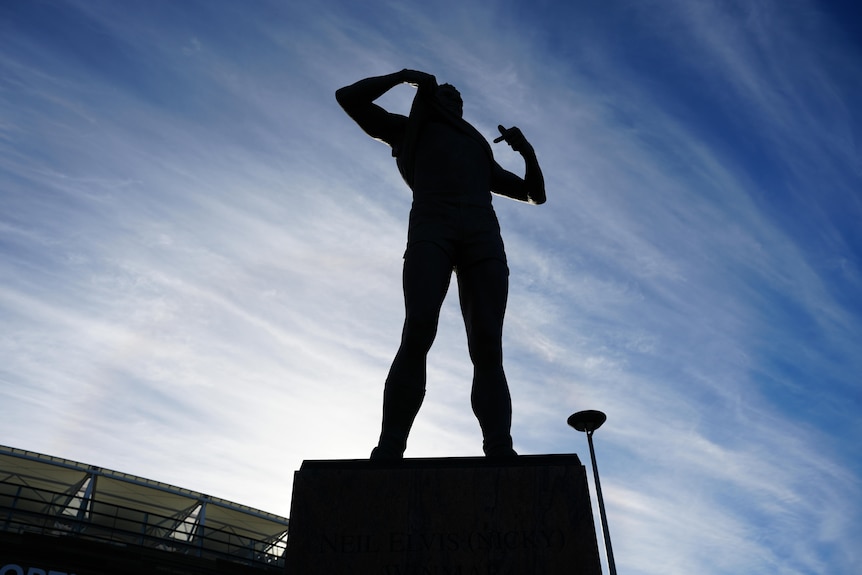
The Winmar statue has been removed from Perth Stadium. (ABC News: Lauren Smith)
“This is a big iconic moment in Australian history and to take it down in the way that they did it overnight and without the due diligence or messaging that they needed to give to the community I think is, again, problematic.”
Dr Gorman said it was important to consider what statue represented, and the symbolism of taking it down.
“For 30-odd years it’s been the main focus of many journal articles, TV pieces, documentaries, graffiti, so on and so forth,” he said.
“It’s been a really significant part of understanding these issues … The ways that this now, is shaped by virtue of what the government have done, puts a very strange full stop on all of that.”
NAIDOC Week runs from July 5 to 12 this year.
dan