


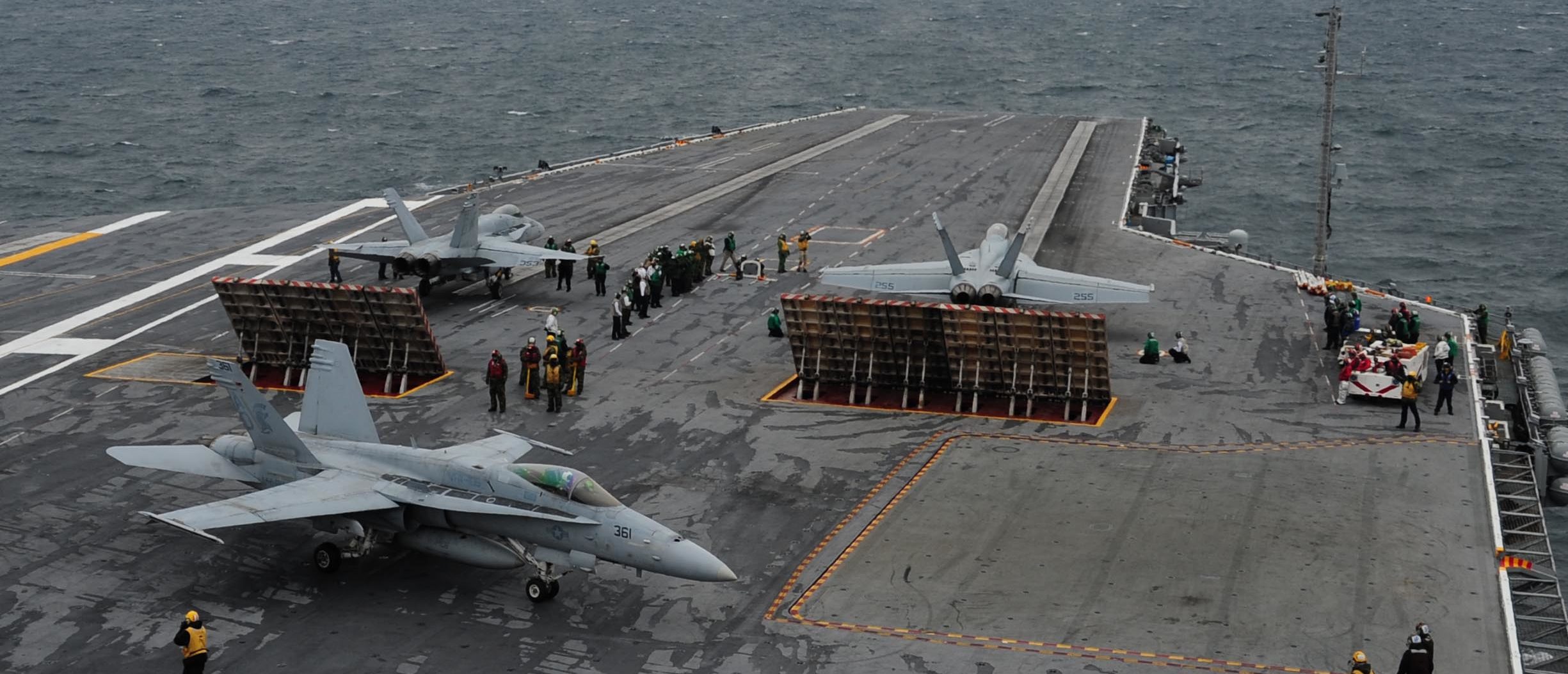
The redeployment of U.S. warships to the Middle East has left a significant strategic void in the Pacific, heightening concerns about regional security as China increases its aggressive actions.
By yourNEWS Media Newsroom
The recent redeployment of U.S. warships from the Pacific to the Middle East has created a notable strategic void in a region crucial to global security, particularly as tensions with China and its neighbors escalate. The USS Lincoln Strike Group, led by the Lincoln aircraft carrier, departed the U.S. Indo-Pacific Command (INDOPACOM) area earlier in August and arrived at the U.S. Central Command (CENTCOM) area of operations last week. The shift has left the Pacific without a U.S. aircraft carrier presence for the foreseeable future, a situation that experts warn could embolden China.
The Lincoln’s departure has sparked concerns, especially as China continues to assert its territorial claims in the South China Sea, often through aggressive actions against U.S. allies like the Philippines and Taiwan. Just this past Sunday, Chinese coast guard ships fired water cannons and rammed Philippine fishing vessels, a recurring incident in recent months, according to The Associated Press. Additionally, Japan accused a Chinese warplane of violating its airspace on Monday, a significant escalation that hasn’t occurred in years, The Japan Times reports.
The decision to relocate the USS Lincoln and other naval assets is seen as a response to escalating tensions in the Middle East, particularly the growing threat posed by Iran. The U.S. is bolstering its military presence in the region amid fears of a potential conflict involving Israel and Iranian-backed forces such as Hezbollah. Over the weekend, Israel and Hezbollah exchanged hundreds of missiles, rockets, and drones in one of the most significant crossfire incidents in recent months, according to Reuters.
The Lincoln Strike Group has now joined the USS Theodore Roosevelt in the CENTCOM theater, enhancing U.S. defense capabilities to support Israel, according to the Pentagon. The move underscores the U.S.’s commitment to its Middle Eastern allies but raises questions about the security of the Indo-Pacific region, where the absence of a carrier could leave a critical gap until mid-September, as reported by Naval News.
USS Abraham Lincoln (CVN 72), equipped with F-35C and F/A-18 Block III fighters, entered the U.S. Central Command (USCENTCOM) area of responsibility.
The USS Abraham Lincoln (CVN 72), the flagship of Carrier Strike Group 3, is accompanied by Destroyer Squadron (DESRON) 21 and… pic.twitter.com/RKoJQshigR
— U.S. Central Command (@CENTCOM) August 21, 2024
China’s increasingly aggressive posture in the region, particularly toward Taiwan, continues to strain its relations with the U.S. and its allies. China’s military frequently conducts drills and blockades around Taiwan, which it views as a breakaway province. Chinese officials have also expressed their “serious demands” regarding Taiwan to U.S. President Joe Biden’s national security adviser, Jake Sullivan, during his visit to Beijing this week, as reported by Chinese state media.
As the U.S. balances its strategic priorities between the Middle East and the Pacific, the temporary absence of an aircraft carrier in the Pacific raises concerns about the region’s stability and the potential for increased Chinese aggression. The Pentagon has yet to comment on the situation, leaving many to speculate on the long-term implications of this significant shift in U.S. military presence.
For further details, refer to the original sources on the Defense Department’s news release and reports from The Wall Street Journal.
Featured Photo: U.S. Navy photo by Mass Communication Specialist Seaman Jenna Kaliszewski/Released

yourNEWS.com is a premier news dissemination platform operating at local, state, and national levels. Our unwavering commitment lies in the restoration of journalistic integrity. We envision news delivery in its purest form: untainted by bias and firmly grounded in truth. Embracing transparency, we refrain from censorship. By circumventing the gatekeepers of misinformation and government narratives, we empower ‘the people’ with the rightful control over the press. yourNEWS is on the cusp of reshaping the media landscape, cultivating the largest news platform globally. We are not just forecasting change—we’re creating it. The views expressed in this article are those of the author and do not reflect the official position of yourNEWS. (Note: Articles may not be original content. Reference byline for original source.)