


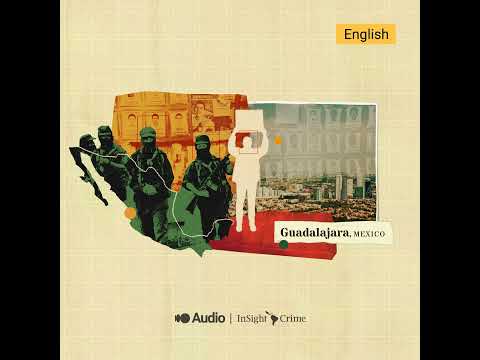
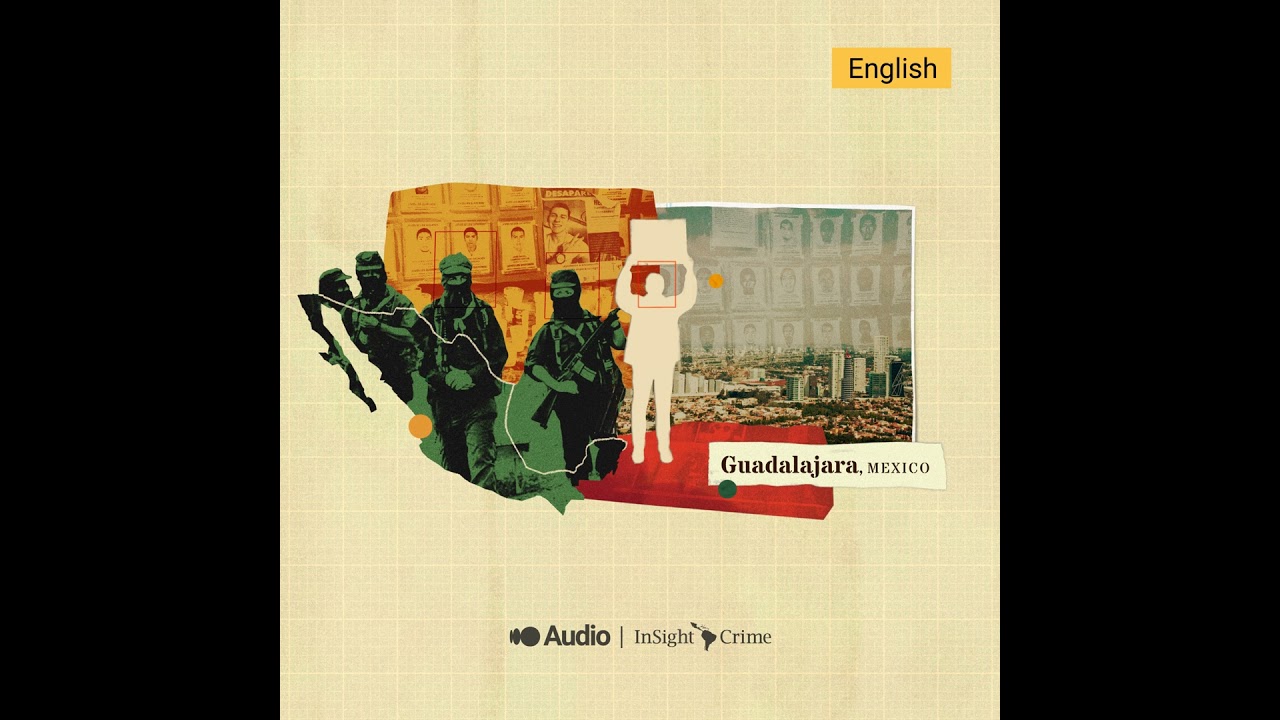
Héctor’s son disappeared in Guadalajara. He suspects that those who should be searching for him may have been involved.
*This episode is also available in Spanish.
About the Episode
Dani was one of over 8,000 people to go missing in his hometown of Guadalajara, and one of 130,000 around Mexico, where the word “disappeared” has become part of everyday life.
In Guadalajara, most of disappearances are blamed on the Jalisco New Generation Cartel (CJNG), which uses them as a tool to exert social control, intimidate the population, punish people, and even recruit new members.
But for Héctor, that explanation did not fit his son Dani’s story. As he began gathering clues on his own, he started to suspect that the reality was more complex and disturbing: that the very authorities who were supposed to protect his son and search for him may have been behind his disappearance.
We visited Héctor at his bunker-like home, where he has installed cameras, locks, and reinforced walls after years of intense harassment linked to his search for his son. From there, we retraced Héctor and Dani’s story and explored some uncomfortable questions: What happens when families lose trust in the very institutions responsible for searching for their loved ones? Could the state be enabling disappearances?
Forced Disappearances in Mexico
Criminal violence in Mexico has taken on new shapes and forms over the last decade. In parts of the country, homicides have remained stable or even gone down. But disappearances have risen, and become a defining feature of areas dominated by organized crime. Victimsare often never found, or only their remains are recovered. The absence of a body further complicates investigations in a justice system already overwhelmed with cases, and marked by high levels of impunity and corruption. That’s why it is often the victims’ own families who end up taking on the search for their loved ones.
Factions of the Sinaloa Cartel have used disappearances as a weapon of war to punish people they believe were affiliated with rival groups or accused of violating the organization’s rules. Groups such as the Jalisco New Generation Cartel (CJNG) have also used abductions to exert social control through fear and, in some cases, as a form of forced recruitment. Yet many families never learn why their loved ones were taken.
Héctor and Dani’s case shows how corrupt authorities are often complicit; blurring the line between organized crime and the state.
Credits
Script and Narration
Victoria Dittmar y Steven Dudley
Research
Victoria Dittmar, Peter Appleby, Mike LaSusa y Analy Núñez
Editing
Liza Schmidt, Tomás Uprimny, Steven Dudley
Production
Steven Dudley and Elisa Roldán
Creative Direction
Elisa Roldán
Sound Design
Valentina Fonseca and Juan Felipe Pulido
Graphic Design
Isabella Soto
Marketing and Social Media
Paula Rojas and Isabella Soto