


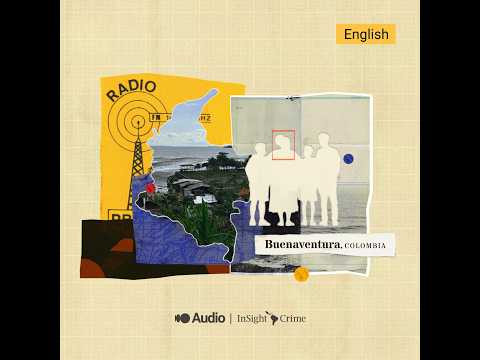
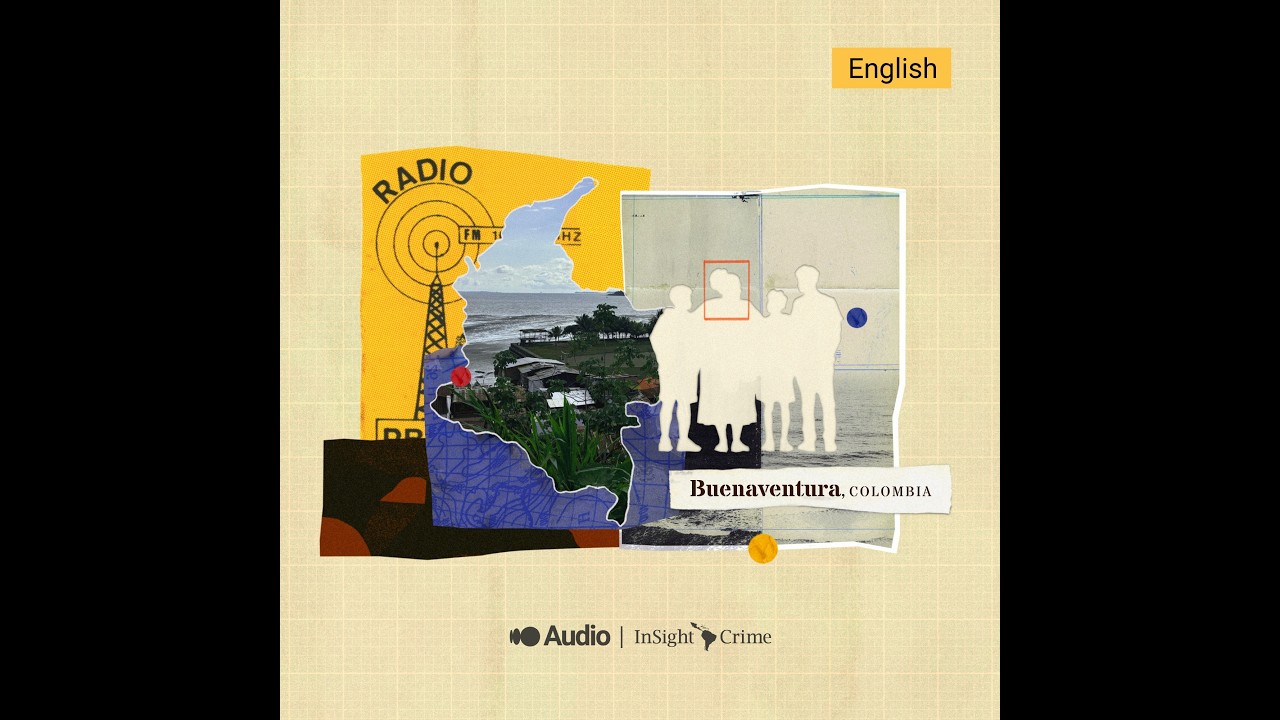

A mother searches for three missing children amid the wreckage of decades of armed conflict in Buenaventura, Colombia.
*This episode is also available in Spanish.
About This Episode
Buenaventura is Colombia’s main Pacific port and one of the continent’s most strategic corridors for cocaine trafficking. For decades, the city has been a battleground between guerrilla groups, paramilitaries, and criminal gangs fighting for control of drug routes toward Europe and North America. The result is a city where men and women are killed, children disappear, and families learn to live with grief and uncertainty as a permanent companion.
In this episode, we travel to Buenaventura and meet Elena, an Afro-Colombian woman in her sixties who arrived in the city as a child after armed groups killed her parents in her hometown. Buenaventura took her in, and she made it her own. She had seven children and built a life.
But the war that brought her there never left. Three of her children have disappeared. Two vanished without a trace, leaving Elena searching in vain for clues to their fate. The skull of the third was found in an estuary three years after he disappeared.
Through Elena’s story, we investigate how the armed conflict in Buenaventura has corroded the social fabric of the city. And we explore how violence does not just kill—it erases people, breaks families apart, and leaves mothers waiting for answers that sometimes arrive too late and sometimes never arrive at all.
Transcription
Context: Buenaventura, Colombia’s Armed Conflict and Criminal Violence
Buenaventura, Colombia, concentrates some of the country’s starkest contradictions. It is Colombia’s most important Pacific port and handles around 60% of the country’s foreign trade. At the same time, it is one of the cities with the highest levels of poverty, unemployment, and violence in the country.
Its geographic position has made it a key hub for drug trafficking: it sits next to Colombia’s largest coca-producing region and has direct access to maritime routes toward Europe and North America. Its strategic importance first attracted the rebels of the Revolutionary Armed Forces of Colombia (Fuerzas Revolucionarias de Colombia – FARC), then their bitter enemies in counterinsurgency groups.
Both the paramilitaries and the FARC have demobilized following peace accords, but in both cases the power vacuum was filled by successor groups and local gangs.
Today, two groups in particular—the Espartanos and the Shottas—fight a neighborhood-by-neighborhood war for control of the city’s strategic corridors, generating waves of forced displacement and disappearances that disproportionately affected people in low-income neighborhoods.
Forced disappearances in Buenaventura have a particular characteristic: many bodies are thrown into estuaries—the waterways surrounding the city—making the identification of remains extremely difficult and prolonging families’ suffering indefinitely. Victims’ organizations have spent decades demanding a stronger response from the Colombian state.
Credits
Research, Script, and Narration
Juliana Manjarrés and Henry Shuldiner
Editing
Tomás Uprimny, Elisa Roldán, Liza Schmidt, and Steven Dudley
Production
Steven Dudley and Elisa Roldán
Creative Direction
Elisa Roldán
Sound Design
Valentina Fonseca and Juan Felipe Pulido
Graphic Design
Isabella Soto
Marketing and Social Media
Paula Rojas and Isabella Soto