


The race is likely to lead to opposition from human rights groups accusing Rwanda of sportswashing, as has been the case with its sponsorship of Premier League football clubs Arsenal and Aston Villa.
Rwanda’s east-central African neighbour, the Democratic Republic of Congo, has filed a case against the country at the International Court of Justice (ICJ), accusing it of breaching multiple international treaties covering genocide prevention, racial discrimination, women’s rights and torture.
A spokesperson for F1 said: “We have the opportunity to inspire and bring the passion of F1 to 100 million people across Africa and sport can be a positive force for good.”
But Felix Jakens, Amnesty International UK’s head of campaigns, said: “Rwanda is buying into the world’s biggest sports to polish its image and deflect from its appalling human rights record.
“Formula 1 says sport can be ‘a positive force for good’. That rings hollow if F1 shrugs off who it is partnering with.
“Formula 1 must not be a bystander. It should use its influence with the Rwandan authorities to push for change, rather than lend its brand to a PR exercise.”
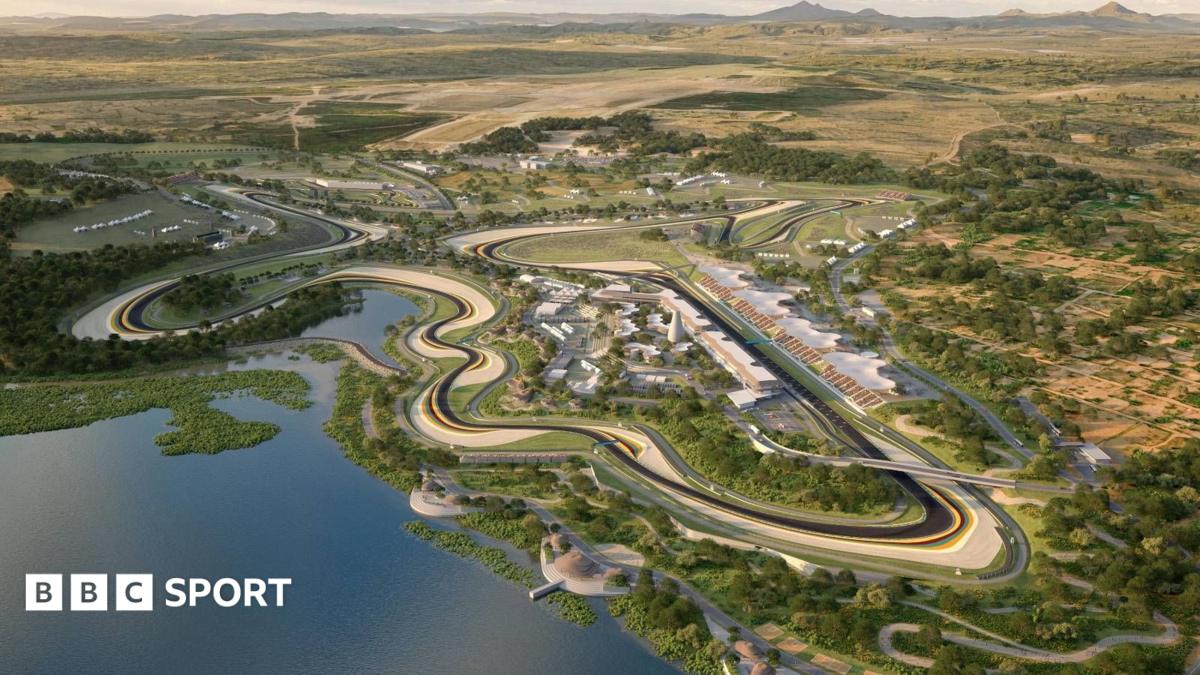
The track’s build process will be overseen by three companies, with long-time F1 track architect Tilke and DAR working alongside WurzDesign as the creator of the circuit.
It is designed to be fast and flowing, with significant elevation change, using the natural contours of Rwanda’s hilly landscape.
The first grand prix in Africa was the final round of the World Championship in Morocco in 1958.
South Africa hosted a race during the apartheid era – from 1960-66 in East London, now known as KuGompo City, before the race moved to Kyalami near Johannesburg from 1976-85.
Kyalami returned for two races in 1992 and 1993 as apartheid was coming to an end.
The country has held talks with F1 in recent years about a return at various venues, including Kyalami and Cape Town, but a deal has not proved possible.