


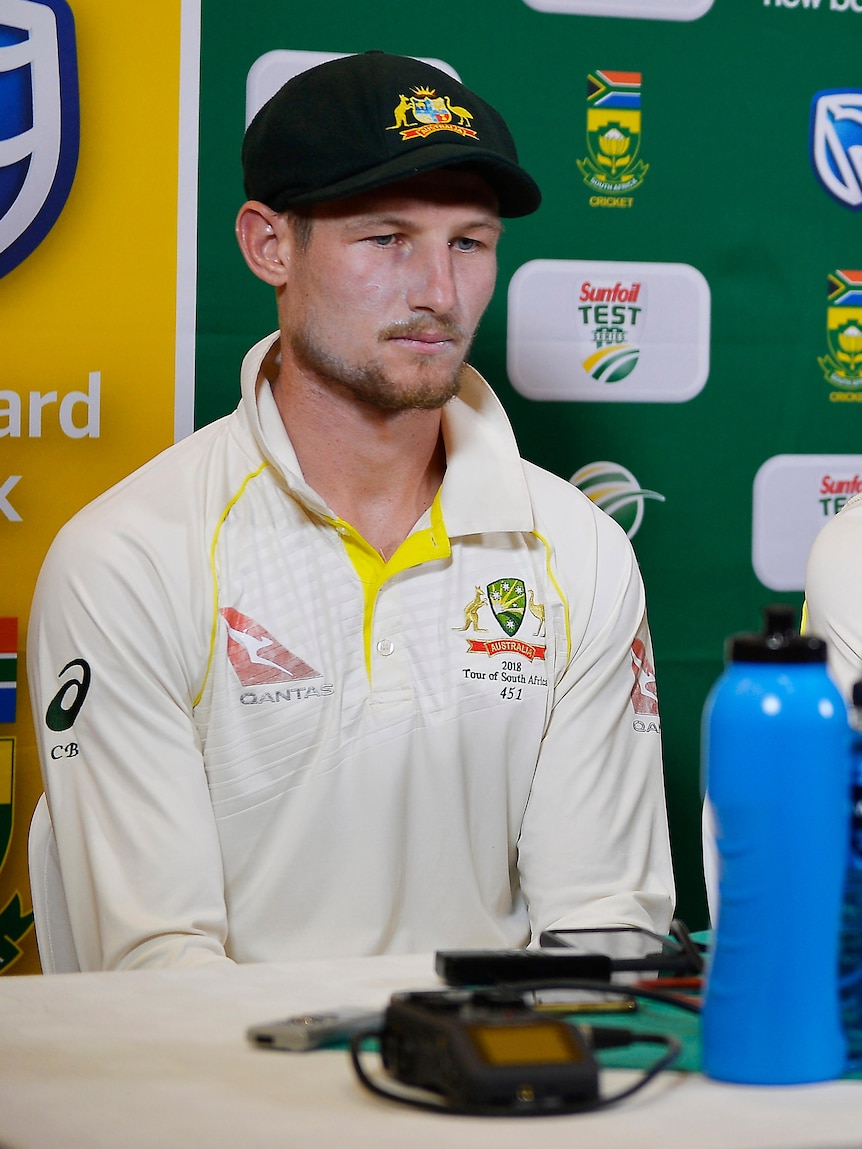
It’s possible to forget now, obscured by the fog of the past eight years, just how extreme the national fury was in the wake of Cape Town, 2018.
This was a sporting scandal that broke containment lines. From your barista to your bus driver to the prime minister, everyone had something to say.
Sandpapergate touched something sensitive in the national psyche. It busted precisely the wrong myth, bruised just the wrong bit of our collective ego.
And not even after Cameron Bancroft, Steve Smith and David Warner were tarred and feathered in the town square did the interest subside. Outrage was diluted by time into regret and curiosity, but there was a permanence to the damage done.
This next chapter was inevitable and in the end it was Usman Khawaja who put his hand up and first told his story, one now corroborated by his good mate Warner. The floodgates may well now open, and civil war could be at hand.
Khawaja’s version, which has trickled out gradually over the course of four days, is only barely revelatory. The notion knowledge of the sandpaper plot went beyond the banned trio is not new, stands to reason and has been hinted at consistently almost from day one.
Bancroft himself back in 2021 insinuated with only a degree of subtlety that the great conspiracy extended beyond he, Smith and Warner. It was Bancroft’s comments that prompted the indignant statement from the bowlers, which Khawaja claims further enraged Warner.
Given what Khawaja and Warner have now shared publicly, you can only imagine the atmosphere inside that dressing room. Fractured relationships may have been held together by shared on-field goals, but once that field is no longer shared, all bets are off.
The wider reaction has been curious. Some have pointed blame at Khawaja, which is unsurprising and something he likely expected.
It seems that by in going first he is seeking to clear the runway for Warner to eventually tell his tale in greater, potentially more scathing detail. Whether Khawaja has done this out of pure friendship, a form of penance or a little of both is something only he will know, but arguing he is simply trying to make a buck from a book is an oversimplification.
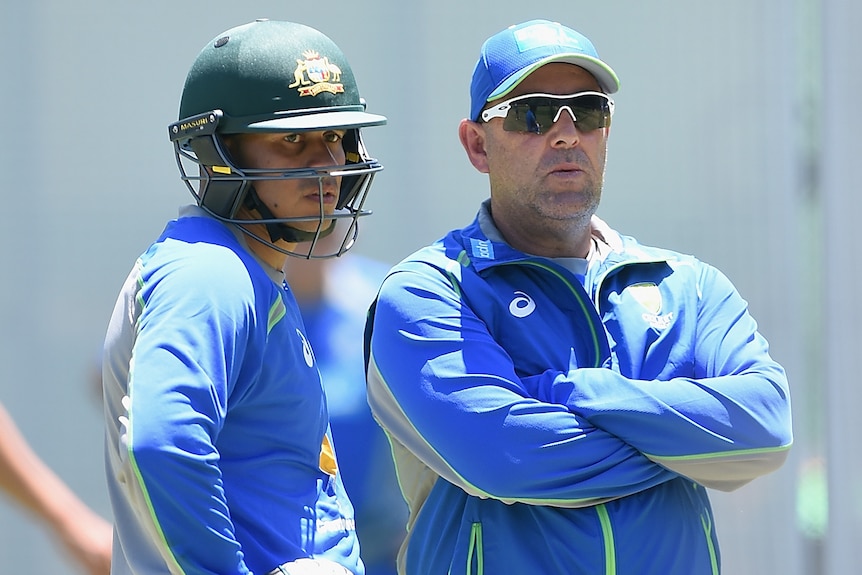
Darren Lehmann rejected Usman Khawaja’s claims, but said ball tampering had been widespread in international cricket. (Getty Images: Matt Roberts)
Darren Lehmann, meanwhile, the coach at the time and the only other person to suffer any significant repercussions, rejected some of Khawaja’s assertions but offered up the fact that ball tampering had been “going on for 150 years” by “everyone in the world”.
The substance of Khawaja’s claims have not sparked any great backlash or rebuttal, but the timing, source and medium of them have drawn ire. And from all of that combined, much can be gleamed.
The greatest sin committed by the Australian cricket team in Cape Town in 2018 — or at least the sin that cost them the most — was taking the Australian public for fools.
Lehmann was, of course, correct when he said that ball tampering had been around forever and that basically everybody did it. Performed with the correct amount of tact it could be passed off as one of the game’s “dark arts”, and even those who did get caught generally only received fines or very minor suspensions.
As you could sense in Lehmann’s tone, this was not as much of a taboo inside Australian cricket, even down to the dog-eat-dog ranks of grade cricket, as it was to the uninitiated who, quite justifiably, simply saw cheating as cheating and not part of some wider unspoken code.
In any case, before Cape Town most Australians were comforted by th belief that they were above such a thing. That Test match permanently shattered illusions. Mints and fingernails are one thing, but something as blatant and guileless as sandpaper? Not only were we ball tamperers, we were incredibly bad at it too.
Then came the first cover-up. Not the one Khawaja has allegedly lifted the lid on, but the instinctive, reflexive lie that came from Cricket Australia and the players on the day, when it was claimed that the contraband in Bancroft’s pocket was a piece of sticky tape covered with “granules” from the pitch.
As ever, the cover-up was worse than the crime. The cavalier hubris of the whole affair, from conception to execution to deception, stung our sense of Australian exceptionalism and prompted an exceptional punishment.
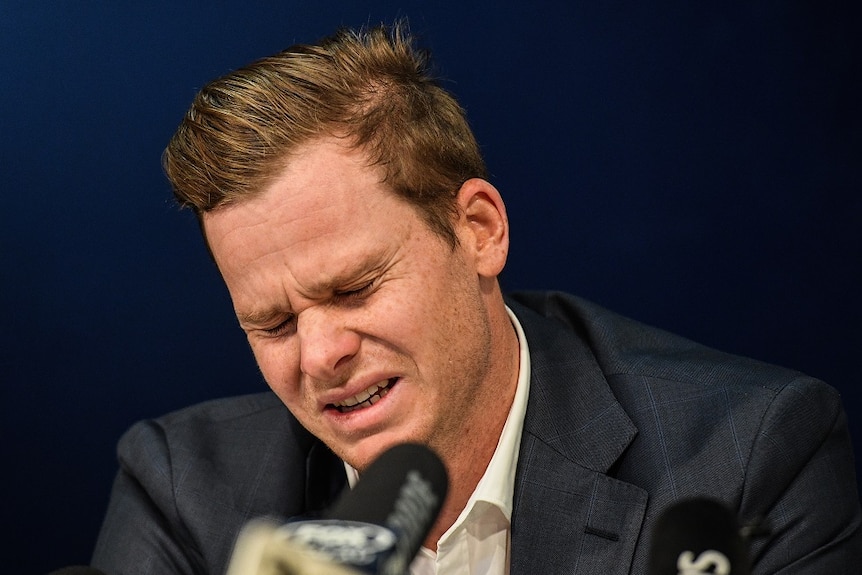
Steve Smith breaks down speaking to media at Sydney International Airport upon return from South Africa. (AAP: Brendan Esposito)
Eight years on and with a perpetual war of words seemingly pending, it’s hard to see how many lessons have been learned. “Ball tampering is bad” may be the extent of them.
Trying to wring the truth out of this mess may forever prove impossible, arguably by design. Khawaja said he was stunned that at no point during the investigation was he questioned or approached in any way. Indeed, if your goal is to ascertain what everybody knew, it does seem counterproductive not to simply ask everybody what they knew.
We have received hints at the truth, raised eyebrows and winking “no comments”. Even Khawaja’s recollections are in the main broad enough to avoid direct accusation, and therefore responsibility.
If everyone is ball tampering, then is anyone really ball tampering? If everyone knew about it, then who do you actually blame for it? At this point we’re left with Joe Pesci in JFK, screaming at us about mysteries wrapped in riddles inside enigmas. “Even the ball tamperers don’t know who did it! Don’t you get it?”
And all the while Australians, who have always cared less for a case of whodunnit and more about the irreparable breach of trust, are still being played for fools.
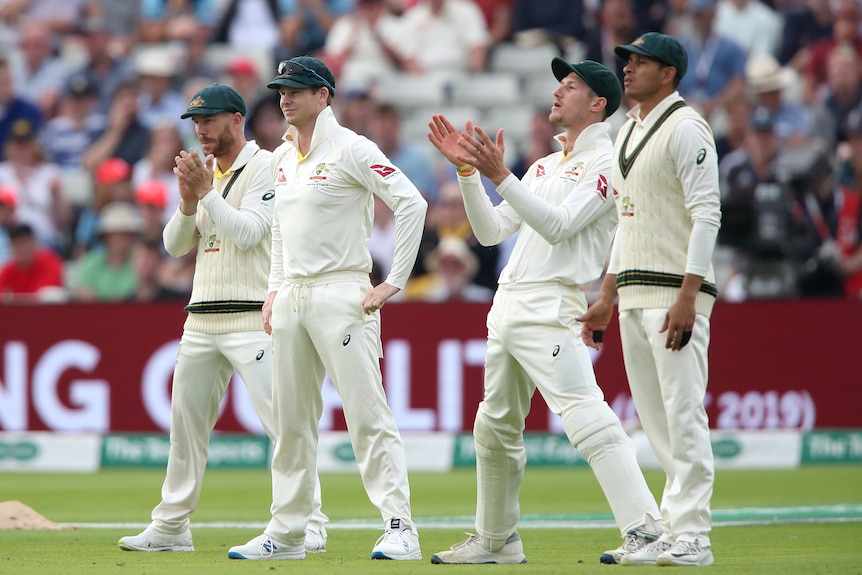
Usman Khawaja (far right) says David Warner, Steve Smith and Cameron Bancroft were the victims of the saga. (Getty Images: Nick Potts/PA Images)
Khawaja says Bancroft, Smith and Warner are the greatest victims and his point is valid. They suffered unprecedented consequences for not entirely unprecedented acts. If they did indeed carry the can for their equally implicated teammates then they have right to feel beyond aggrieved.
But the sense of loss felt by Australians was what justified those consequences at the time and what is fuelling the emotion of today. Rightly or wrongly, some element of our national identity will always be attached to our men’s Test cricket team and the wounds that remain stem from a feeling of betrayal.
Nothing we have learned this week helps to mend those wounds. Yet more cover-ups, more accusations, more denials, more quasi-confessions. The water is only muddier, the deeds of the past worth less, and the worst, surely, still yet to come.
dan