


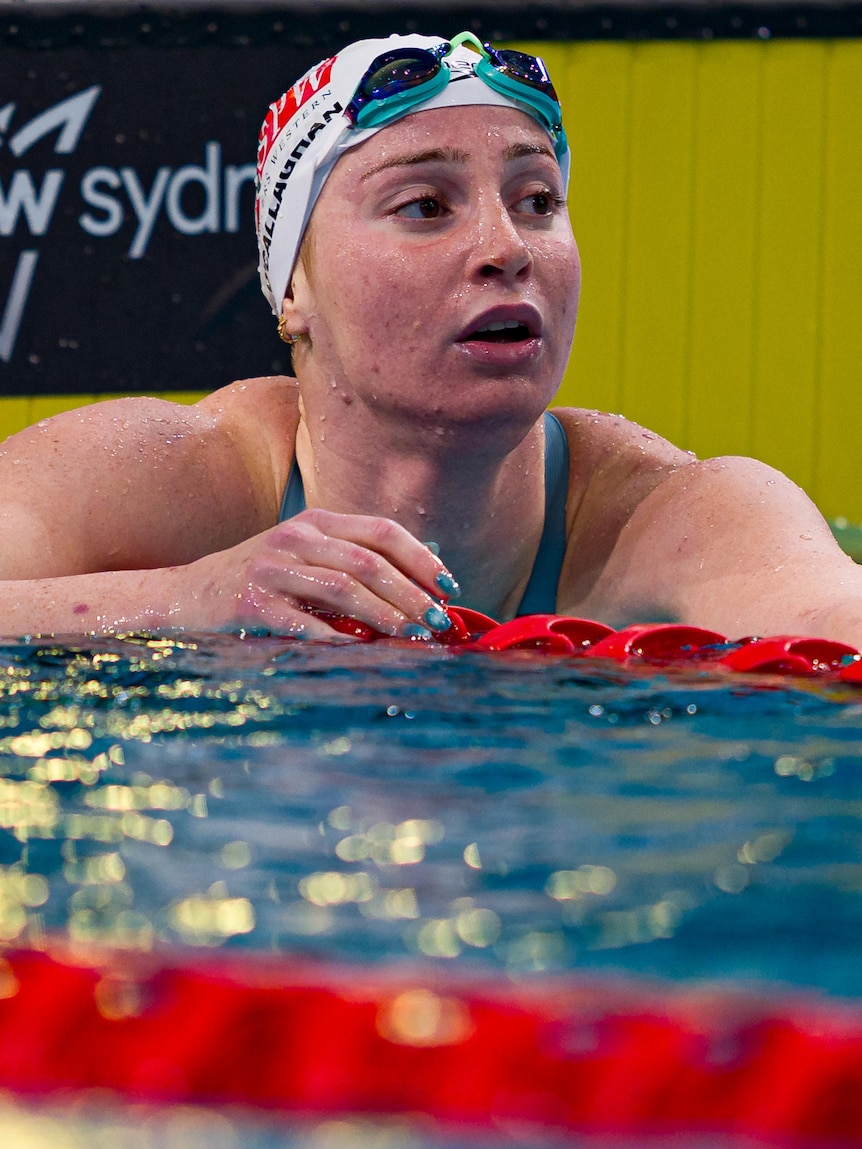
Swimming Australia has taken aim at the scourge of fake news and misinformation about its athletes head-on with an innovative world-first program, christened flickbait.
Designed primarily to help protect athletes, Swimming Australia has built a new resource, to be housed on its website, where fake news will be housed and debunked.
Swimming Australia said it had tracked sports and human-interest pages promoting fabricated content, be it anti-transgender narratives about Olympic swimmers or fabricated comments from high-performance coaches.
Swimming Australia said that although it continued to work positively with the eSafety Commissioner, DFAT and Meta, it still receives a number of reports from current athletes and family members about fake content on websites and social media platforms, much of which appears to be generated by AI.
Swimming Australia is no longer content to leave the issue to social media companies. (Getty Images: Andy Cheung)
In the interest of athlete welfare, Swimming Australia decided to take a proactive approach.
“We have seen a rise in the number of reports from our athletes and members of the Swimming Australia community of posts that are clearly from fake accounts and many have caused great distress,” Swimming Australia’s national wellbeing and engagement manager, Linley Frame, said.
“We will continue to work hard to close down these posts with the relevant bodies, but rather than sit back and see these posts liked, shared and commented on, we thought it was our responsibility to be proactive and denounce the content as flickbait.
“We will continue to address this challenge to counter misinformation — and disinformation — and we hope this resource proves an additional valuable tool in safeguarding our athletes and our community.
“We will do what we can, and this is not to say that posts we haven’t addressed are accurate.”
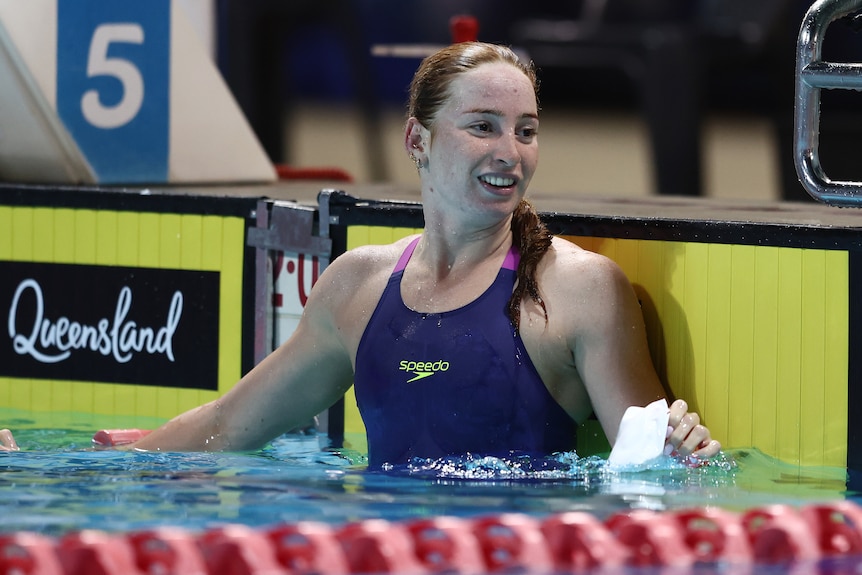
Mollie O’Callaghan says having to defend herself against fake quotes was “scary”. (Getty Images: Chris Hyde)
The flickbait section of the website will take fake news social media posts, which have been fact-checked by Swimming Australia, and displayed with a large red cross.
Swimming Australia was at pains to point out that this does not endorse posts as accurate that do not appear on the website.
Australian swimmers are regularly targeted by fake news websites with inflammatory quotes that cause them significant distress.
Both Kyle Chalmers and Mollie O’Callaghan have been targeted in the past, with Swimming Australia fighting a lengthy battle with Meta, the company that owns Facebook and Instagram, to have erroneous posts related to trans athletes removed.
Both O’Callaghan and Chalmers were hit with posts referencing interviews, which had never taken place, about claims they would not compete at the next Olympics in Los Angeles in 2032 if a trans athlete were allowed to compete.
The false quotes caused significant stress to five-time Olympic champion O’Callaghan, who was forced to defend herself both publicly and privately.
“It’s a scary thing,” O’Callaghan said, backing the move from Swimming Australia as a significant positive step for athlete welfare.
“You don’t want people impersonating you and making statements that aren’t true.
“I had to remind everyone to check their sources, and flickbait is a great first step for the public and media to rule out the fakes.
“I hope other sports follow suit.”
Swimming Australia is set to announce the project on Thursday, as the Dolphins prepare to leave for a staging camp in Europe ahead of the 2026 Commonwealth Games in Glasgow, which gets underway on July 23.
The team will then head straight to the Pan Pacific and Para Pan Pacific Championships in California.
dan