


US President Donald Trump appeared full of swagger on January 3, as he announced the arrest of his Venezuelan counterpart Nicolás Maduro.
Flanked by senior US officials in a makeshift briefing room at his mansion in the US state of Florida, Trump lauded the operation that snatched Maduro from a Caracas compound and brought him to the United States to face drug trafficking charges.

*This article is the second in a six-part investigation, “Cocaine and Venezuela’s Cartel of the Suns Post-Maduro,” exploring the current drug trafficking dynamics in Venezuela, the nature of the Cartel of the Suns, and their future without Maduro. Read the full investigation here.
“He personally oversaw the vicious cartel known as Cartel de los Soles, which flooded our nation with lethal poison responsible for the deaths of countless Americans,” Trump said.
It was the only reference to the Cartel of the Suns (Cartel de los Soles) during the entire hour-long press conference, but it carried significant weight.
The United States justified the Maduro arrest as a law enforcement action intended to take down the leader of a powerful criminal organization. But US officials have offered evolving and sometimes contradictory descriptions of the so-called cartel that Maduro allegedly headed.
Creating a coherent legal strategy is difficult without a coherent conception of the facts. Maduro’s upcoming prosecution may force the administration to address these definitional tensions and settle on a unified portrayal of the Cartel of the Suns.
The 2020 Indictment
The first time the United States named Maduro as the head of the Cartel of the Suns was in previous criminal charges unveiled in 2020, near the end of the first Trump administration.
In the 2020 indictment, prosecutors described the cartel as a group of officials who “corrupted the legitimate institutions of Venezuela” to import cocaine to the United States and aid the Revolutionary Armed Forces of Colombia (Fuerzas Armadas Revolucionarias de Colombia — FARC), a leftist guerrilla group designated as a terrorist organization by the United States.
The indictment painted a picture of a vertically controlled drug trafficking organization with Maduro and a few key allies at the top – most of whom had backgrounds as former high-ranking military officials under Maduro’s predecessor, Hugo Chávez.
One of the leaders of the Cartel of the Suns, a former general named Hugo Carvajal Barrios, alias “El Pollo,” had already been arrested at the time of the indictment. After going into hiding and then being re-arrested in Spain, he was extradited to the United States and pleaded guilty in June 2025.
Another top leader, an ex-general named Cliver Alcalá, turned himself over to US authorities immediately after the release of the 2020 indictment. He pleaded guilty in 2023 and later was sentenced to more than 20 years in US federal prison.
Both Carvajal and Alcalá have recently indicated a willingness to work with US authorities to prosecute Maduro on the new charges, likely hoping they will receive leniency in return.
A third top military official and alleged Cartel of the Suns leader, Nestor Reverol, remained in Venezuela after the 2020 charges, but he may have fallen out of grace with the regime and has since kept a relatively low profile.

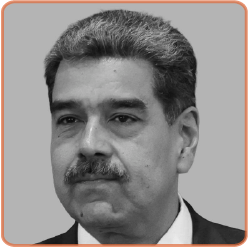
Charged with narco-terrorism, drug trafficking, and firearms offenses
Diosdado Cabello Rondón

Longtime Senior Ruling-party Politician Interior Minister (2024 – present).
Charged with narco-terrorism, drug trafficking, and firearms offenses
Vladimir Padrino López
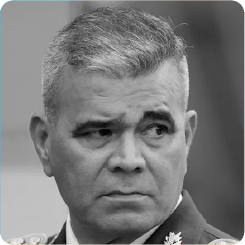
Defense Minister (2014 – present).
Charged with drug trafficking
Tareck Zaidan El Aissami Maddah

Former Vice President (2017 – 2018), Oil Minister (2020 – 2023), Governor of Aragua (2012 – 2017). Charged and sanctioned as a trafficker. Arrested in Venezuela in 2024 on corruption and treason charges
Hugo Armando Carvajal Barrios
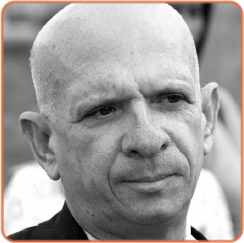
Former Military Intelligence Chief (2004 – 2011, 2013 – 2014). Charged and pleaded guilty in US court to narcoterrorism, weapons, and drug charges in June 2025
Maikel José Moreno Pérez
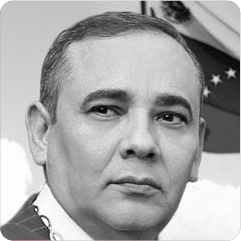
Former Chief Justice of the Venezuelan Supreme Court (2017 – 2022). Charged with laundering money linked to bribes
Clíver Antonio Alcalá Cordones
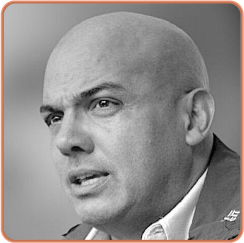
Former Military General (served 1983 – 2013). Originally charged with narco-terrorism, drug trafficking, and firearms offenses. Received 21-year, 6-month prison sentence in the United States in April 2024
Joselit Ramírez Camacho

Former Cryptocurrency Superintendent (2018 – 2023). Charged with evading sanctions. Arrested in Venezuela in March 2023 on corruption charges
Luis Alfredo Motta Domínguez
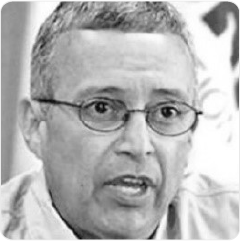
Former Electrical Energy Minister (2015 – 2019), Current Vice Minister for Monitoring Government Performance (2026). Charged with laundering money linked to bribes
Néstor Luis Reverol Torres

Former Military General (served 1983 – 2013). Charged with narco-terrorism, drug trafficking, and firearms offenses. Received 21-year prison sentence in the US in 2024
Edylberto José Molina Molina

Former Anti-drugs Deputy Director Venezuela’s military attaché to Germany. Charged with drug trafficking
Vassyly Kotosky Villarroel Ramírez

Former Bolivarian National Guard captain. Charged with drug trafficking
Rafael Antonio Villasana Fernandez
Former Bolivarian National Guard officer. Charged with drug trafficking
Nervis Gerardo Villalobos Cárdenas
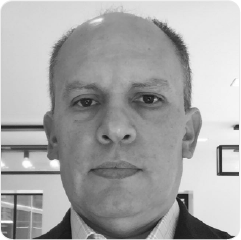
Former Electrical Energy Vice Minister (2002 – 2006). Charged with laundering money linked to bribes. Under investigation in Spain for money laundering
Oscar Rafael Colmenarez Villalobos

Former Air Force Officer. Charged with violating US arms export controls

Currently detained, awaiting sentence, or sentenced
The 2020 indictment also alleged the Cartel of the Suns and the FARC worked together to use drug trafficking to fund terrorist activities that targeted the United States. Alongside the Venezuelan officials, prosecutors charged two FARC leaders who had abandoned a demobilization process established by a 2016 peace agreement with the Colombian government.
One of those leaders, Seuxis Pausias Hernández Solarte, alias “Jesús Santrich,” was reportedly killed in Venezuela in 2021. The other leader, Luciano Marín Arango, alias “Iván Márquez,” heads a FARC dissident group called the Second Marquetalia (Segunda Marquetalia) and is believed to be hiding in Venezuela.
The 2025 Terrorism Designations
The second Trump administration reprised the portrayal of the Cartel of the Suns as a drug-trafficking structure centrally managed by Maduro and close allies, and further equated its drug trafficking activities with terrorism.
In July 2025, the US Treasury Department sanctioned the Cartel of the Suns as a “Specially Designated Global Terrorist,” describing it as “a Venezuela-based criminal group” headed by Maduro and high-ranking Venezuelan officials, who corrupted Venezuela’s institutions to “assist the cartel’s endeavors of trafficking narcotics into the United States.”
The United States had previously accused the Cartel of the Suns of supporting other terrorist groups, namely the FARC. But the Treasury Department designation marked the first time the United States described the Cartel of the Suns as terrorists in their own right.
In theory, the Treasury Department designation would allow authorities to seize assets and block financial transactions involving people associated with the Cartel of the Suns, though many key actors connected with the Maduro government were already largely shut out of the US financial system through previous sanctions.
Perhaps more importantly, the terrorism designation helped justify a broader US pressure campaign against Maduro that ultimately led to his arrest.
Building on previous accusations that the regime’s involvement in drug trafficking had funded terrorist acts, the Trump administration put forth the argument that the trafficking itself constituted a terrorist attack aimed at harming the well-being of the US public through overdose and addiction.
In August, the United States upped its bounty on Maduro to $50 million and began a military deployment in the Caribbean that would become the biggest buildup the region has seen in modern times. In September, US forces started launching deadly missile strikes on alleged drug-carrying vessels off the Venezuelan coast.
In November, the Trump administration added the Cartel of the Suns to its list of Foreign Terrorist Organizations (FTOs), allowing US prosecutors to bring “material support for terrorism” charges against anyone that could be construed as giving aid to the cartel – which was again portrayed as being essentially equivalent to the Maduro regime.
The 2026 Indictment
Months of increasing pressure culminated in the dramatic arrest operation in Caracas on January 3, and the publication of a new criminal indictment against Maduro, his wife Cilia Flores, and his son known as “Nicolasito,” along with a FARC-linked ex-minister and governor named Ramón Rodríguez Chacín and the alleged head of the Tren de Aragua gang, Héctor Rusthenford Guerrero Flores, alias “Niño Guerrero.”
Aside from Maduro himself, the only figure from the 2020 indictment also charged in the new indictment is Interior Minister Diosdado Cabello, who continues to play a key role in drug-related corruption in Venezuela.
Notably, the new indictment – which cancels and replaces the 2020 indictment – backs away from the longstanding US description of the Cartel of the Suns as an actual group with Maduro at the top.
Instead, prosecutors describe it as “a culture of corruption in which powerful Venezuelan elites enrich themselves through drug trafficking and the protection of their partner drug traffickers.” This is what InSight Crime has described as Venezuela’s “hybrid state” – a symbiotic relationship between criminal and political elements that has kept the socialist government in power despite the collapse of the economy and its democratic legitimacy.
While the new indictment mentions “narco-terrorism” – a term with no legal significance – it does not formally charge any of the defendants with terrorism-related crimes.
The US government is treating the Maduro prosecution squarely as a drug trafficking case. The charges all center around alleged drug trafficking and weapons violations, and the government lawyers leading the prosecution all specialize in narcotics cases rather than terrorism.
But while the US portrayal of the Cartel of the Suns in the courtroom will center around drug trafficking, the term has also been used to refer to a broader portfolio of military corruption that extends far beyond the drug trade.