


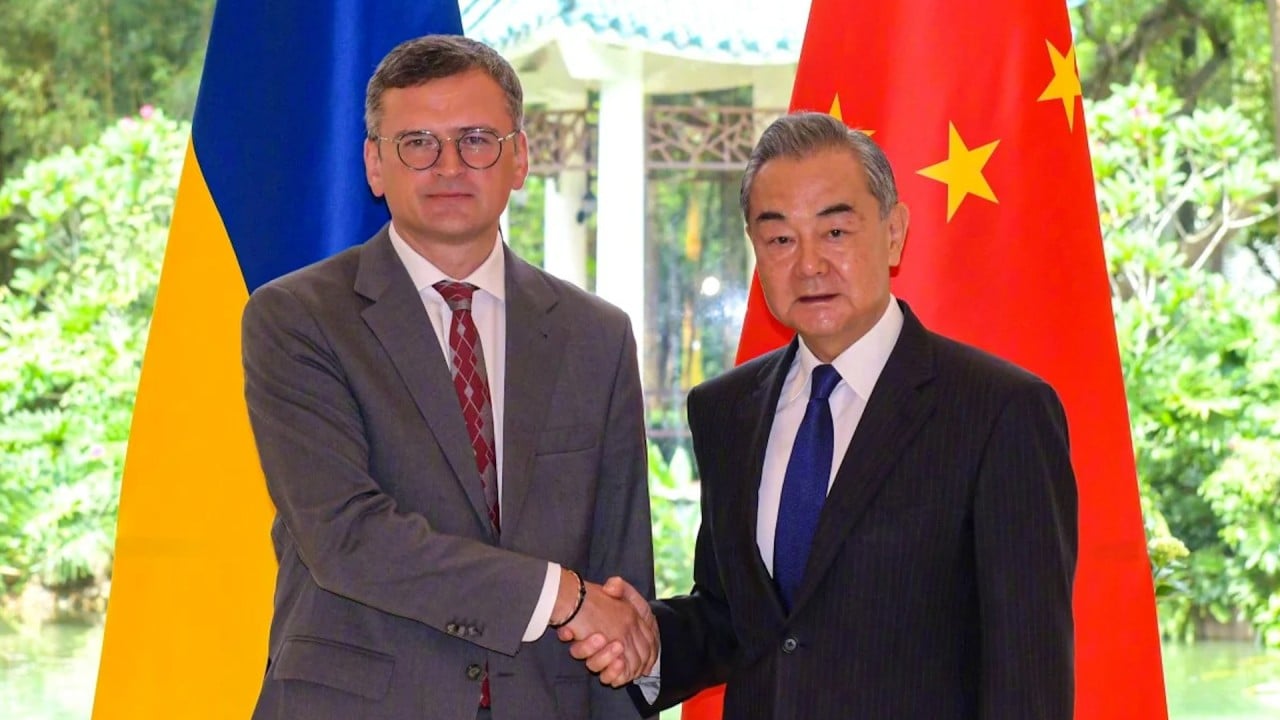
They said the choice showed that China and Ukraine intended to revive their strained ties amid the war, but it could also have been a strategic decision by Beijing to preserve relations with Russia.
Wang Yiwei, an international relations professor at Renmin University, said that Guangzhou was a “less formal” choice of venue that provided a more relaxed setting for the meeting, which followed Ukraine’s recent criticism of China’s role in the war.
Beijing, which has positioned itself as a peacemaker in the conflict, skipped that summit, to which Russia was not invited. China instead called for a fair summit with equal participation by both Russia and Ukraine.
“Instead of criticising China, [Ukraine] now hopes that it may play the role of a mediator,” Wang said.
“For [Ukraine], it should start engaging with China first … and hear directly from China and see if both can be brought together on finding a solution to the conflict.”
02:29
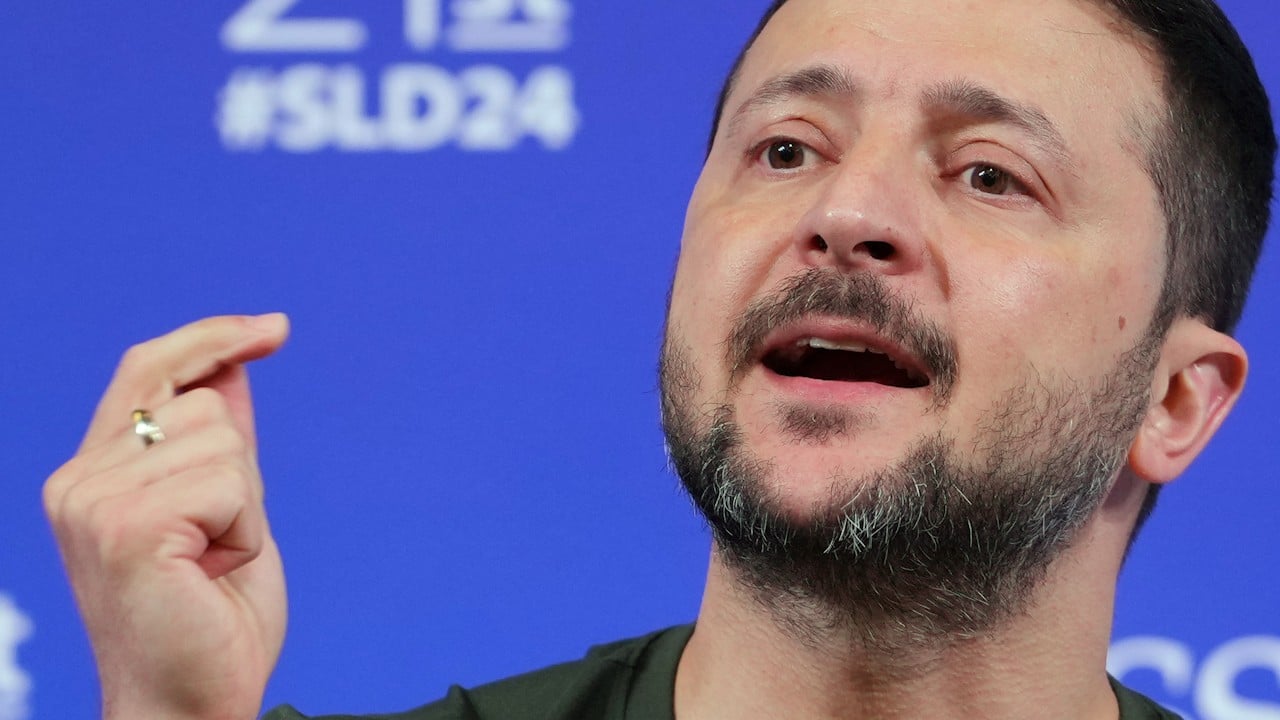
China urged to help end Ukraine war by President Volodymyr Zelensky at Shangri-La Dialogue
China urged to help end Ukraine war by President Volodymyr Zelensky at Shangri-La Dialogue
Wang told Kuleba in Guangzhou that China was committed to playing a constructive role in promoting a ceasefire and the resumption of peace talks, while Kuleba expressed willingness to negotiate directly with Russia if it was ready to do so “in good faith” – though he said he had observed “no readiness” from Moscow.
In an interview with Ukrainian media outlet TSN following his meeting with Wang, Kuleba said he received a clear signal from China that it was looking for sustainable but “not temporary” solutions to the conflict.
“Those who believe that China will stand on the side of Russia or on the side of Ukraine are deeply mistaken or are looking too superficially at China’s strategic vision of the development of the situation in the world, and not just in Ukraine,” Kuleba said.
Guangdong is an economic powerhouse and the biggest province in China in terms of GDP, exceeding 13 trillion yuan (US$1.8 trillion) last year.
Kuleba visited Hong Kong on Thursday, where he met business representatives and Chief Executive John Lee. While he called for deeper trade ties with the city, he warned it against being used to circumvent sanctions on Russia.
Over a dozen Hong Kong companies have been sanctioned by the US and EU for their alleged role in transferring dual-use goods to Russia to enable its war efforts.
01:47
Ukraine says it’s ready to resume ‘good faith’ negotiations with Russia
Ukraine says it’s ready to resume ‘good faith’ negotiations with Russia
Björn Alexander Düben, a lecturer specialising in China and Russia studies at the University of London’s Forward College in Berlin, said while economic ties could be a factor behind Kuleba’s south China tour, he did not believe it was a “primary motivation”.
“It is possible that Beijing deliberately arranged for the meeting to occur outside of the capital city, so as to subtly and symbolically downgrade the meeting relative to its diplomatic interaction with Russia,” he said.
He noted there was an “interesting contrast” with Russian Foreign Minister Sergey Lavrov’s April visit to Beijing, where he was received by Xi.
“Maybe Guangzhou was picked as the venue in order to make this contrast appear less awkward, creating a spatial distance between Xi and Kuleba during his visit.”
Analysts also speculated that Kuleba’s itinerary was meant to accommodate his travel schedule or to dovetail with Wang’s attendance at the Asean summit in Laos on Thursday.