


Court premises in the Zambian capital, Lusaka, and elsewhere have been shut as the deadline for filing a petition against the outcome of the recent presidential election approaches.
An unusual police presence has been reported at some courts, which have been taped off to prevent access.
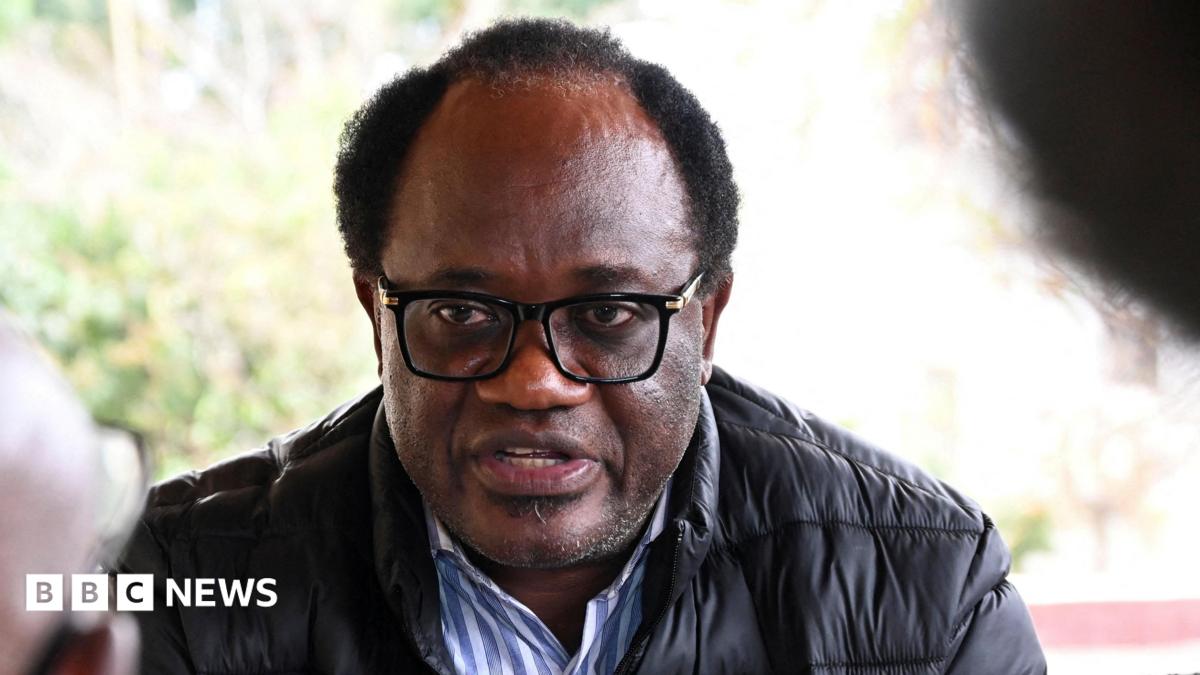
Opposition candidate Brian Mundubile said he would challenge the election result, citing irregularities, after coming second with a 38% share of the vote. Incumbent Hakainde Hichilema won a second term with 60%.
Mundubile is in hiding over alleged threats made against him, amid a post-election period marked by controversy, including the shooting dead of an opposition figure and the arrest of others.
Monday is the last day on which petition against the presidential election result can be filed. Such a petition could potentially affect the inauguration of Hichilema, which is scheduled for 1 September.
On Monday, lawyers who arrived at the courts were being asked to depart.
One lawyer told the BBC that three armed men approached his vehicle, identified themselves, and instructed him to leave the area.
The courts that have been sealed off include the High Court in Lusaka, the Supreme Court, which also houses the Constitutional Court, and several local courts.
It is unclear when the premises will reopen. The BBC has contacted the Zambian police and the judiciary for comment.
Local media cite a directive by a judiciary administrative official telling all staff not to report to work following the closure of courts for “security reasons”.
The memo, which has also been shared online by some opposition figures, does not give details of the security situation.
Some commentators have raised concerns over the closure while questioning the independence of the judiciary.
A prominent voice for the opposition, Emmanuel Mwamba, alleged the action was aimed at preventing Mundubile from filing his presidential election petition.
The Law Association of Zambia (LAZ) said it was concerned by the closure of the courts and the presence of heavily armed military personnel around court premises in Lusaka.
It said there was no formal public explanation for the closure nor its expected duration.
Referring to the “unsigned memorandum” from the judiciary addressing staff, it said no further official information had been provided to lawyers and the public.
“The closure of the courts has immediate implications for access to justice, particularly for persons requiring urgent judicial intervention,” it said in a statement
It said the timing was “particularly significant in the present electoral context”, citing a “seven-day period” in which a person may “petition the Constitutional Court to nullify the election of a President-elect”.