


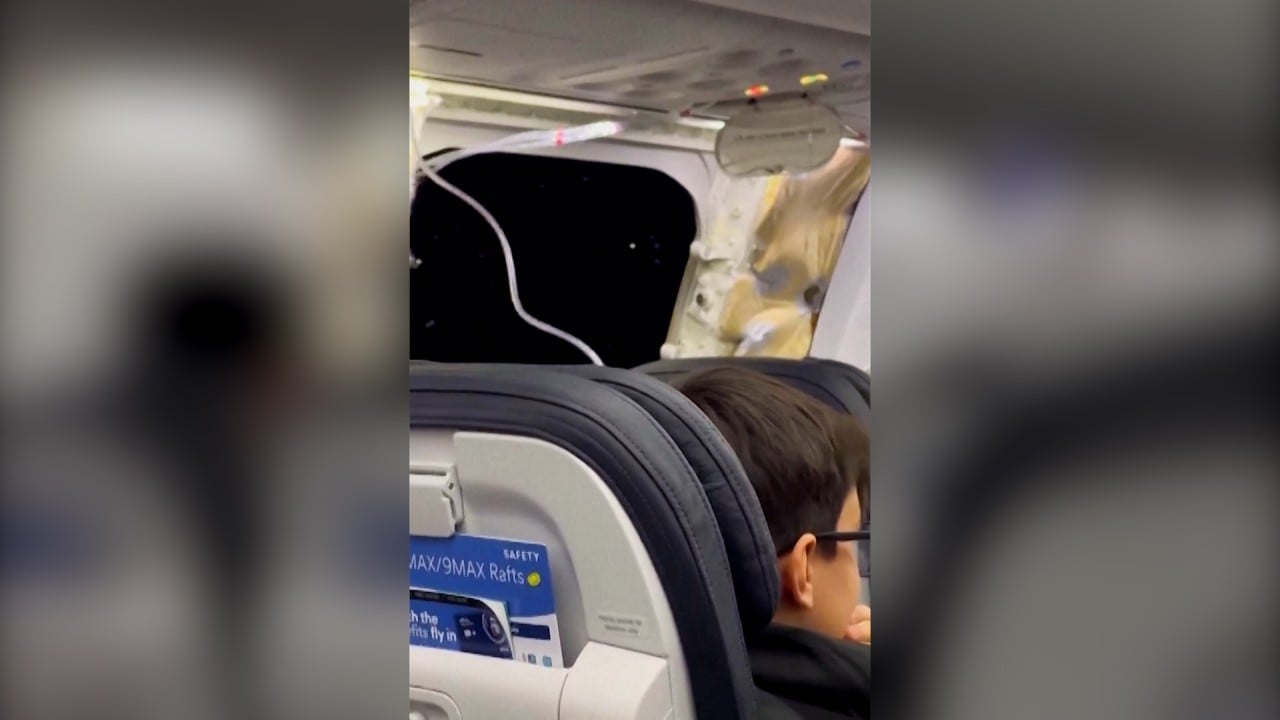
Max 9 planes with the same door configuration as the Alaska plane were grounded for weeks until they could be inspected, and regulators are poring over Boeing’s manufacturing processes and ratcheting up pressure on the company’s management.
02:30
Boeing Max plane grounded globally after mid-air blowout leaving hole the size of a door
Boeing Max plane grounded globally after mid-air blowout leaving hole the size of a door
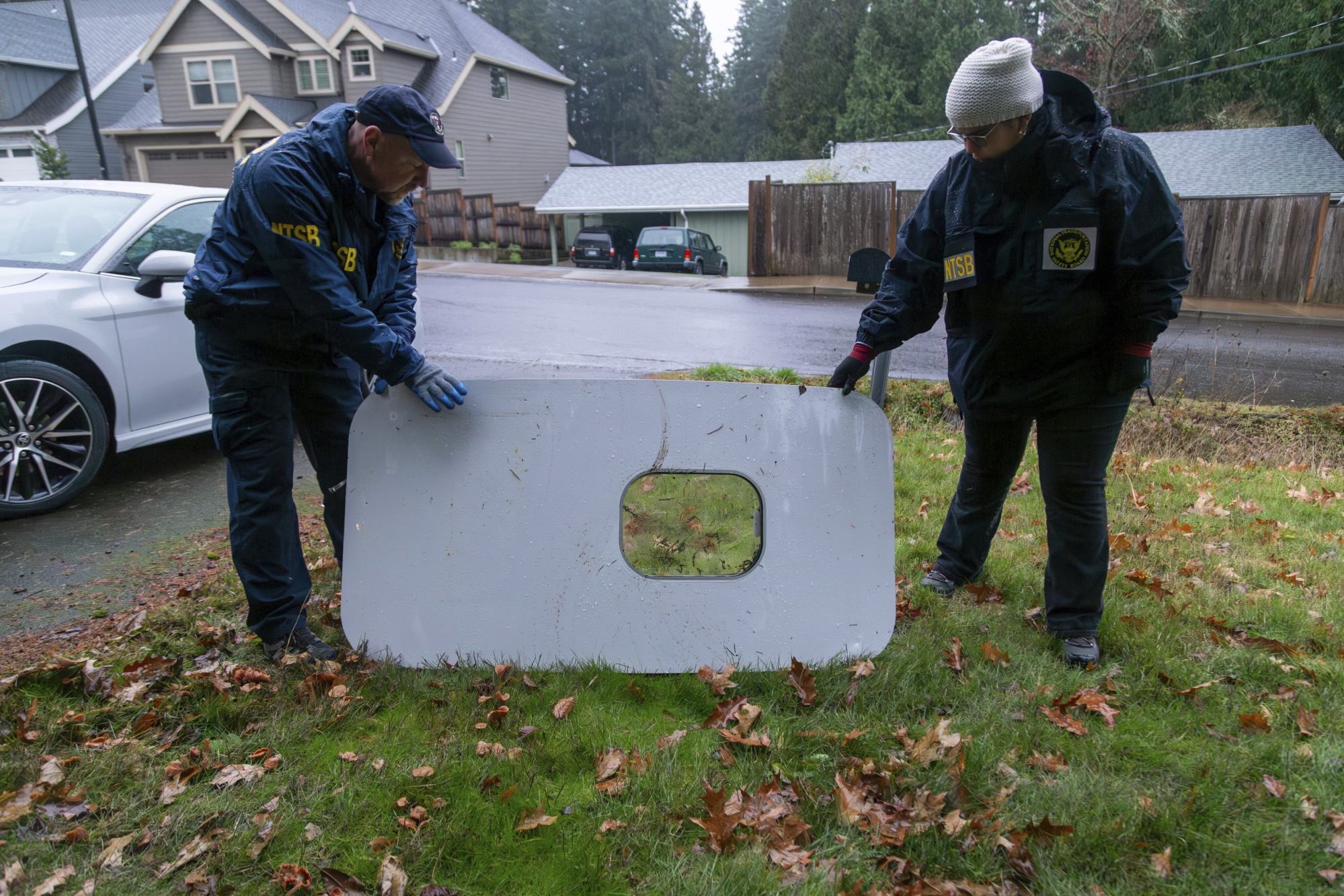
The evidence from the recovered door and the fuselage indicate that the four bolts “were missing”, the NTSB report said.
The report reaches no conclusions about what caused the January 5 failure, but it is an unusually detailed account of the safety board’s initial fact gathering. It contains photos of the panel that later failed that were taken on the Boeing shop floor.
The panel had been worked on during final assembly, but NTSB is still reviewing what was done and why. The safety board can take a year or longer to conclude its formal findings.
“The investigation continues to determine what manufacturing documents were used to authorise the opening and closing of the left MED plug during the rivet rework,” the report said in reference to the panel that failed.
US grounds Boeing 737 Max 9s after blowout on Alaska Airlines flight
US grounds Boeing 737 Max 9s after blowout on Alaska Airlines flight
Spirit AeroSystems Holdings, Boeing’s most important supplier, has also been under scrutiny in the wake of the accident.
The incident occurred when a panel that seals an unused door opening on the left side of the Alaska Air Group plane blew open shortly after take off from Portland, causing it to violently lose pressure and subjecting passengers and flight crew to high winds and noise as it returned for an emergency landing. No serious injuries were reported.
The panel, known as a door plug, is held in place by 12 braces that withstand the massive pressure differential between the cabin and the thin air at altitude. A separate set of four bolts are designed lock it in place.
The panel opens by sliding upwards and the bolts, which include pins to prevent them from inadvertently loosening, prevent that movement.
Issues with Boeing’s work on the Max family of aircraft continue to emerge. On February 4, the company disclosed that it had discovered manufacturing flaws with rivet holes in about 50 undelivered 737s. The problem originated with Spirit, a spokesman for that company said.
The problem disclosed on February 4 is the latest in a series of glitches originating with Boeing’s former aerostructures unit.
A drilling mishap on an aft pressure bulkhead supplied by Spirit Aero slowed deliveries of the 737 Max – the plane maker’s most important generator of cash flow – last year. A separate issue with tail-fin fittings affected output earlier in 2023.
Boeing will also have to contend with the possibility of labour disruption later this year.
Boeing’s largest union, the International Association of Machinists and Aerospace Workers, will demand a 40 per cent pay rise over three or four years, emboldened by a resurgent US labour movement, a scarcity of qualified aerospace workers and pressure on Boeing to stabilise work in its factories.
The Federal Aviation Administration is also conducting enhanced oversight of Boeing and Spirit.
The agency is about halfway through its review and expects to release findings and possible recommendations as soon as this month, Jodi Baker, FAA deputy associate administrator for aviation safety, said on Monday.