


On September 22, 2026, José Ángel Rivera Zazueta, a.k.a. “Don Flaco,” was arrested in the Condesa neighborhood of Mexico City’s Cuauhtémoc borough. The operation was carried out by the Fiscalía General de la República (FGR), in coordination with the Secretaría de Seguridad y Protección Ciudadana (SSPC), based on information and support from U.S. agencies, particularly the DEA and FBI.
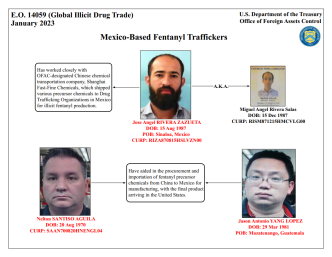
Rivera Zazueta had already drawn the attention of U.S. authorities. In 2023, the U.S. Treasury Department’s Office of Foreign Assets Control (OFAC) designated him as the leader of a drug-manufacturing and trafficking organization based in Culiacán, Sinaloa, and Mexico City.
Rivera Zazueta’s criminal network reportedly operated globally, with nodes across the United States, Mexico, South and Central America, Europe, Asia, Africa, and Australia. According to an investigation by journalist Anabel Hernández, the network also moved between 500 and 800 kilograms of cocaine from Colombia each week.
Rivera Zazueta’s network illustrates how synthetic-drug production can operate as an international supply chain. Chemical suppliers in China provide precursors used to manufacture synthetic drugs, including fentanyl, MDMA, crystal methamphetamine, 2C-B, and ketamine. Other nodes move these chemicals into Mexico, where specialized laboratories convert them into synthetic drugs. Trafficking networks then move the finished products across the U.S. border, where wholesale distributors and local criminal groups handle domestic distribution and retail sales.

One example of this connection is Shanghai Fast-Fine Chemicals, a Chinese company that U.S. authorities said worked with Rivera Zazueta’s network and shipped precursor chemicals to drug-trafficking organizations in Mexico. The company had previously been sanctioned by OFAC.
Sources: proceso – infobae.com – home.treasury.gov