


Ken Moelis, 65, has already stuck with the Middle East through thick and thin. In 2009, he boarded a plane to pitch for a $US25 billion restructuring of state holding company Dubai World as it teetered on the brink of default. His firm ended up advising the government on the complex restructuring plan involving more than 70 creditors.
That agreement cemented his reputation with some of the United Arab Emirates’ top officials and laid the foundations for more transactions.
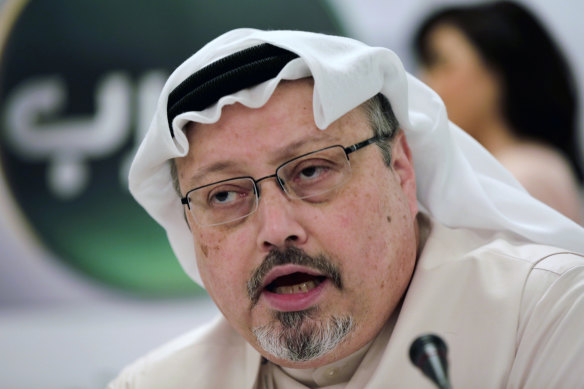
Most of Wall Street kept their distance from Saudi Arabia after the murder of Jamal Khashoggi in 2018, but Ken Moelis stayed put. Credit: AP
But he’s also made public relations outreaches that were harder for bigger banks to make because of their global profile.
In October 2018, Ken Moelis and the firm’s vice chairman Eric Cantor stood out as two of the only top US financiers who attended Saudi Arabia’s flagship investment conference in Riyadh, just weeks after the murder of Khashoggi by government agents in the Saudi Arabian embassy in Turkey. Crown Prince Mohammed bin Salman denied involvement, but many businessmen and investors shunned the country in the wake of the brutal killing.
Most of Moelis’s Wall Street peers, including JPMorgan Chase & Co. chief executive officer Jamie Dimon and BlackRock’s boss Larry Fink, pulled out of the event amid the controversy. That move earned Moelis the trust of the kingdom’s top decision makers in a region known to reward loyalty, the people said.
Loading
The firm has “built strong relationships with the region’s decision makers and has been involved in some landmark deals which put them on the map,” said Tom de Waele, Bain & Co Inc.’s managing partner for the Middle East. “Once you have established the right track record and level of trust with key decision makers, you see a fly wheel effect kicking in.”
Biggest advisor
The bank is now one of the biggest global investment banking operations in the Middle East, with double the number of advisors than some bigger Wall Street competitors. Besides IPOs, it’s also active in regional M&A and advises firms that are conducting strategic reviews. Restructurings are another of its key offerings in the region.
Despite its large footprint, the bank has only four managing directors in the region and relies heavily on a cadre of more junior executive directors, vice presidents and associates. The Middle East and North Africa office is led by Rami Touma, a former Credit Suisse banker, who is also a Harley Davidson aficionado.
Moelis’s success in the Gulf is partly due to the commitment of its top US management, the people familiar with the matter said. Its founder and Cantor, a former US politician-turned banker, fly to the Middle East three-to-four times a year to pitch ideas. Their regular presence draws clients in a region where decisions are typically made by royals and a handful of top advisers, the people said.
Still, fees in the region can sometimes be lower than expected. Moelis was among the banks that arranged Aramco’s $US29 billion IPO in 2019. Analysts at the time predicted the offering could generate “tens of millions of dollars” in fees for Moelis, but in the end banks shared a fee pool of just over $US100 million, an unusually small amount relative to the deal’s size.
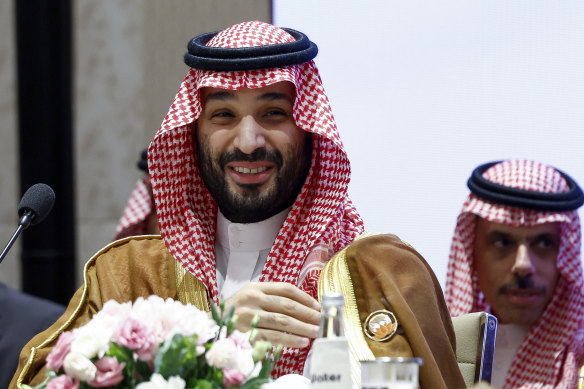
Saudi Arabian Crown Prince Mohammed bin Salman. A frenzy of dealmaking has gripped the Middle East.Credit: Reuters
Moelis didn’t comment for this story and doesn’t disclose revenue from the Middle East, which are dwarfed by those from Europe and the Americas.
Speaking at the 2018 event in Riyadh, Ken Moelis described relationships as a company’s most valuable asset — even if there’s no way to account for them on the balance sheet.
Gulf leaders have welcomed Moelis’s loyalty. At the Qatar Economic Forum last May, Saudi Arabia’s energy minister Abdulaziz bin Salman Al Saud greeted Ken as “my guy,” and praised him for being much better than the other bankers advising the kingdom on the Aramco IPO.
At the same conference, the Wall Street veteran praised the Middle East’s ability to “make decisions, operate quickly, cut through the red tape, and lastly, think long term” without having “to deal with union problems.”
“This is one of the few places in the world that’s actually making investments for the next five to 10 years,” he said.
Regional bets
Still, Moelis’s first-mover advantage in the Middle East is being eroded as more and more rivals muscle in on the deal surge and the more than $US2 trillion held by sovereign wealth funds. Rothschild & Co. has also been involved in landmark deals for years, rivalling Moelis in size and access to key clients. The boutique moved a senior equity capital markets banker to Dubai from Hong Kong in late 2022 to capture a bigger slice of the IPO boom. Advisory specialists from Lazard to Jefferies Financial Group are also beefing up teams.
The IPO market in the Gulf is relatively insulated from regional geopolitical risk, and in areas like local technology and services continues to be “a magnet for new growing companies that need capital,” said Karen Young, a senior research scholar at Columbia University’s Centre on Global Energy Policy.
‘Once you have established the right track record and level of trust with key decision makers, you see a fly wheel effect kicking in.’
Tom de Waele, Bain & Co’s managing partner for the Middle East.
Since opening its hub in the Dubai International Financial Centre in 2011 and hiring JPMorgan veteran Yorick Van Slingelandt, Moelis’s regional business has grown from an eight-person team to a workforce of about 45.
But not all of Moelis’s bets in the region have paid off. The company was involved in a number of deals involving special-purpose acquisition companies, most of which were pulled.
Loading
Meanwhile, although rivals begrudgingly acknowledge Moelis’s success in the region, they also say it has sometimes operated more like a consultancy than an investment bank to win more lucrative work on big-ticket deals. It also charges a rolling fee for strategic advice — a model that’s fairly unique to the Middle East where rulers with grand ambitions surround themselves with consultants, according to executives.
Last year, Moelis appointed Moaath Alangari to run its office in Riyadh after securing a license to operate in the kingdom, giving the firm a front-row seat to the crown prince’s ambitious plans.
“The risks for boutiques like Moelis is that they’ve doubled down on Saudi Arabia and the region as one of their key growth markets, given the potential,” said Lumina’s Traub. “It would be interesting to see whether when deal activity picks up in 2024 across Europe and the US if that investment thesis is still valid and how the key resources are deployed.”
Bloomberg