


2024-08-07T12:48:31+00:00
Shafaq News/
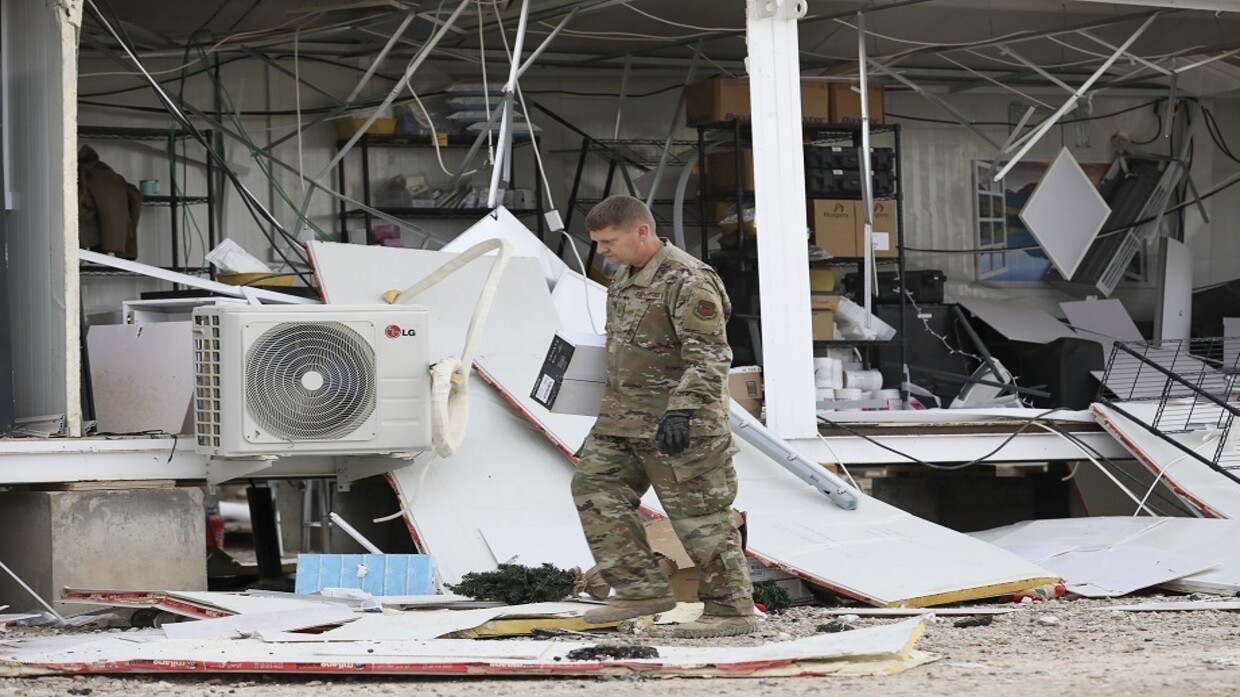
The recent attack on Ain al-Asad airbase in Iraq, which wounded at least five
American servicemembers and two contractors, underscores a potential escalation
in the already volatile Middle East, according to a detailed analysis by Vox.
The incident
occurred on Monday amid a period of heightened violence in the region. The
ongoing conflict in Gaza, coupled with the recent assassinations of Hamas
leader Ismail Haniyeh and Hezbollah commander Fuad Shukr, attributed to Israel,
has fueled expectations of Iranian retaliation. As Vox noted, “uncertainty
over how Iran will respond has raised the possibility of wider conflict in the
region.”
“It’s
unclear if Iran had anything to do with the attack on al-Asad, and no group has
claimed responsibility as of yet. There are Iran-allied groups operating in
Iraq, such as the prominent Iraqi militia Kataib Hezbollah. But even if one of
these groups is behind the strike, that doesn’t necessarily mean it was on Iran’s
orders; Iran’s allies in Iraq sometimes act without explicit instruction.”
Vox said.
The analysis
suggested that the attack on Ain al-Asad could be interpreted as part of a
broader tit-for-tat dynamic, especially in light of the recent US operations
targeting Iranian-backed militias. As Vox explained, “Monday’s attack can
be seen as a tit-for-tat response for the US attack last week on the Popular
Mobilization Forces, which killed four.”
The
implications of this incident are significant, highlighting the delicate
balance of power and the potential for a larger conflict. Colin Clarke, a
senior research fellow at the Soufan Center, told Vox, “I think that’s the
challenge for the Iranians is trying to thread that needle where they respond
in a way that doesn’t prove to be completely impotent and reveal them as weak,
but they also don’t want to go overboard.”
Ali Vaez,
director of the Iran program at the International Crisis Group, added, “Without
inflicting pain, there is no gain deterrence-wise, and Israel is not a country
that just absorbs pain and does not respond — even with US arm twisting.”
The broader
context of this attack involves a series of strategic calculations by regional
powers. Iran’s potential response, which could include leveraging its regional
allies to overwhelm Israel’s Iron Dome defense system, poses a significant risk
of escalating violence. Vaez suggested that the message behind the airbase
attack could be that “if [the US] fails to hold Israel back after Iran
retaliates for Haniyeh’s killing in Tehran, the US would also be caught in a
crossfire this time around.”
Ultimately,
how Iran and its allies choose to respond to the recent assassinations will
play a crucial role in determining the trajectory of the conflict. As Clarke
warned, “If they escalate too much, the Israelis are really going to
continue, especially Netanyahu, to pressure the United States to become more
involved, which is not a good scenario for the Iranians.”
“Under
that scenario, strikes and counterstrikes would likely continue — and the death
toll would rise, in Iran, among its allied groups, and perhaps in Israel as
well,” Vox concluded.
Disclaimer:
The views expressed in this article do not necessarily reflect the standing of
Shafaq News Agency.