


Just before midnight on September 15, 2023, four masked men dressed in all black walked down an alley just north of the main plaza in Santa Rosa de Copán, one of the largest municipalities in western Honduras.
From the darkness, one of them stepped into the light of a nearby streetlamp. He then stopped in front of the home of the environmental activist Ramiro Lara, pulled out a handgun, and fired 22 shots at the house.
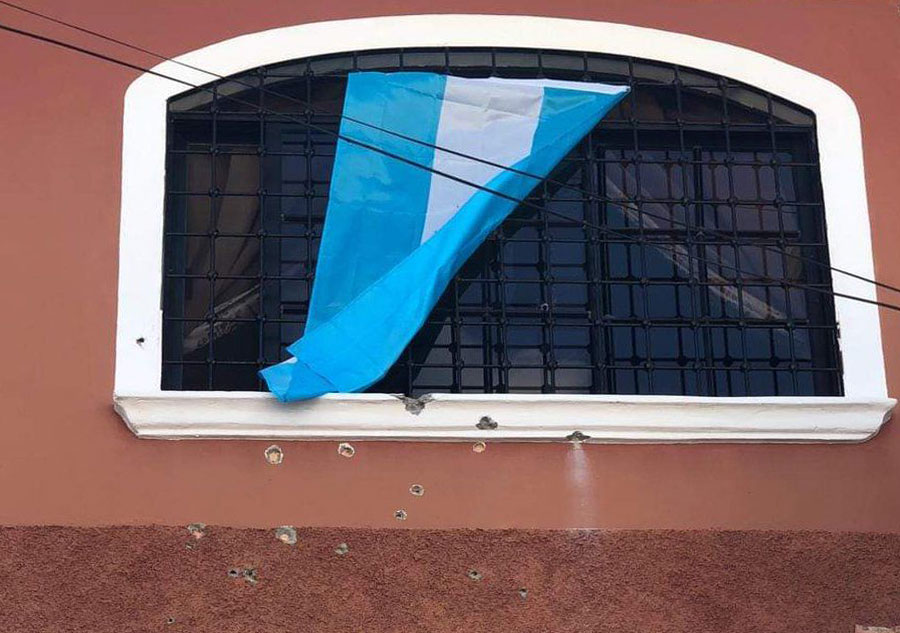
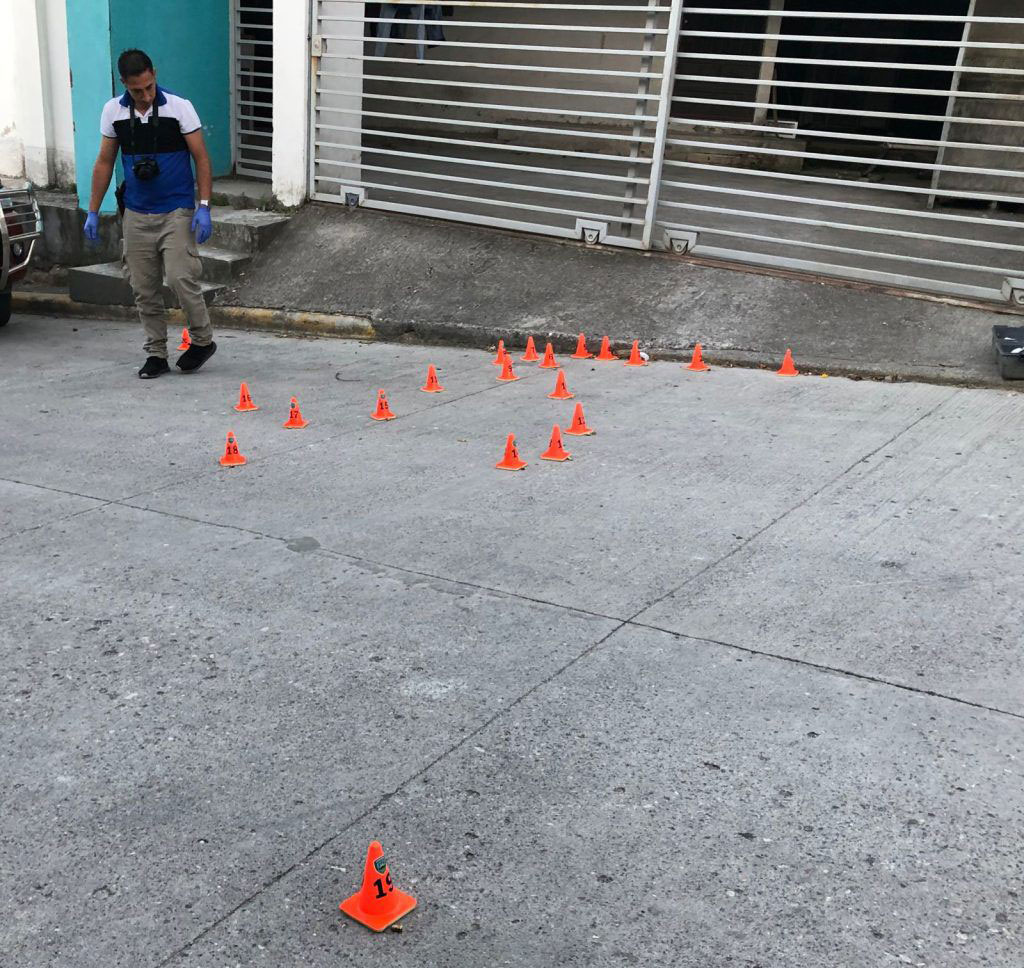
Lara and his family were sleeping inside, and one of the rounds pierced an upstairs window, which had a Honduran flag draped to one side. More than a dozen other bullets pockmarked the white frame and brown painted wall just below it. When the police arrived early the next morning, they found a pile of spent shell casings scattered in front of the home.

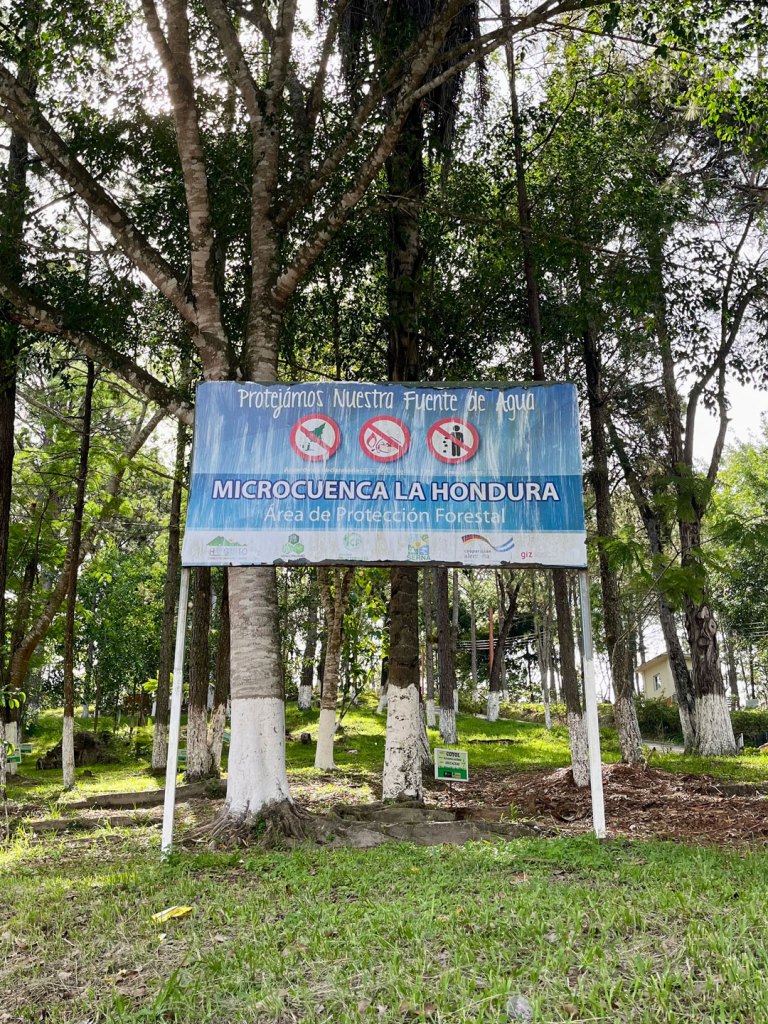
In the months before the attack, Lara had dedicated his time to denouncing a sharp rise in deforestation in and around the municipality, particularly in an area known as El Carrizal. Community members there had asked him to help file a complaint against a landowner who was cutting down trees near a micro-basin called La Hondura, which provides around 25% of the city with water, according to local activists.
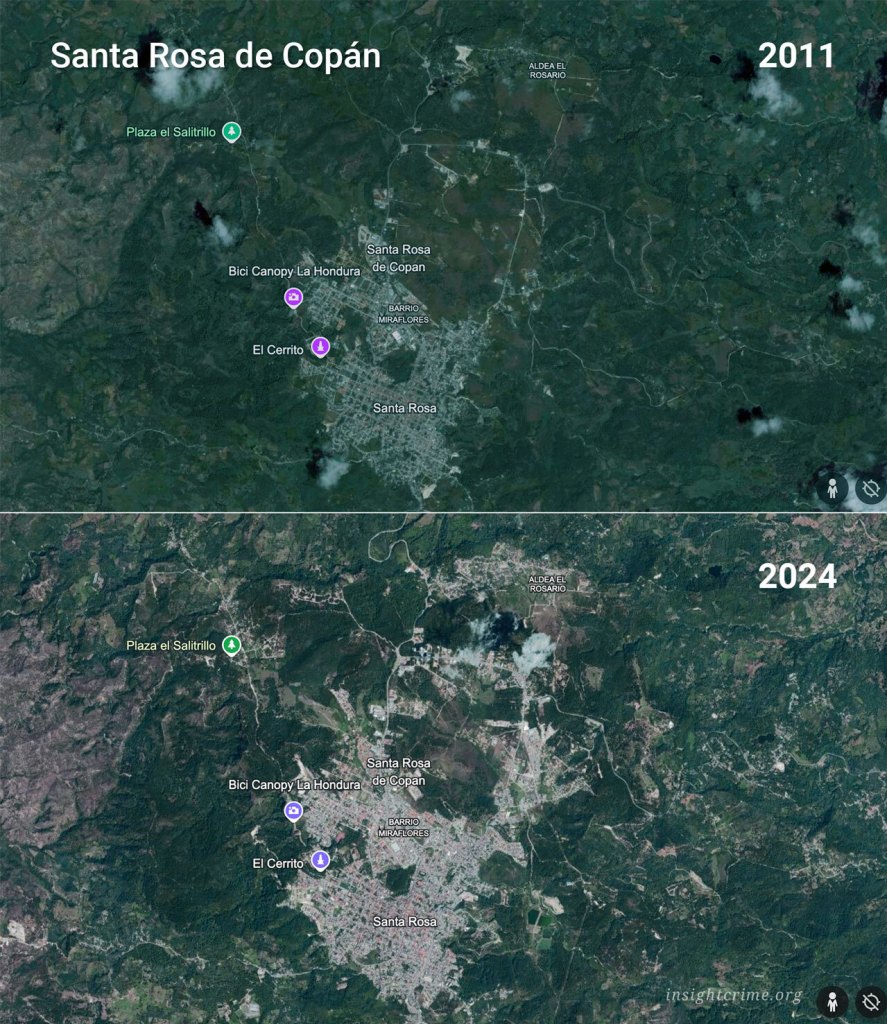
It was a pattern connected to a sharp rise in the number of people living in the area, which began shortly after the election of Santa Rosa de Copán Mayor Aníbal Erazo Alvarado. Since Alvarado took office in 2010, the population of Santa Rosa de Copán has swelled from just under 40,000 residents to more than 70,000.
This rapid growth pushed municipal authorities to expand the city’s territorial limits, which Lara and other activists said has damaged the environment and threatened several water sources like Hondura.
“This problem of losing forested areas in Santa Rosa de Copán and the surrounding area has a long history in this local government, and in this case, we are talking about the mayor,” said a member of Honduras’ Forest Conservation Institute (Instituto de Conservación Forestal – ICF), who requested anonymity for security reasons.
In fact, dozens of sources consulted by InSight Crime accused Mayor Alvarado of spearheading a sprawling corruption network filled with powerful actors who have profited from the city’s expansion at the expense of its natural resources. They allege that the mayor and other municipal employees exchange licenses and construction permits for bribes, pieces of land, and other economic benefits.
SEE ALSO: When Corruption Kills: Extractives and Environmental Destruction in Western Honduras
Alvarado has denied these accusations, but the attack on Lara highlighted the dangers facing those who oppose this development. Although he and his family were unharmed, the message was clear. Honduras is one of the most dangerous places in the world to be an environmental defender. The country saw the highest number of killings per capita in 2023, according to Global Witness, and at least a dozen land defenders were killed in 2024.
Local community groups and the United Nations’ office in Honduras condemned the attack. And the Association of Non-Governmental Organizations of Honduras (Asociación de Organismos No Gubernamentales de Honduras – ASONOG), where Lara worked, said in a press release that the attack on him was designed to silence his efforts to expose the abuses and bad practices of “certain powerful actors” in the area.
He had made them “uncomfortable,” ASONOG stated.
Humble Beginnings
When you ask residents of Santa Rosa de Copán about the Alvarado family, many recall fond memories of eating the legendary roasted pork that its proud matriarch, María Olimpia Alvarado, cooked in artisanal clay ovens for more than six decades. Doña Olimpia, as she was affectionately known, came from humble beginnings, and, in an interview with InSight Crime almost a year after the attack on Lara, the mayor said she instilled a strong moral compass and work ethic in him as a child.
His office is adorned with her images. As he spoke, behind him sat a framed photo of his mother in front of one of her famous ovens. Hanging above that was a large painting of his mother’s hands gripping the cooked feet of a pig she had lowered into the oven.
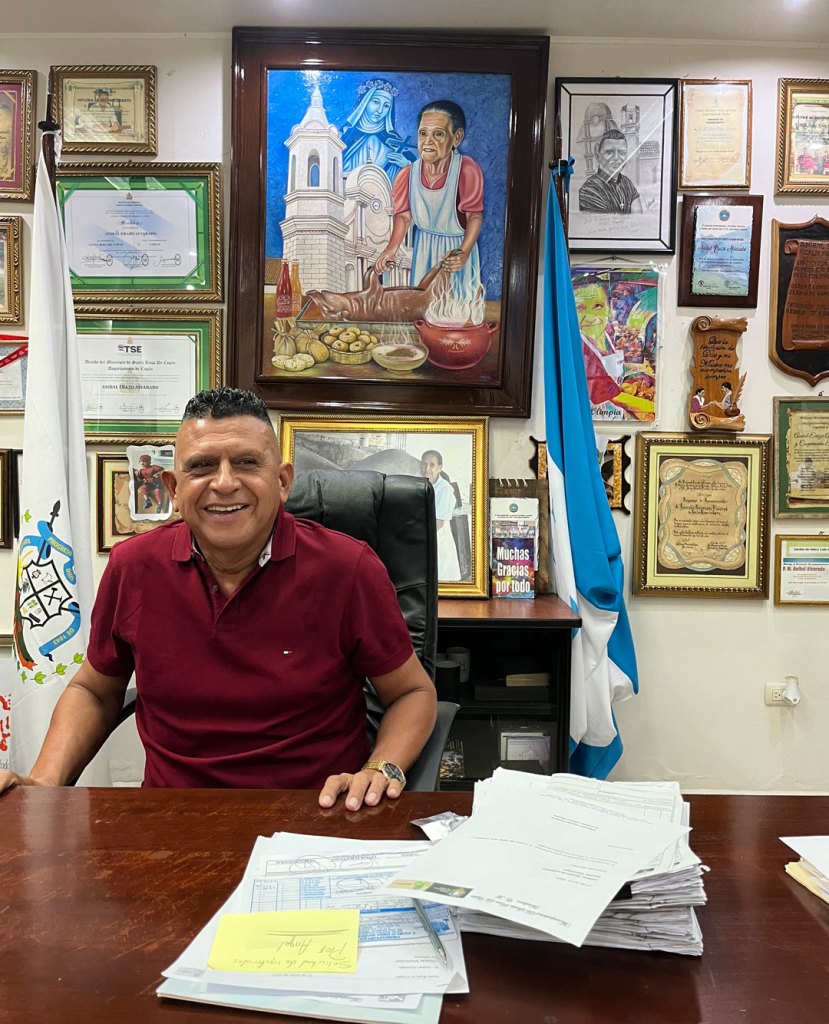
His father was similarly centered, the mayor said. Alvarado recalled one day when he passed through a nearby farm on his way home and saw a banana tree hanging over a fence. With his machete, he cut some of the fruit. But when he got home, his father scolded him, he said, and forced him to give the bananas back to the owner.
“I’m not going to raise you like that,” Alvarado remembered his father saying.
From that point on, Alvarado understood the values his parents wanted to instill in him.
But life wasn’t easy. Alvarado is one of 10 kids, and after his father died when he was just nine years old, he began working at a young age to support his family. He later took night classes at a public medical school while he worked in construction loading tractor trailers during the day. It wasn’t much, he said, but it was hard work, and he earned enough to help support his mother and pay his way through school.
During one of his seminars, he remembered the professor asking each student to think about what they wanted to do for a living after graduating. Alvarado had a lot of experience in construction and medicine, but he envisioned something different: politics. Specifically, local politics.
“I told myself I’m going to be a force,” he said in his office. “Where my family and I come from, we’ve been fighters all our lives.”
After finishing school, Alvarado got a job as the head of social development in the administration of the then-mayor, Juan Carlos Elvir. And four years later, in 2006, he became a municipal councilman.
While in office, Alvarado said he made a habit of interacting closely with the community, especially in the Santa Teresa neighborhood where he was raised. He’d walk the streets and knock on doors, listen to complaints, and try to develop proposals that would help his constituents, he said.
In 2009, he ran for mayor. His mom was on the ballot as much as he was.
When the election came, he said many residents told him they were voting for Doña Olimpia’s son.
“I became mayor thanks to my mother,” he said.
A Community Seeks Support
It was August 2023 when some people from El Carrizal first approached ASONOG, where Lara worked. They had discovered an area of land stretching about five hectares that had been razed and wanted the civil society group to alert the authorities.
Since Alvarado took office, locals told InSight Crime that it was increasingly common to see contractors and developers cutting down trees in Santa Rosa de Copán. But what worried residents of El Carrizal was that this loss of tree cover threatened four water sources, including the Hondura micro-basin and two others that the community relied on directly.
Honduran authorities formally declared Hondura a protected area in 1988. This meant that the municipality was responsible for safeguarding the micro-basin and the natural resources that surround it. In practice, this included working with other agencies to develop a management plan and reforestation campaign, as well as surveillance activities to prevent illegal deforestation and logging.
Santa Rosa de Copán has two main water sources: the Higuito River and the Hondura micro-basin that is fed by several underground wells. And as the city’s urban sprawl grows larger, there are fewer green spaces with forest cover. This has caused more soil erosion and less rainwater to enter the subsoil and replenish the wells, creating a water crisis.
After the meeting, ASONOG agreed to form a team, which Lara became part of, to help the residents. In an interview with InSight Crime, Lara said this work entailed advising them on how to present the complaint, organizing an environmental committee, and investigating who lived in the area where the deforestation was taking place.
During their investigation, Lara and his team focused on two brothers: Dennis and Hernán Sierra Valladares. Both of them worked in different capacities for a real estate company in Santa Rosa de Copán. Hernán was identified as the landowner of the area. But Dennis did not appear in any paperwork.
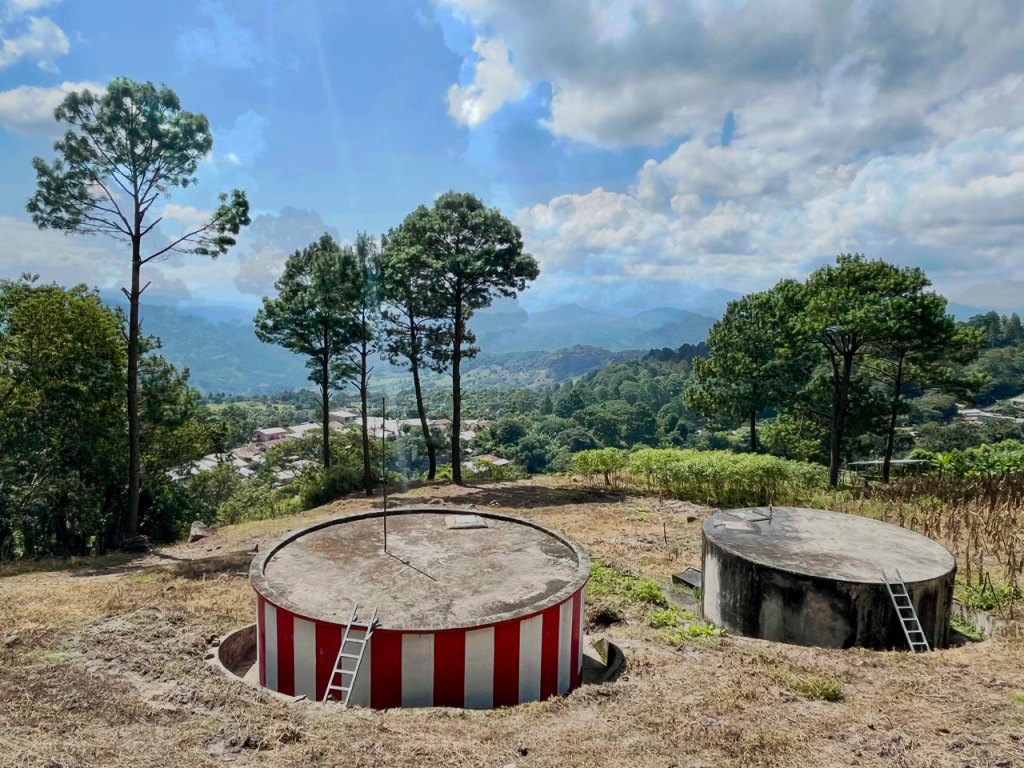
In addition to being an important source of water, Hondura is a popular tourist attraction, and Lara said they thought the brothers planned to build several cabins in the mountains surrounding it.
It was around this time when Lara was reminded of how dangerous this work can be. One night, he said he received a phone call from Bayron René Hernández. He was the municipal judge of Santa Rosa de Copán, which meant he oversaw the local justice system and all court cases — although that did not save him later from his own transgressions. He was also Mayor Alvarado’s “right-hand man” and a key intermediary within the alleged corruption network, according to several council members interviewed by InSight Crime.
The call was strange. According to Lara, Hernández told him he was “getting involved in something he had no business getting in the middle of.”
Lara interpreted it as a threat.
“I felt like he was being defensive and trying to intimidate me,” Lara told InSight Crime.
Still, ASONOG and Lara pushed ahead, and on August 10, 2023, a representative of El Carrizal’s community board filed an official complaint with the Attorney General’s Office. Days later, a team of technicians from the special prosecutor’s office against environmental crime, the aforementioned ICF, and the municipality’s environmental unit visited the area and found about three hectares of trees had been cleared.
The inspectors also encountered Hernán Sierra, one of the two brothers under suspicion. They informed him of the complaint and asked if he had the proper permits to be cutting down trees. He told them he did not, whereupon the officials ordered him to stop working.
The following week, authorities received another complaint about a group of people cutting down trees in the same area. They returned, this time with the police, where they again found Hernán Sierra. The police read him his rights, took him into custody, and charged him for illegal exploitation of natural resources.
Sierra denied the charges and was later released to await trial.
About a week later, gunmen rained bullets on Lara’s house.
“It was retaliation,” Lara told InSight Crime months after the attack. “Unfortunately, people linked to the municipality and so-called ‘investors’ associated with them are involved.”
A few weeks later, Lara and his family fled the region.
A ‘Green’ Municipality
It was a crisp, partly cloudy morning when the municipal corporation in Santa Rosa de Copán held its final town hall of 2023. A lawyer representing an investment company called Inversiones La Roca was in attendance to present Mayor Alvarado and the 10 council members with a housing development project.
The site of the project was located on the northeast reaches of the city, just off the only highway heading into the neighboring department of Lempira. The area was known as the Sabana sector of Villa Belén, and the municipality had determined it to be of “interés forestal.” Among other things, this designation — which roughly translates to conservation area — was designed to protect the existing forest and prevent unauthorized urban expansion.
As such, the company needed approval from the local urban infrastructure commission before it could obtain the necessary licenses and permits to move forward with construction. The municipal council members are responsible for liaising with this body. Their oversight also included visiting the site before making a determination about the feasibility of the proposal.
A housing development project that has been temporarily halted on the eastern reaches of Santa Rosa de Copán, Copán. Credit: Sam Woolston
But these and other oversight mechanisms are often co-opted and have failed to prevent deforestation. Since Alvarado became mayor in 2010, for instance, the city’s rapid expansion has halved the size of protected forests like the one surrounding Villa Belén, local activists, residents, and several council members told InSight Crime.
Projects like these are what Lara and other environmental activists say are putting at risk the city’s water supply.
“The city has a big water problem,” a human rights official, who asked to remain anonymous for security reasons, told InSight Crime. “Here we receive water every 12-14 days, so twice a month, but sometimes it suddenly doesn’t arrive, or it arrives once a month, and that is not sufficient.”
The issue came up in the Inversiones La Roca case. And as part of their proposal, Inversiones La Roca and the municipal board negotiated a number of concessions to help safeguard the environment and ensure access to water and other basic services in this area. The company owned about 21 hectares of land and wanted to develop a little more than half. They also proposed installing a reservoir and defining a reforestation plan to lessen the environmental impact of the project.
The local Citizens’ Commission on the Environment (Comisión Ciudadana de Ambiente – COCAM), a civil society group that analyzes projects that involve a land use change, also supported the proposal, provided that the agreed-upon conditions were met.
For council members who were resisting, this was not surprising. Rather than turning back proposals, they said that COCAM often collaborates with the municipality to find ways to approve development projects, even if other civil society groups argue they may harm the environment. The result, these critics say, is that COCAM lacks the autonomy needed to be an effective watchdog.
By the end of the session that morning, Mayor Alvarado and the 10 municipal council members voted 7-4 in favor of the development.
Although the company agreed to certain environmental safeguards, grassroots organizations like ASONOG pushed back when news broke of the approval. Any development that would destroy more green space, they argued, would jeopardize future generations.
ASONOG added that approving the land use change in Villa Belén was not the type of sustainable development Alvarado had promised when he publicly declared Santa Rosa de Copán a “green municipality” two weeks earlier. Instead, they said, the project paved the way for the destruction of an important part of the city’s already-deteriorating green space.
“This approval mocks the wishes and demands of the community to protect our environment,” ASONOG said in a statement.
Many also suspected something else might be going on behind the scenes. Local authorities had received several complaints in recent years about the arbitrary way in which permits and licenses were issued for urban development, according to the human rights official, who has reviewed many of the accusations.
The mayor was unperturbed. He said the new initiative would prioritize the “conservation of the environment, sustainable development, [and] implementation of concrete actions to improve the quality of life” of residents.
A Land Defender Forced to Flee
As Hernán Sierra’s case moved through the court system, Lara and his family relocated more than 300 kilometers away to Tegucigalpa, Honduras’ capital city. From there, Lara continued his work with ASONOG and monitored different threats to environmental defenders in the western part of the country and elsewhere. He also followed the case in El Carrizal.
Investigators had compiled substantial evidence against Sierra, according to a copy of the case file obtained by InSight Crime. The ICF produced a technical report that said the deforested land was just 400 to 500 meters from the Hondura micro-basin. In other words, it was part of the protected area surrounding the site.
Technicians with the environmental unit of the regional prosecutor’s office also examined the land and determined Sierra did not have the proper permits to cut down trees in this area. Doing so risked further soil erosion and directly threatened the water provided by the micro-basin.
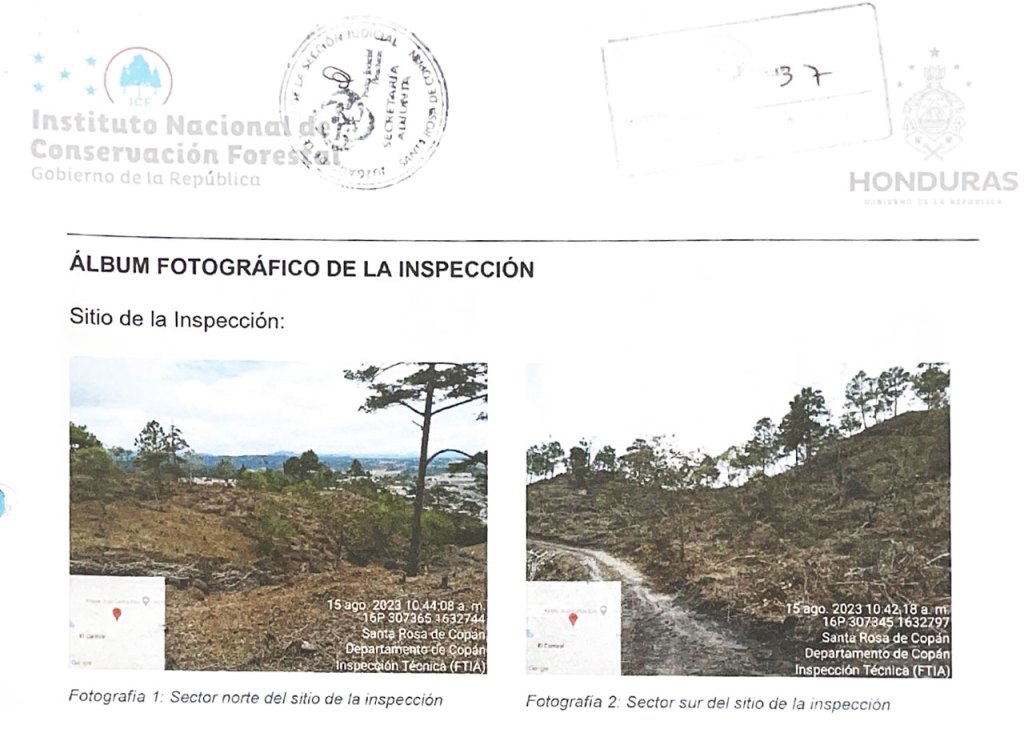
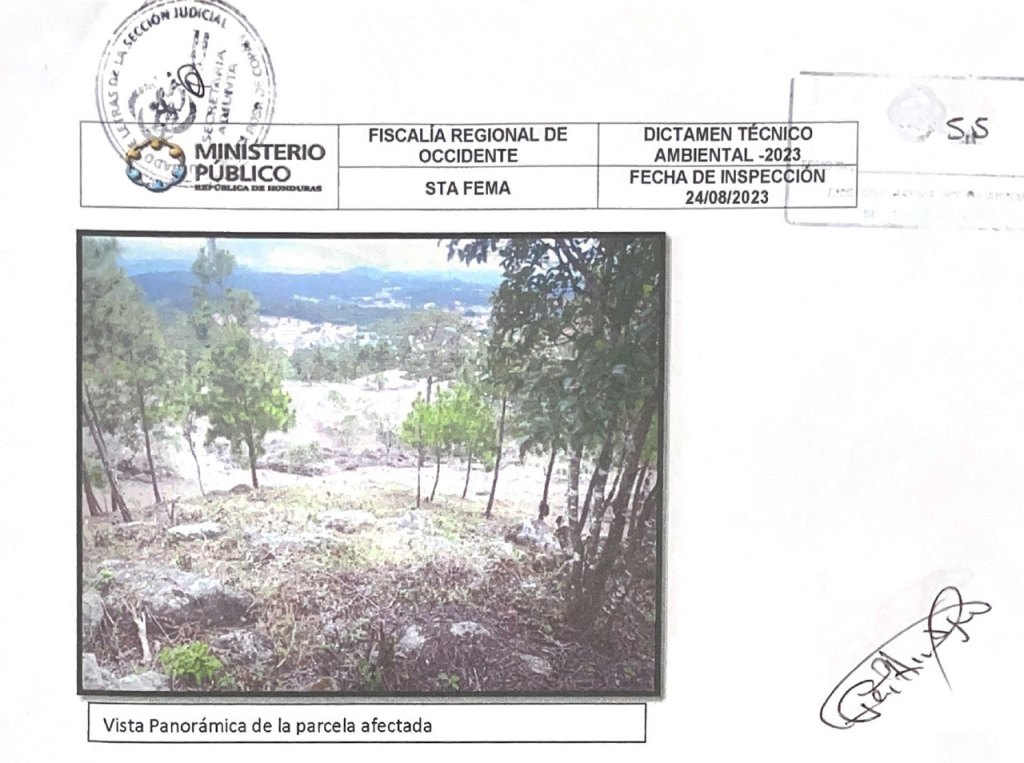
Prosecutors also collected testimonies from neighbors who told them when the trees were cut down and by whom. They had photos taken at the scene that showed dozens of discarded tree trunks, as well as a dirt road cutting through a large area almost entirely cleared of trees. Sierra figured in all of it and would soon get punished for it as well.
Meanwhile, the United Nations’ International Organization for Migration (IOM) and High Commissioner for Human Rights took on Lara’s case. They began collecting the relevant information related to the attack that was needed to present his case for asylum to authorities in the United States.
But the process was slow. It was difficult for him. He was worried about his family, and he was still working cases in Santa Rosa de Copán, where civil society groups like ASONOG had shifted their focus to another case that was growing more controversial: the housing project in Villa Belén.
Pay-to-Play
During the first town hall meeting of 2024, the municipal council reversed its decision on the housing development in Villa Belén. Mayor Alvarado, the council said, had a conflict of interest. Specifically, according to documents obtained by InSight Crime, on June 8, 2022, the president of Inversiones La Roca sold a piece of land in Villa Belén to Josué Aníbal Erazo Otero, one of Mayor Alvarado’s sons.
On the surface, there was nothing out of the ordinary about the agreement, according to the lawyer who facilitated the sale. But a handwritten note, signed and fingerprinted by the mayor’s son in the months after, stated that his land deal was part of a quid pro quo for approval of the Inversiones La Roca project.
“On September 8, 2022, in the city of Santa Rosa de Copán, I received a deed of sale for a piece of property in exchange for a land use change of 50 manzanas for Inversiones La Roca,” read the document obtained by InSight Crime, which also contained the seal of the municipal property institute.
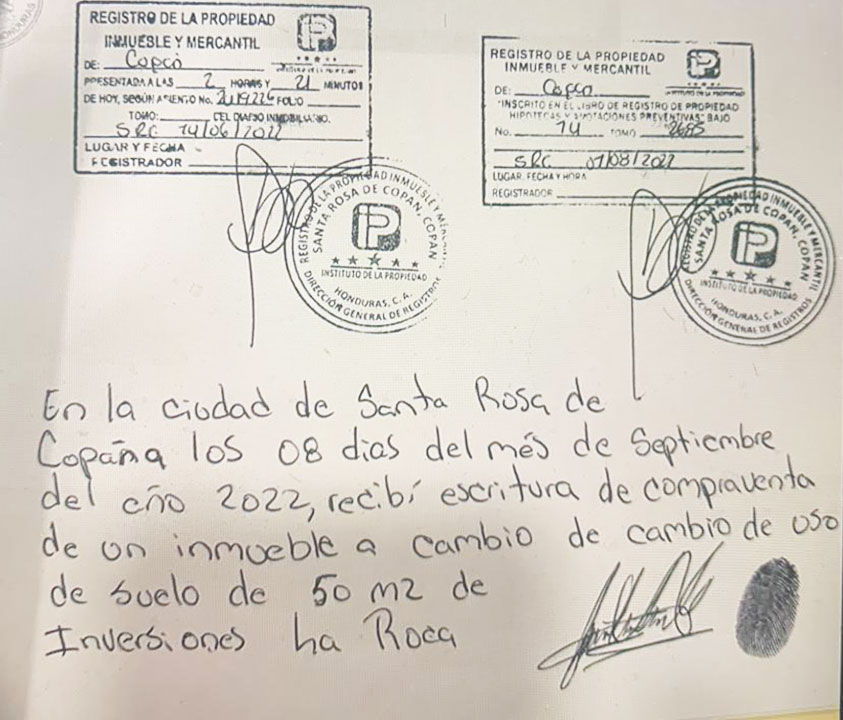
The document further supported the mayor’s own admission of a conflict of interest during the town hall. His son’s acquisition of land in Villa Belén would create a potential financial incentive for him to vote in favor of the project.
“This is a tremendous act of corruption,” the lawyer told InSight Crime.
Neither the president of Inversiones La Roca, nor the lawyer representing the company for the housing development in Villa Belén, nor the mayor’s son responded to InSight Crime’s request for comment. Mayor Alvarado also did not respond to a detailed list of questions sent to him and his office.
Meanwhile, other members of his administration were also coming under scrutiny. Later that year, in November 2024, police in Santa Rosa de Copán arrested Hernández, the municipal judge and mayor’s right-hand man, as he received what authorities called a cash “bribe” of 100,000 Lempiras (almost $4,000).
Working alongside a local lawyer, prosecutors said Hernández demanded payments from certain business owners in exchange for expediting the approval of operating permits. The lawyer allegedly found “clients” for Hernández and then delivered the illicit payments.
Alvarado quickly removed Hernández from office. Hernández, who served as municipal judge since 2018, denied the charges and was released from jail while awaiting trial.
Pyrrhic Victories
In October 2024, Lara and his family received the news that US authorities had accepted his asylum case, and they were being transferred to Costa Rica. On one hand, he was relieved that his family would be safe. On the other hand, the thought of abandoning his country gutted him.
“It’s hard to accept that it has come to this extreme, that for doing something in the public interest, there are people who are willing to take your life,” Lara lamented as he looked back on the attack that displaced him and his family.
The view looking down on El Carrizal outside of Santa Rosa de Copán, Copán, Honduras. Credit: Parker Asmann
“It’s a shame, but that’s the reality of people who defend human rights and the environment [in Honduras].”
There was some silver lining: Sierra was convicted of environmental crimes, and a judge sentenced him to two years in prison and ordered him to pay a fine of 10,000 lempiras (less than $400) for the Carrizal case. His defense team filed several appeals, but the sentence was ultimately upheld. It was a rare victory for land defenders.
Still, no one has been held accountable for the attack on Lara, and threats to the environment still loom large in Santa Rosa de Copán.
What’s more, Mayor Alvarado remains in power. During the March 2025 primary election, he received 6,828 votes, or 84.7% of the votes, and he will be the Liberal Party’s candidate when he runs for mayor for the fifth time in November 2025.
And while the municipal council ultimately voted down the development project in Villa Belén in January 2024, when InSight Crime visited the area a few months later, dozens of trees had been cut down at the job site and building materials were scattered all around. It appeared as if work had continued in some capacity despite the ruling.
In Honduras, several activists told InSight Crime that the corruption networks plundering the environment too often have the legal, economic, and political backing to do so openly.
“We are defenseless,” Lara told InSight Crime from an undisclosed location in the United States.
Investigation credits:
Written by: Parker Asmann
Edited by: Steven Dudley
Fact-checking: Sam Woolston
Creative direction: Elisa Roldán Restrepo
Chapter layout and video editing: María Isabel Gaviria
Graphics: Juan José Restrepo
Photos and videos: Parker Asmann and Sam Woolston