


It was around 4:00 a.m. on January 26, 2024, when residents of the San Juan neighborhood of San Manuel de Colohete, in western Honduras, first heard the rumble of heavy machinery approaching a rocky road that runs alongside a nearby micro-basin.
For more than three decades, many families have collected fresh water from what is known as El Rancho for cleaning, cooking, and drinking. In fact, the micro-basin supplies water to dozens of them year round, according to Life Source (Fuente de Vida), a local community group in San Juan that advocates for the environment and protecting natural resources like El Rancho. And in 2019, Honduras’ Forest Conservation Institute (Instituto de Conservación Forestal – ICF) formally declared this site a protected area.

However, as cities like San Manuel de Colohete have grown — the population doubled over the last 20 years — local politicians like Mayor Elder Mejía have struggled to strike a balance between opening up areas for development and protecting the environment.
While this is a small part of a small town, it is a big problem. Across Honduras, mayors like Mejía wield inordinate power and influence over these often controversial development projects, which some say constitutes a form of organized crime. What’s more, these disputes can lead to political and economic clashes, and sometimes even deadly violence.
The bulldozer’s arrival was related to a commitment Mejía had made to expand and repair an existing road that hugs the protected area surrounding the micro-basin, but many residents and some former officials considered it an illegal breach of a protected area.
contaminate the water source. Credit: Parker Asmann
“It is an abuse of authority,” said Francisco Escalante, a forest engineer who previously served as the youngest vice minister of the ICF from 2019 to 2021. “It is a well-known protected area. The boundaries are marked, and if there is a community that is affected, the first thing to consider is that the community was looked over.”
Dozens of San Juan residents who rely on the El Rancho micro-basin agreed. They said the mayor never consulted them about the project and its potential impact.
As dawn gave way to first light, a group of residents gathered outside their homes. They walked past the lone gas station and a primary school, then made their way along the dirt path that leads to the area. As they approached, they heard the bulldozer and shuddered. It was a matter of life and death, they thought.
Pushed Into Politics
The day we went to city hall to speak with Mejía was a cold, autumn morning. Large, gray clouds hid the rising sun and threatened rain. A brisk breeze accompanied a crowd of residents, which were waiting for him inside the courtyard.
Since taking office in 2022, the mayor has opened his office to his constituents so they can voice their concerns and make requests. The mayor’s approach was a welcome change from the previous administration, residents told us that day in early November 2024.
“The previous mayor never listened to us, he never made time for us,” said one coffee farmer from a nearby village still without electricity, who had left his house before sunrise to meet the mayor.
SEE ALSO: When Corruption Kills: Extractives and Environmental Destruction in Western Honduras
But Mejía’s tenure as mayor has not been without controversy. Just as many residents praise him for opening his doors, land activists accuse him of approving infrastructure projects that damage the environment, and some say he has used public funds for personal gain by contracting his companies for municipal work.
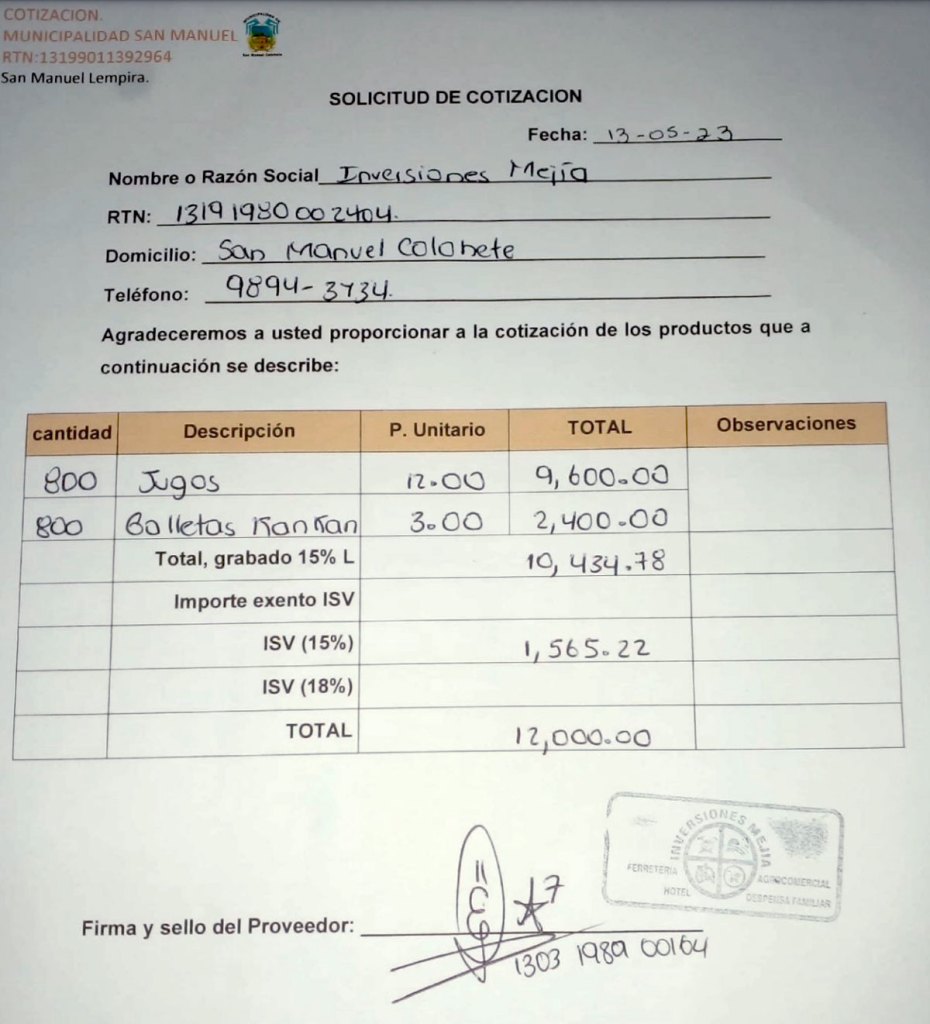
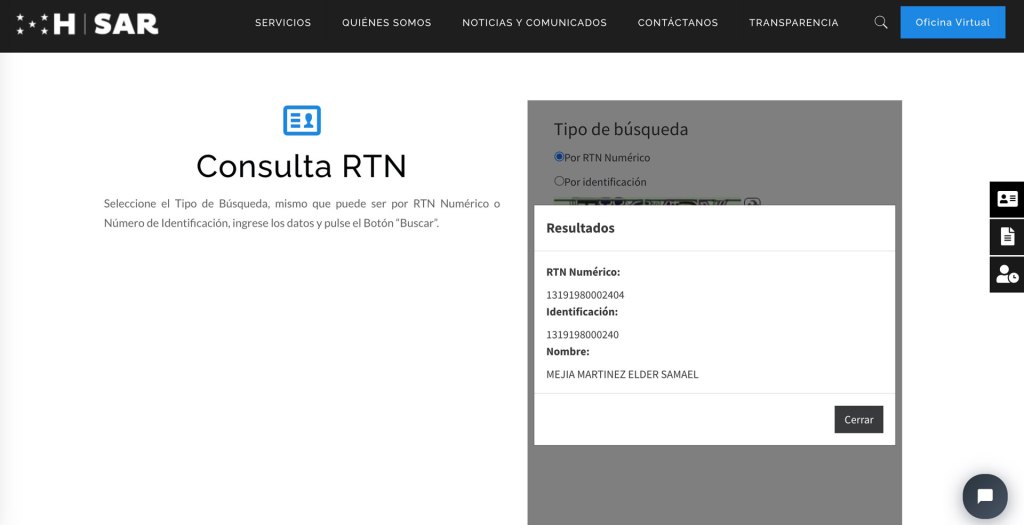
Mejía arrived that morning nearly two hours after the office opened. Wearing loafers, crisp blue jeans, and a colorful, freshly ironed plaid dress shirt, he greeted everyone warmly. Humble farmers and tradesmen removed their cowboy hats before exchanging a firm handshake, moved by whom many of them call a “man of the people.”
A native of San Manuel de Colohete, the mayor’s family is well known. They have operated several hotels, hardware stores, and a real estate company in the area for years. It was a perfect entry into politics, but Mejía told us that he never saw himself becoming a public official.
When the municipal elections approached in November 2021, he was working as a school teacher. But a few months before the vote, he said a group of residents urged him to run and unseat the incumbent, J. Inés Mejía Romero.
Political divisions were growing, and Mejía said he and many others felt that Romero had grossly mismanaged the city, racking up large debts and turning a blind eye to growing deforestation. In one instance, Romero even fled a town hall meeting as townspeople demanded to know more about how municipal funds were being used.
So it was that Mejía launched what seemed like an unlikely bid for mayor. And when the polls closed, Mejía had won by a razor-slim margin of about 400 votes. His party, Liberty and Refoundation (Libertad y Refundación – Libre), also won the governorship for the department of Lempira, and its presidential candidate, Xiomara Castro, coasted to an historic victory and became Honduras’ first female president.
Backtracking on the Backtracking
On the campaign trail, one of the strategies Mejía used to secure votes included making promises to communities that had long felt disenfranchised by Romero. In addition to the controversial road work in town opposed by the community in San Juan, he also committed to rebuilding a remote road within a protected zone of the Celaque Mountain National Park.
It was a bold promise. Hurricanes Eta and Iota had ravaged the region in 2020, and repairing the thoroughfare would directly benefit four Indigenous communities living in the area. San Manuel de Colohete is one of 11 municipalities located within the park. However, the government declared it a “protected area” in 1987, a designation that requires Mejía and other elected mayors to work together to preserve Celaque’s natural resources.
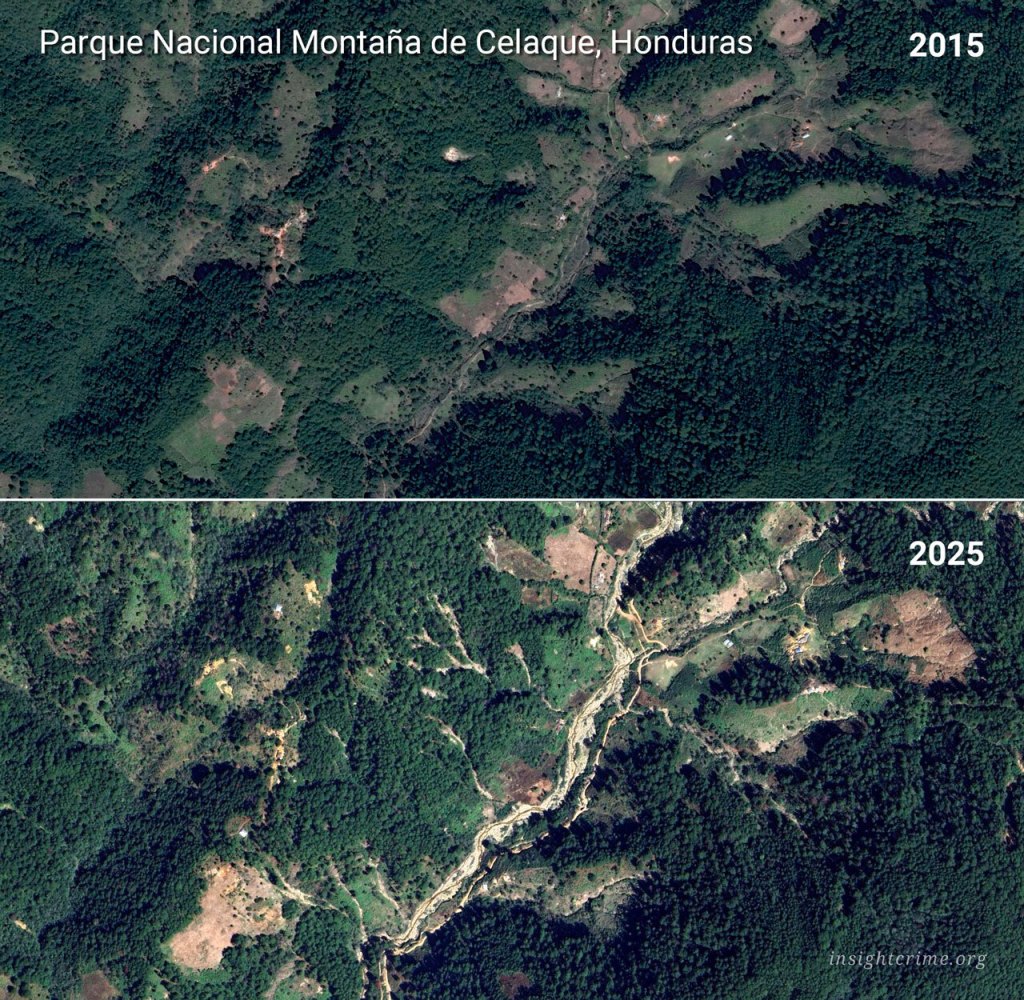
After taking office, Mejía went back and forth on the issue — first backtracking on his campaign promise, then backtracking on his backtracking. Throughout, the Indigenous communities who stood to benefit the most from the road repairs kept lobbying for the road repairs.
“They are not going to come stop us,” one of the community members told Mejía during one of many contentious encounters. “If we have to shed blood here, we will do it.”
As pressure from his constituents grew, Mejía found a workaround. Instead of doing it as a municipal project, he could channel it through the communities themselves, arguing that they have a much better grasp than the government on how to protect their environment. He and the other mayors inside the park went on to sign an agreement with the four Indigenous communities that was essentially designed to cover them in the event of any conflict related to the road’s construction. While Mejía’s office supported the project, this shifted some of the responsibility onto the communities.
The mayor’s office tried to distance itself from the project. But, according to his own admission in a video obtained by InSight Crime, the mayor allocated more than 400 hours of labor and the use of a tractor to help rebuild the road. In all, local officials estimated the project cost city hall at least $1 million Lempiras (almost $40,000).
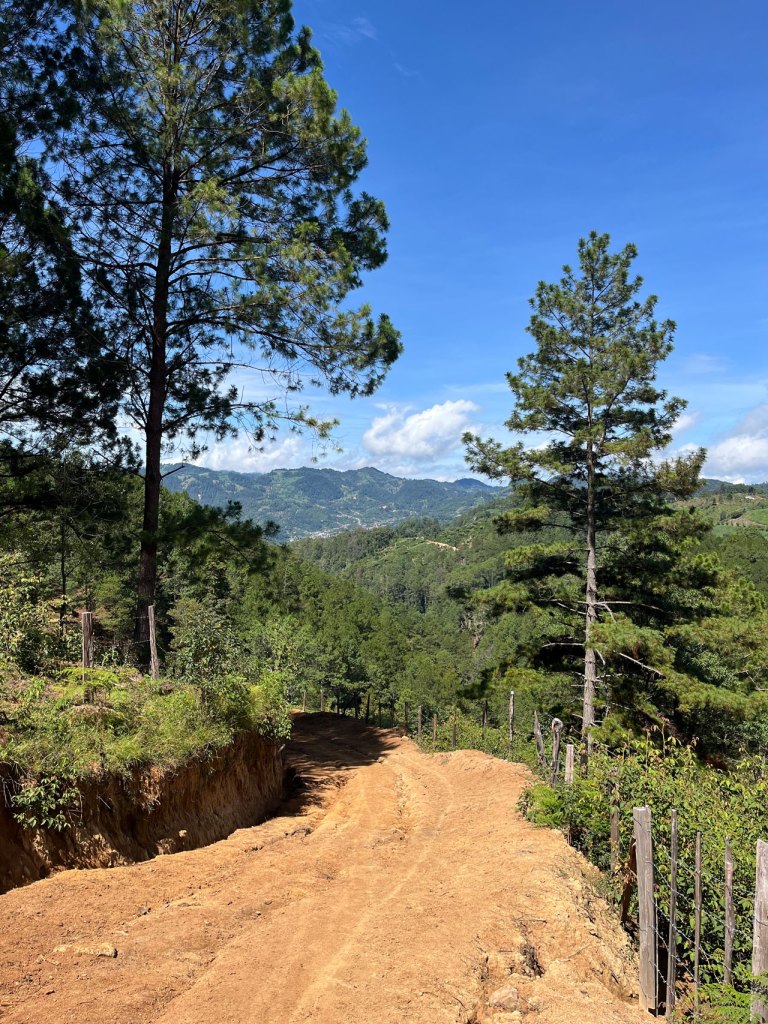
Still, Mejía got some top cover. In July 2022, the mayor invited Jorge Salaverri, the vice minister of the Ministry of Natural Resources and Environment (Secretaría de Recursos Naturales y Ambiente – SERNA), to visit one of the communities inside the Celaque Mountain National Park.
There, Salaverri expressed his support for the project.
“We know that we are in a protected area [but] what I’m here to do is commit myself to also being a spokesperson [for the road] and to come together with the mayor,” Salaverri told the crowd, according to a video of the meeting obtained by InSight Crime.
“I think it’s easier for us to agree and get this road completed and get it to where people need it,” he added during the meeting.
Two months later, photos and other video evidence surfaced showing that the initial manual labor had given way to heavy machinery. Alarmed, members of the ICF, as well as the Mancomunidad de Municipios del Parque Nacional Montaña de Celaque (MAPANCE), which was formed to manage and protect the park’s natural resources, notified the Attorney General’s Office.
Legal Battles, Political Shenanigans
By early 2023, at least two formal complaints concerning the road in Celaque had been filed against Mejía with the environmental unit of the regional prosecutor’s office. The Attorney General’s Office eventually opened an investigation, but the process was slow. It’s a small team, and the head and deputy coordinators of that unit handle dozens of cases spanning the entire western part of Honduras. In addition, the site of the illegal road is remote and difficult to access.
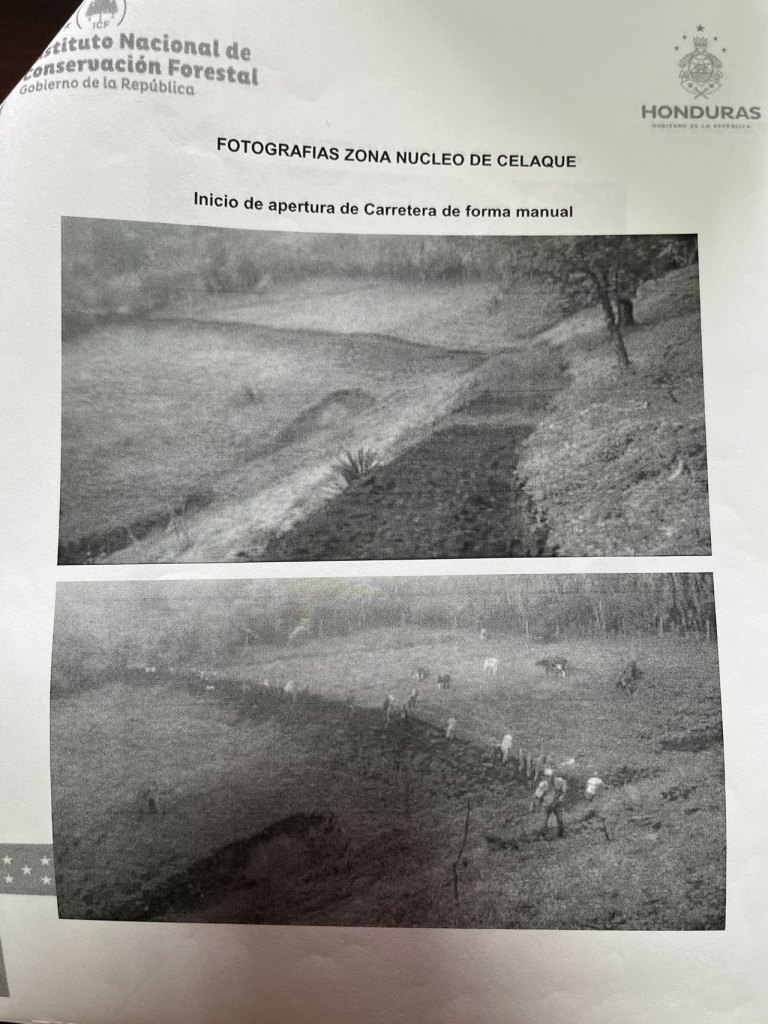
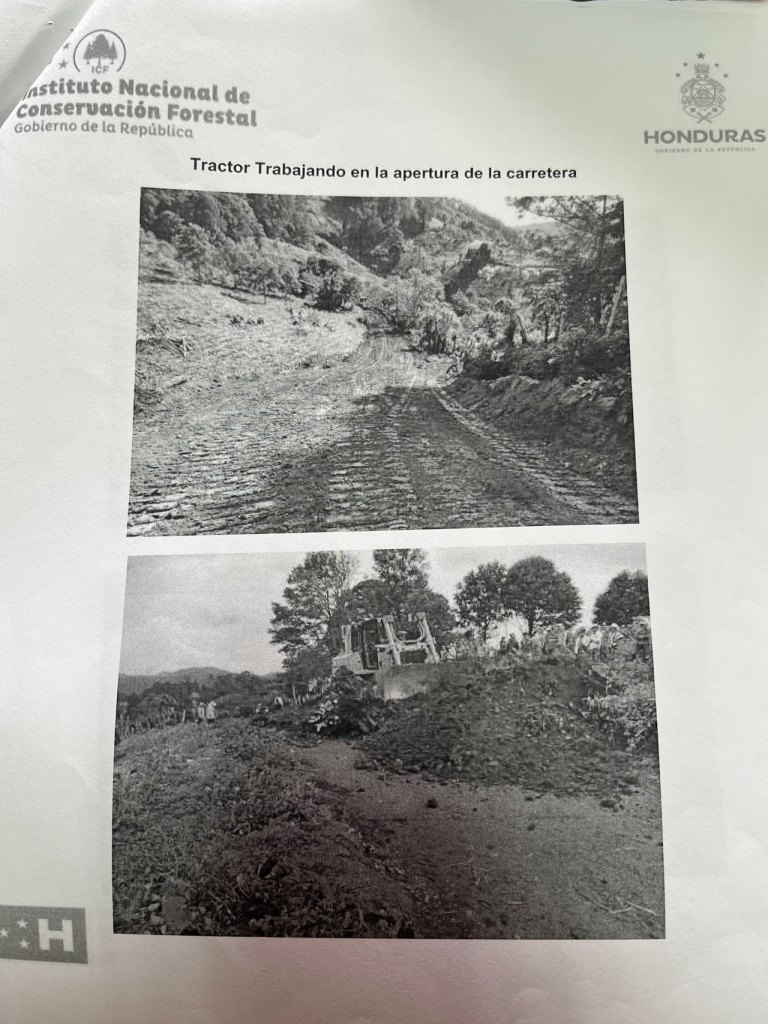
Meanwhile, work continued. At one point, desperate to slow the construction, the ICF called Teófilo Enamorado, the governor of Lempira, to organize an urgent meeting of the park mayors’ committee to discuss the environmental impact of the road. But the governor, according to the ICF official who called him, never formally responded.
The governor later told InSight Crime that he had no knowledge of the road until after he heard complaints and was contacted by the ICF. But soon after the meeting request was ignored, documents obtained by InSight Crime show that Mejía contracted a company co-owned by the governor’s son to repave a road in the center of San Manuel de Colohete. The project was worth almost $2 million Lempiras (about $80,000). Mejía has also been photographed alongside the governor and his son at different Libre Party events.
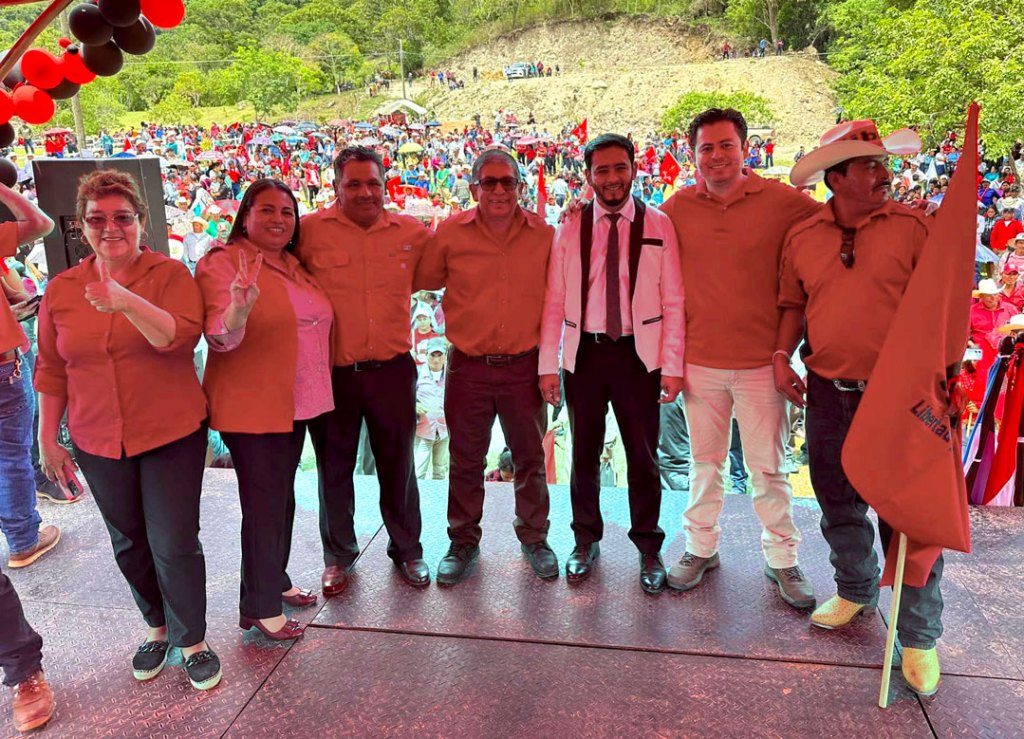
When confronted, Enamorado said that his son’s repavement project “had nothing to do with” his stance on Mejía’s road projects. His son did not respond to InSight Crime’s request for comment.
For his part, Mejía confirmed that the road project in San Manuel de Colohete went to the company connected to the governor’s son, but he also vehemently denied any wrongdoing regarding the Celaque road or that it had anything to do with his dealings with the governor. His office later reiterated that the road in Celaque had been constructed by the Indigenous communities without municipal assistance.
It is a dubious claim. Members of the community did not respond to InSight Crime’s request for comment, but forest officials working with MAPANCE, who have years of experience in this remote region, said local residents would have had a hard time contracting the machinery and the labor needed to re-build such a road.
Meanwhile, the only regulatory authority connected to the case washed his hands of any responsibility as well. In a statement, SERNA’s Salaverri told InSight Crime that “at no time was the construction of this road verbally authorized, as it is not within the authority of this secretary to issue oral permits, and there is a protocol to follow for this type of infrastructure.”
He added that the “co-managers [MAPANCE] of Celaque National Park should have stopped the construction of that illegal road from the beginning and held those who paid the operators of the heavy machinery legally responsible.”
The road was eventually completed, and after finishing construction, Mejía held a meeting at the mayor’s office to celebrate. He invited local council members and other members of the community to attend the official inauguration, according to a video obtained by InSight Crime.
“We had to support them. We even brought SERNA’s vice minister to those communities, and now we are going to celebrate one more project completed with the resources of our administration,” he boasted.
A Project Approved Without Consultation
Despite the controversy in Celaque, Mejía brought up the road project near the El Rancho micro-basin during an August 2023 municipal board meeting. He proposed partnering with the National Coffee Fund, whose mission is to improve the road infrastructure in Honduras’ coffee-growing regions. San Manuel de Colohete is located in the department of Lempira, one of the country’s top coffee-producing areas.
The project would cut a more direct route for residents of a nearby village to access the center of San Manuel de Colohete. An alternative route already existed, the mayor admitted, but many in the community argued it was long and winding, and these improvements would make for better connectivity.
However, the project called for the use of heavy machinery, which environmental experts consulted by InSight Crime, as well as the residents of San Juan, said would cause soil erosion and change the land’s makeup, leading to contamination of natural water sources like the El Rancho micro-basin.
In addition, it is illegal to carry out this kind of construction so close to a protected water source, according to Honduras’ Law for Protected Forest Areas and Wildlife. But environmental violations like these are not prioritized and rarely punished, and Mejía continued to push the project.
The residents of San Juan, meanwhile, pushed back. They attended town halls to voice their concerns, sought out legal advice, and worked on filing a complaint with the environmental unit of the regional prosecutor’s office.
Despite the resistance, it was not hard to get the project through the municipal government. Like the mayor, the municipal council saw a need for more infrastructure and development, and at the end of the meeting, they secured a majority vote in favor of the project.
Two months later, Mejía formally requested financial support for the road. As part of the agreement, the municipality would contribute more than 720,000 Lempiras (just under $30,000), while the Coffee Fund provided around 120,000 Lempiras (almost $5,000) and a large bulldozer.
Soon after, the mayor cleared the final hurdle when the head of the municipality’s environmental unit evaluated the site of the proposal near the micro-basin and declared that there was “no significant environmental impact,” according to documents obtained by InSight Crime. An engineer working with the Coffee Fund agreed.
The contract was signed shortly thereafter. But for Óscar Josué* and other San Juan residents, fear began to set in.
“Our goal is to protect the micro-basin and ensure no one comes to destroy it,” he told InSight Crime when we spoke to him a year after the vote. “If heavy machinery passes by within a certain number of meters, the vibration could cause the water to drain down. Then we’re left without water.”
Their fight was just beginning.
‘Water is Life’
Short and sturdy, Josué hunched down as he inspected the area around El Rancho. He wore brown leather boots and badly faded blue jeans that had large rips on both knees. A cowboy hat covered his thick black hair, weathered face, and dark eyes. A trusted machete dangled off one of his back belt loops in a leather holster.
In the months after the road project began near the micro-basin, several community members developed a plan to fight back. It was a bold strategy. Honduras is one of the most dangerous countries in the world to be a land activist. As many as 23 environmental defenders were killed in 2023 and 2024 alone, and there have been few prosecutions.
But that didn’t stop them from confronting the bulldozer that morning in late-January 2024.
“The idea of us risking our lives was to protect the micro-basin, the environment, and the trees that have been there for so long,” said Josué, who was among those who protested.
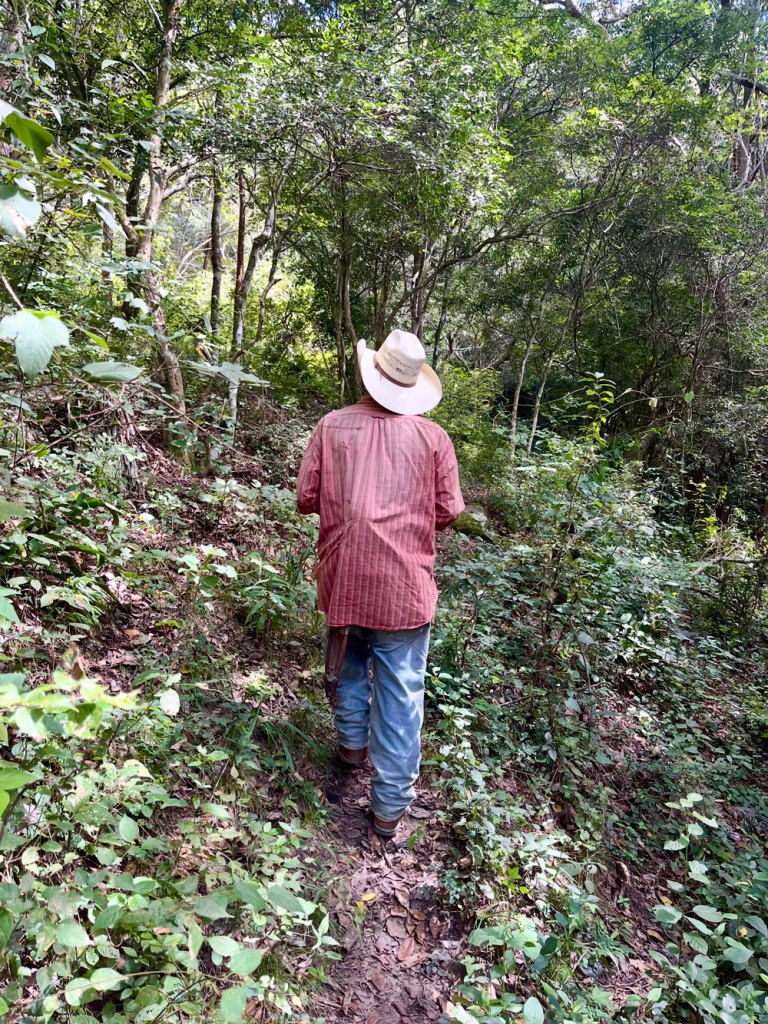
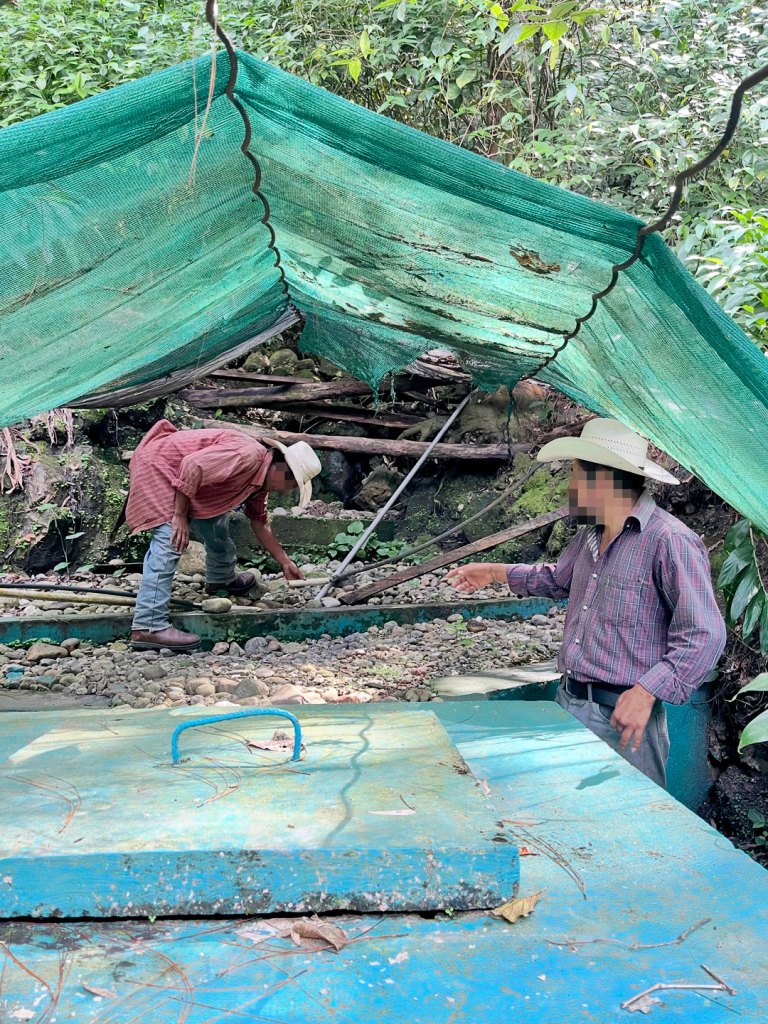
Months later, shaded from the midday sun by the thick underbrush growing beneath the pine trees, Josué remembered his childhood. When he was five years old, he said his mother made him and his siblings wake up early and head to the river with four empty plastic buckets where they’d fill them from a well on the riverbank. They’d then drop the buckets off at home before going to school, their pants soaked in water. That well dried up, as did many others.
Josué knows that politicians like Mejía are not the only ones to blame. Climate change and mismanagement have also played major roles. But to him and the others fighting for the El Rancho micro-basin, that is why the fight is so important.
For his part, Mejía was adamant that there was absolutely no damage or crime being committed.
“All of the opposition is based on personal gripes or partisan political ideologies,” he said in response to an official information request.
The residents, in contrast, insisted their fight is not political, they are just trying to protect their livelihoods and future generations.
“Water is life,” Josué told InSIght Crime. “I know that they could have killed me there for striking. But our children, my wife, our grandchildren were going to suffer the consequences.”
Prosecutors have since opened a criminal investigation into the San Juan project. They also seized the bulldozer and suspended work, but the investigation is ongoing.
*The name of this source has been changed for security purposes.
Investigation credits:
Written by: Parker Asmann
Edited by: Steven Dudley
Fact-checking: Sam Woolston
Creative direction: Elisa Roldán Restrepo
Chapter layout and video editing: María Isabel Gaviria
Graphics: Juan José Restrepo
Photos and videos: Parker Asmann and Sam Woolston