


The endless growth of the global cocaine trade and the game of whack-a-mole to stop it has propelled innovation and experimentation from drug trafficking organizations to get their product out into the world. Hiding cocaine in banana shipments, hollowed-out lumber, and soy flour have become popular go-to methods, but traffickers aren’t resting on their laurels and always find new ways to get an old job done.
Below are five inventive approaches to transporting cocaine across borders.
Avocado Pits
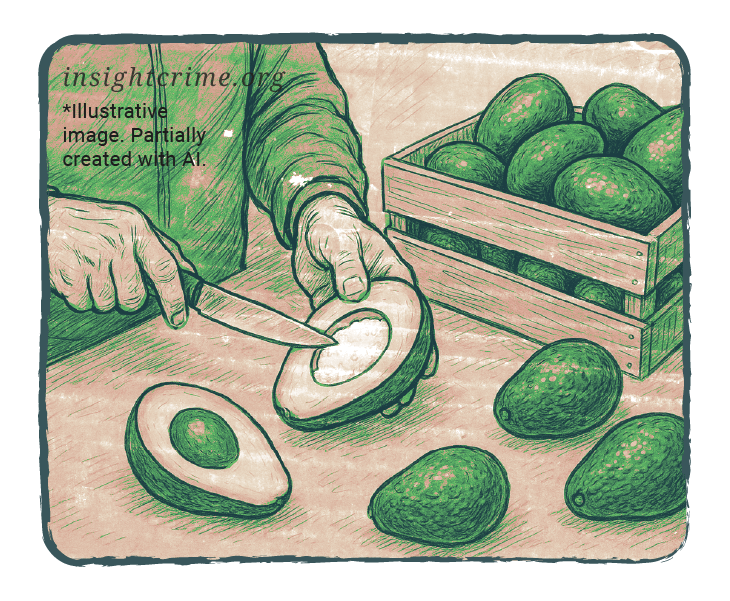
When a shipment of avocados showed up in the town of Barendrecht, not far from Rotterdam in the Netherlands, in April, it seemed normal. But when one of the avocados rolled out of its case and fell to the floor, it cracked open. It was a highly convincing plastic avocado, and beneath its cracked shell was a pit filled with cocaine.
A more thorough search revealed many other fake fruits hiding amid the real deal, which had been shipped from the Dominican Republic. In total, authorities found 400 plastic avocados hiding 80 kilograms of cocaine.
Given that Rotterdam is one of the primary entry points for cocaine into Europe, 80 kilograms is a tiny load. However, 553 kilograms were discovered in Rotterdam the next day in another shipment of avocados. This haul used the more conventional method of simply covering the bricks of cocaine with the fruit and hoping it would go unnoticed.
Smaller loads are often used by traffickers to test new routes and methods. If the lighter shipments make it through undetected, the criminal group may try sending a much larger amount using the same means. But when drugs are seized, as they were in this case, the method is typically discarded from their criminal toolbox.
Meat

Soon after his release from prison, a trafficker looking to get back into the business used his ranching experience as camouflage.
Ángel Javier Varón Castro, a Colombian rancher with ties to cocaine trafficking groups from before he ended up in prison, was arrested again in 2021 along with 20 other suspects after authorities seized 200 kilograms of cocaine wrapped in meat.
Meat has been used to try to distract drug detection dogs, but in this case, the meat was used as camouflage. The group wrapped the bricks of cocaine in pork and then vacuum-packed them in the Colombian city of Envigado before packing the drugs into a refrigerated truck headed to the United States.
Varón Castro was previously arrested in 2012 and extradited to the United States, where he served a prison sentence for cocaine trafficking until 2020. Upon his return to Colombia, he got back into the drug game, working with ex-FARC dissidents to traffic cocaine.
Surgical Implants

Drug mules smuggling cocaine inside live human bodies is a story that goes back decades. But a group called the “Surgeons” went a step further than the typical technique of swallowing small, deflated balloons filled with drugs.
This Colombia-based criminal group filled cosmetic implants with liquid cocaine. Then two surgeons working with the group performed cosmetic surgery, embedding the implants into the breasts or legs of women the group recruited with promises of work in Europe. The women would then fly to Madrid, where others would remove the implants and extract the cocaine.
Ten people were arrested in 2020 for allegedly participating in the scheme.
Surf Boards

Uruguay’s waters have garnered increasing attention in recent years, as the quiet South American nation has become an important transit country for cocaine heading to Europe. While container ships are the typical method for moving the drug, three people were arrested in 2023 for attempting to traffic cocaine to Europe hidden in surfboards.
Authorities first realized something was off due to the weight of the surfboards. The typically buoyant foam cores of the boards had been hollowed out and replaced with bricks of cocaine. A thorough inspection of each surfboard found a total of about 50 kilograms of cocaine.
Had this particular scheme been successful, the drugs would have eventually made it to Portugal, Spain, and Italy.
Narco-Cats

When you think about animals and drug trafficking, you might picture a drug detection dog or Pablo Escobar’s infamous cocaine hippos. But a cat carrying cocaine is a novelty — the animal was detained in 2021 trying to enter a Panamanian prison with a load of cocaine on its back. A similar case happened in 2025, when a cat was caught trying to enter a prison in Costa Rica.
Perhaps the cutest of all methods, relying on narcocats is unlikely to scale well. Larger operations using multiple animals might be challenging — rather like herding cats — but their use does have some benefits: the cats did not speak a word to investigators.