



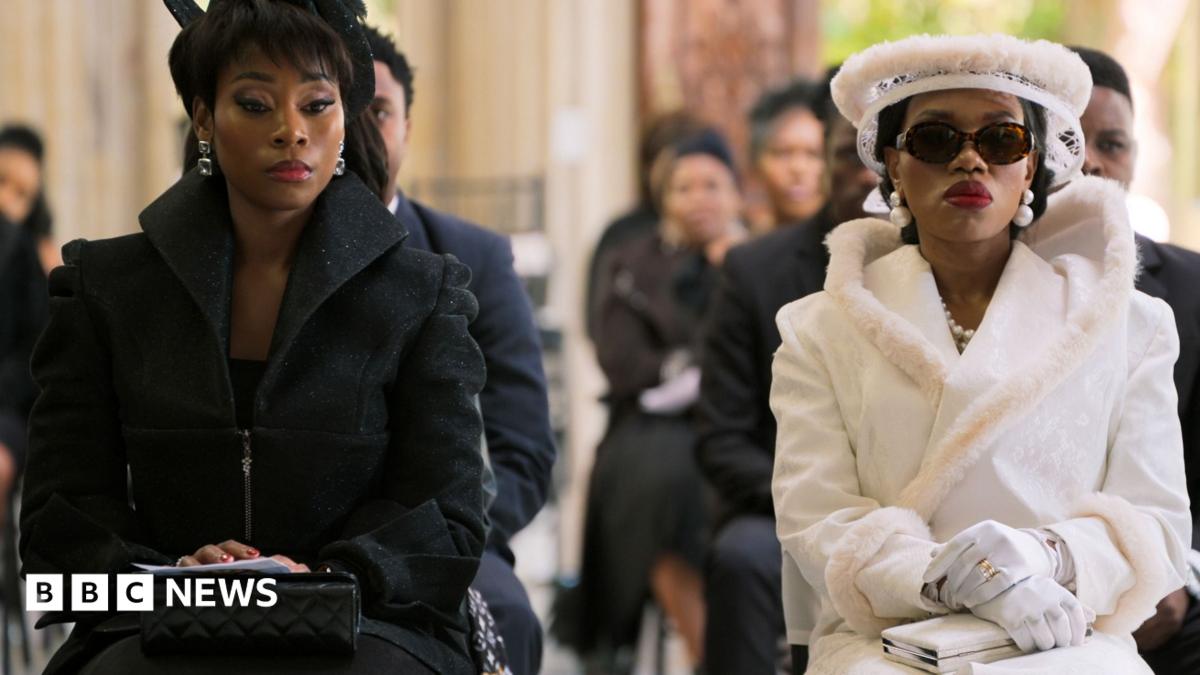
Letlhogonolo Mogale, who binged the show days after its release, described Jonasi as an “serial cheater” and “opportunist who would do anything to satisfy himself”.
The 35-year-old is not from a polygamist family herself, nonetheless The Polygamist’s storyline resonated and highlighted “social ills that happen and [are] normalised in South Africa”.
“What stuck out for me personally was how broken families are and how broken society is,” she told the BBC.
Polygamy is legally recognised in South Africa and within Zulu, Xhosa, Ndebele and Venda cultures, among others, it is not uncommon for a man to have multiple wives – as happens in some other African and Muslim societies.
The women tend to be set up in their own households though there is usually co-operation between co-wives in terms of child-rearing – something that can be less realistic in urban settings.
For Mogale the polygamy in the show is duplicitous, secretive and “forced”.
It is “not supposed to be that way”, she said, adding that the scene that best illustrated this was between Jonasi and his eldest daughter Mpume.
Jonasi has six children altogether, with three women, and is closest to Mpume who is known as “Daddy’s Girl”.
But as a teenager, broken by her father’s deceit, neglect and unfaithfulness, Mpume tries to express her feelings in a letter that she starts to read out loud to him.
His reaction – turning up the volume on the TV and ignoring her – stunned many, including Mogale.
The show does not shy away from tackling other issues such as sexually transmitted diseases, gender-based violence and the trauma these often inflict on African families.
There is also a controversial plotline about HIV.
With 13% of South Africa’s population living with the virus – polygamous unions have divided opinion in the country with many pointing to the dangers plural families face.