


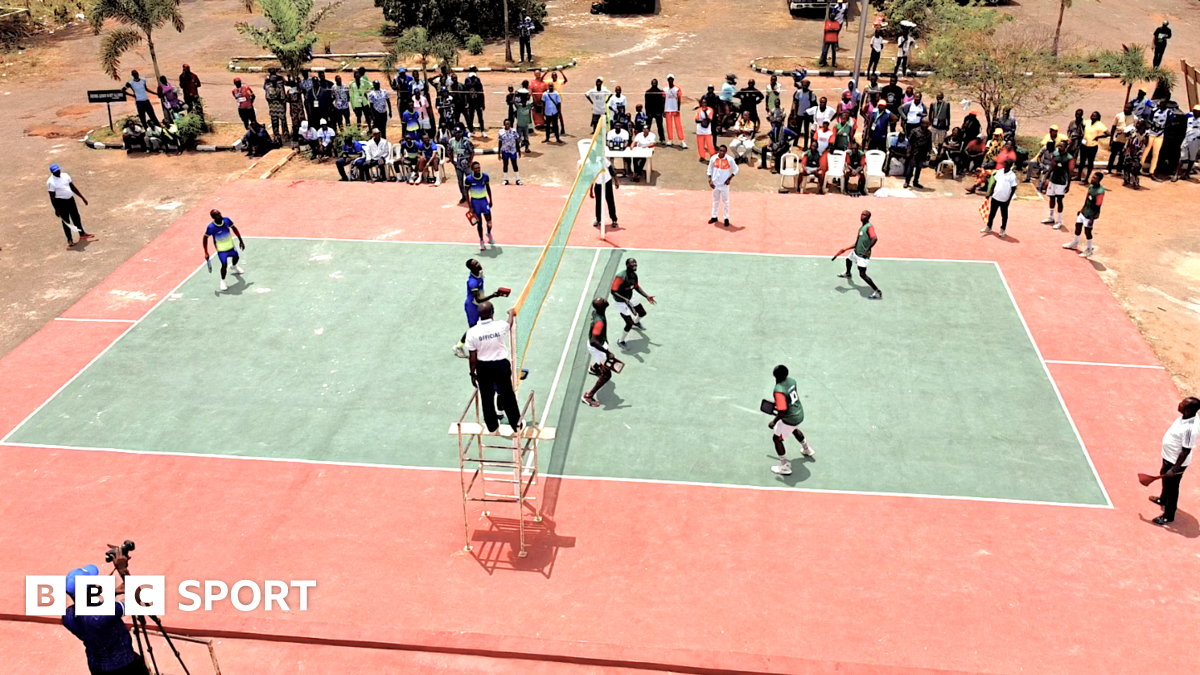
From its simple beginnings, Abula has been a regular event at Nigeria’s biennial National Sports Festival since 1998. It is also played at military camps and school sport events in parts of the country.
Just 10 years after being invented it received patronage from the International Olympic Committee through the Sport for All programme and the Nigeria Olympic Committee.
Although Abula is yet to feature at the African Games, that initial recognition remains a point of pride for its pioneers and strengthened efforts to spread it across the West African country.
But Abula faces the challenges that many emerging sports encounter: limited funding, lack of infrastructure and little media exposure.
Courts are not widely available, equipment is often improvised and competitions are infrequent.
“For now, there is no budgeting provision for this sport,” said Olomo Agbadabina, president of the Nigeria Traditional Sports Federation, which monitors the growth of indigenous games like Dambe, Langa, Ayo and Kokowa alongside Abula.
“But with the coming on board of the present National Sports Commission, we have been assured that funding will not be a problem.”
However, advocates of the game see these hurdles as opportunities.
If supported with sponsorship and structured promotion, they believe Abula could grow quickly – first across Nigeria and then to neighbouring African countries.
“If we are properly sponsored, we can invite other African countries to play this game,” Agbadabina said.
“It can be introduced first to the African Games, then to the Commonwealth Games and the ultimate one – the Olympics.”
It is an extremely ambitious vision, but volleyball offers one example of a sport which successfully made the leap from local pastime to international competition.