


More than 40 countries have either formally applied or expressed interest in joining Brics, according to South Africa’s top diplomat in charge of relations with the bloc. These include Saudi Arabia, Iran, Argentina, the United Arab Emirates and Indonesia.
Brics appeared economically too diverse and geographically scattered to be effective when it was born as the Bric group, without South Africa, in 2009. Yet this very diversity seems to have guided it towards a more global perspective than that demonstrated by other regional groupings.

03:27
Joe Biden set to unveil ‘substantial’ new G7-backed sanctions aimed at Russia’s war in Ukraine
Joe Biden set to unveil ‘substantial’ new G7-backed sanctions aimed at Russia’s war in Ukraine
Advertisement
Non-resident senior fellow at the Atlantic Council Hung Tran believes that Brics “could evolve to become a counterpart to the Group of Seven (G7) in world affairs, resulting in a profound impact on international relations”. Whether this is positive or negative depends on whether China’s or India’s approach prevails.
India, Tran says, “has tried to resist China’s efforts to turn the Brics group into a support organisation for China’s geopolitical agenda, such as promoting Beijing’s Belt and Road Initiative, its Global Development Initiative, and explicit anti-US rhetoric”.
New Delhi has instead, Tran argues, tried to focus the grouping’s Brics attention on “South-South economic and financial cooperation projects, initiatives to reduce global reliance on the US dollar-based international financial and payment system, and reforms of international financial institutions to give developing countries more voice and representation”.
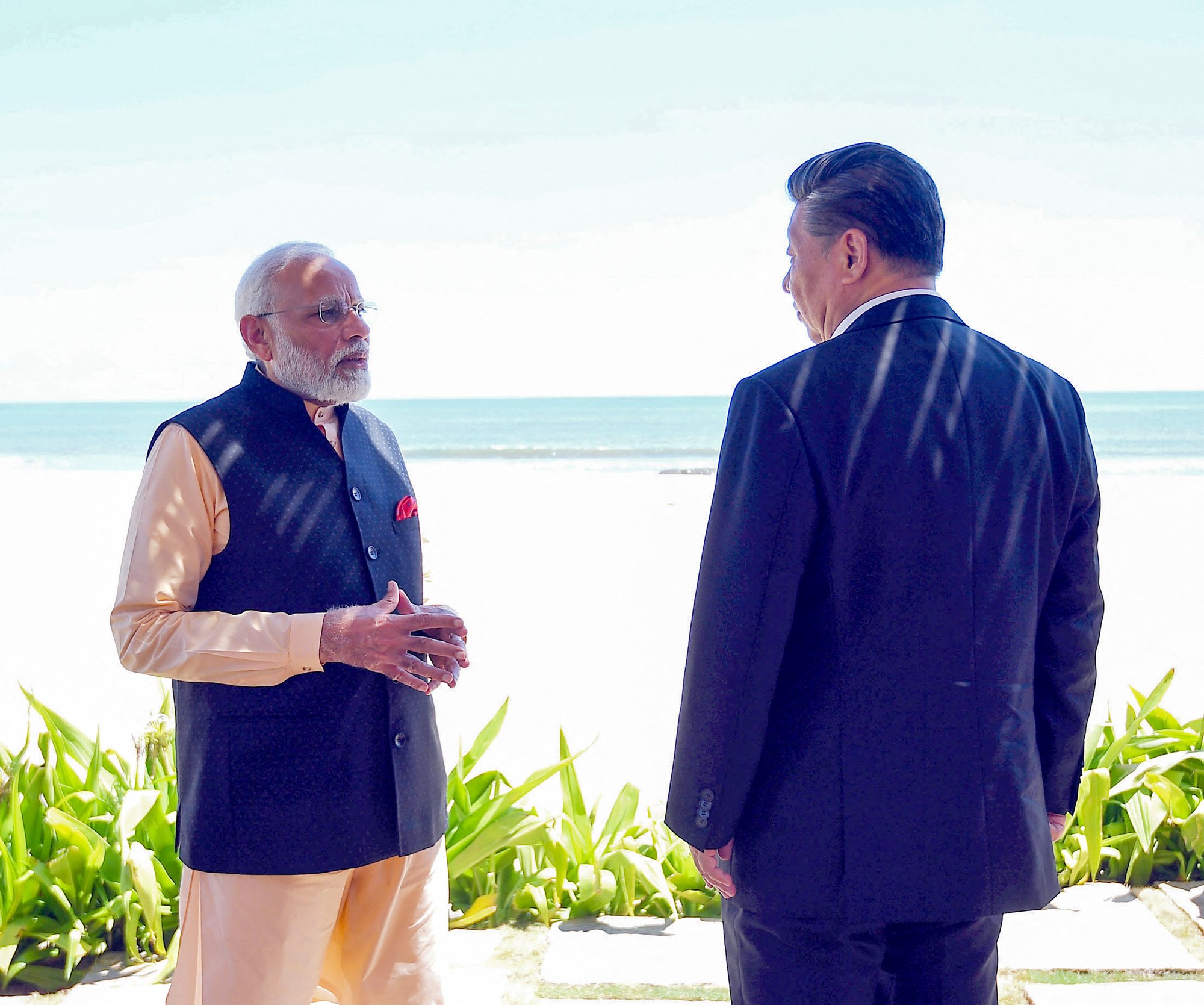
This may or may not be an accurate characterisation of the Sino-Indian situation within Brics but it does not quite square with the tone of the 2022 summit at which China showed strong support for bloc’s push to foster global economic and financial system reforms.
So, too, has Brazil, whose former president Dilma Rousseff was elected president of the New Development Bank in March of this year – a development likely to raise the profile of and bring new members to the Shanghai-headquartered institution, which was founded to mobilise resources “for infrastructure and sustainable development projects in emerging markets and developing countries” and which has financed 98 projects worth around US$33.2 billion.
Why African nations are keen to join the expanding Brics club
Why African nations are keen to join the expanding Brics club
Advertisement
Rousseff’s presence at the Brics summit should provide a focus of attention around which Brics founder states can unite by emphasising its multilateral priorities.

In 2015, the year of the NDB’s founding, the bloc launched a Contingent Reserve Arrangement of US$100 billion to provide support to members in case of balance of payments problems, potentially offering Brics members an alternative financing source to the IMF.
Advertisement
Even earlier, in 2010, the grouping launched an interbank cooperation mechanism to facilitate cross-border payment and settlements between banks in member countries in local currencies. Linking their national payment systems is also being explored by some member countries.
The Brics idea came into being in 2001 when Jim O’Neil of Goldman Sachs suggested the acronym to describe four key emerging markets – he did not include South Africa – and was not taken entirely seriously at the time. Now they account for more than a quarter of global GDP, and no one can dismiss lightheartedly now their challenge to the established economic order.
Anthony Rowley is a veteran journalist specialising in Asian economic and financial affairs
Advertisement