


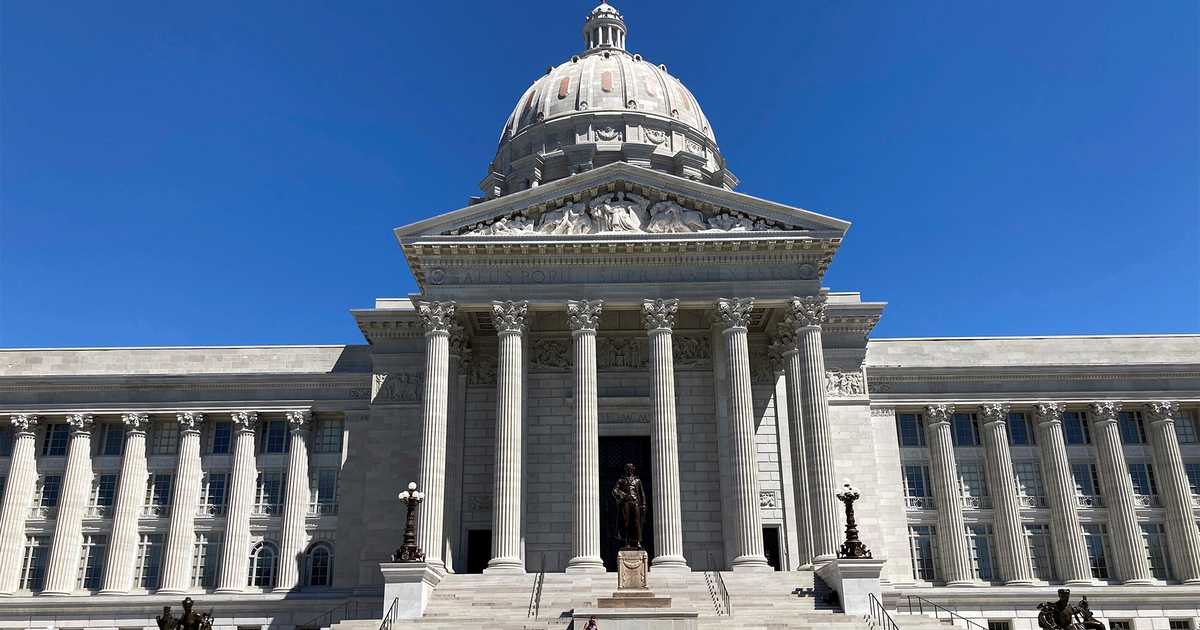
Did I say ping-pong match? We might be in full Tilt-A-Whirl mode in Missouri right about now.
Not an hour after U.S. Supreme Court Justice Brett Kavanaugh declined to intervene in the fight over Missouri’s newly redrawn congressional map — seemingly leaving the old 6-2 map in place for November — a federal judge in Missouri stepped in from a different direction and put the new map right back in play.
Advertisement
In a separate suit, Chief U.S. District Judge Stephen Clark, of the Eastern District of Missouri, granted a temporary restraining order (TRO) late Tuesday afternoon requiring Secretary of State Denny Hoskins to use HB 1 — the new map — for the November 3 general election.
That TRO lasts for 14 days. A preliminary injunction hearing is forthcoming.
🚨 A federal judge has restored Missouri’s 2025 congressional map for the November election, just minutes after Justice Kavanaugh separately denied the state’s bid to revive it. pic.twitter.com/77r3RQPep6
— SCOTUS Wire (@scotus_wire) September 8, 2026
A brief refresher on how we got here:
- September 2025: Missouri Legislature passes HB 1, the new congressional map.
- August 4, 2026: Missouri conducts its congressional primaries using HB 1.
- September 3: Missouri Supreme Court rules the map was subject to referendum and says HB 1 was suspended once the referendum petition was properly submitted — meaning the 2022 map returns for November.
- September 8: Kavanaugh refuses Missouri’s request to stay that state-court judgment.
Less than an hour later, Clark grants a TRO in the separately filed federal case, Onder v. Missouri, requiring use of HB 1.
To be clear, Judge Clark did not overrule SCOTUS or SCOMO.
The Missouri Supreme Court answered a state-law question: Can Missouri voters use the referendum process to challenge a congressional redistricting law?
Recommended
Advertisement
Answer: Yes.
And Clark actually agrees with that. He expressly finds that the federal plaintiffs are not likely to win their Elections Clause argument. Supreme Court precedent allows states to make referendums part of their legislative process, including for congressional redistricting.
So Clark isn’t saying: “Missouri Supreme Court, you got it wrong.” Instead, he’s essentially saying: “You may be right about the referendum. But after Missouri actually held its primary using HB 1, switching maps before the general election creates a different federal constitutional problem.”
First, there’s Article I, Section 2 (of the U.S. Constitution). Clark reasons that primary elections are an integral part of choosing members of Congress, and Missouri already held its primary under HB 1. Switching maps now would mean some voters wind up in districts where they had no role in choosing the nominees. Clark says that effectively nullifies their primary votes and finds that the plaintiffs have a “high probability of success” on this claim.
Then, there’s the Equal Protection Clause. As Clark explains, under the SCOMO ruling, some voters would remain in the same district for both the primary and general elections, while others would be moved into different districts. And that presents the same problem for candidates: Some retain the electorate they spent months campaigning to; others suddenly face a different set of voters. Clark says that creates unequal treatment, thus burdening fundamental voting rights, and again finds plaintiffs have a high probability of success on the claim.
Advertisement
And then there’s the Purcell principle: Normally, Purcell cautions federal courts against changing election rules close to Election Day. Clark says: “This case presents Purcell in reverse, but with no less weight.” The election has already begun in a meaningful sense — Missouri held its congressional primaries under HB 1. So Clark views HB 1 as the status quo, not the 2022 map. Changing maps now, he writes, would “wreak havoc” and cause widespread voter confusion.
So, as of Tuesday evening, Missouri is once again set to use the new HB 1 congressional map for the November election. Clark has prohibited Secretary of State Hoskins from using any other congressional map. And Missouri Attorney General Catherine Hanaway has affirmed the state “is prepared to follow and comply with” Clark’s order.
Missouri is prepared to follow and comply with Chief Judge Clark’s order that binds the state to using the Missouri FIRST map for the November General Election. We maintain that changing the congressional map in between the primary and general elections is simply not feasible and… https://t.co/Ha3V07jaJ9
— Attorney General Catherine L. Hanaway (@AGCHanaway) September 8, 2026
But it’s important to bear in mind that this is only a TRO — one that expires in 14 days unless it is extended or replaced. And Clark will be holding a hearing for a preliminary injunction.
Advertisement
And either way, it’s a safe bet that this ruling will be appealed.
So, to recap: The lower state court said new map. The Missouri Supreme Court said old map. Kavanaugh declined to disturb that ruling. And moments later, a federal judge said new map — albeit for an entirely different reason.
So…ping-pong, Tilt-A-Whirl, what have you: Buckle up, friends. The ride ain’t over.
Editor’s Note: The 2026 Midterms will determine the fate of President Trump’s America First agenda. Republicans must maintain control of both chambers of Congress.
Help RedState continue to report on the Democrats’ radicalism and inform voters as our nation faces a crossroads. Join RedState VIP and use promo code FIGHT to receive 60% off your membership.