


He was responding to pressure from lawmakers to dish out offers in the face of the airline’s bumper profit.
“The best [way of returning their favour] is to restore our services as soon as possible and invest in the future,” he told lawmakers, pointing to an investment of 70 flights, including passenger flights and freighters, for its expansion.
“In the future, we need to be prudent with our expenditure … We need to make investments to consolidate Hong Kong’s status as an aviation hub.”
We need to make investments to consolidate Hong Kong’s status as an aviation hub.”
Lam said the profit would partly be used to repay the government, “which I know is taxpayers’ money”.
In 2020, the government provided a multibillion-dollar bailout to help the company survive the Covid pandemic, which devastated the global travel industry.
Preference shares worth HK$19.5 billion were issued to the government as part of the recapitalisation deal agreed during the pandemic.
Cathay bought back half of the shares for HK$9.75 billion last December and said it planned to acquire the remainder by the end of July.
The airline’s appearance before the panel follows that of MTR Corporation’s last year, to face what observers have said will be a more aggressive Legco as lawmakers try to play their role to check the government despite having a “patriots-only” chamber.
Legco was overhauled in 2021 to ensure only “patriots” could become lawmakers, effectively leaving it without any opposition.
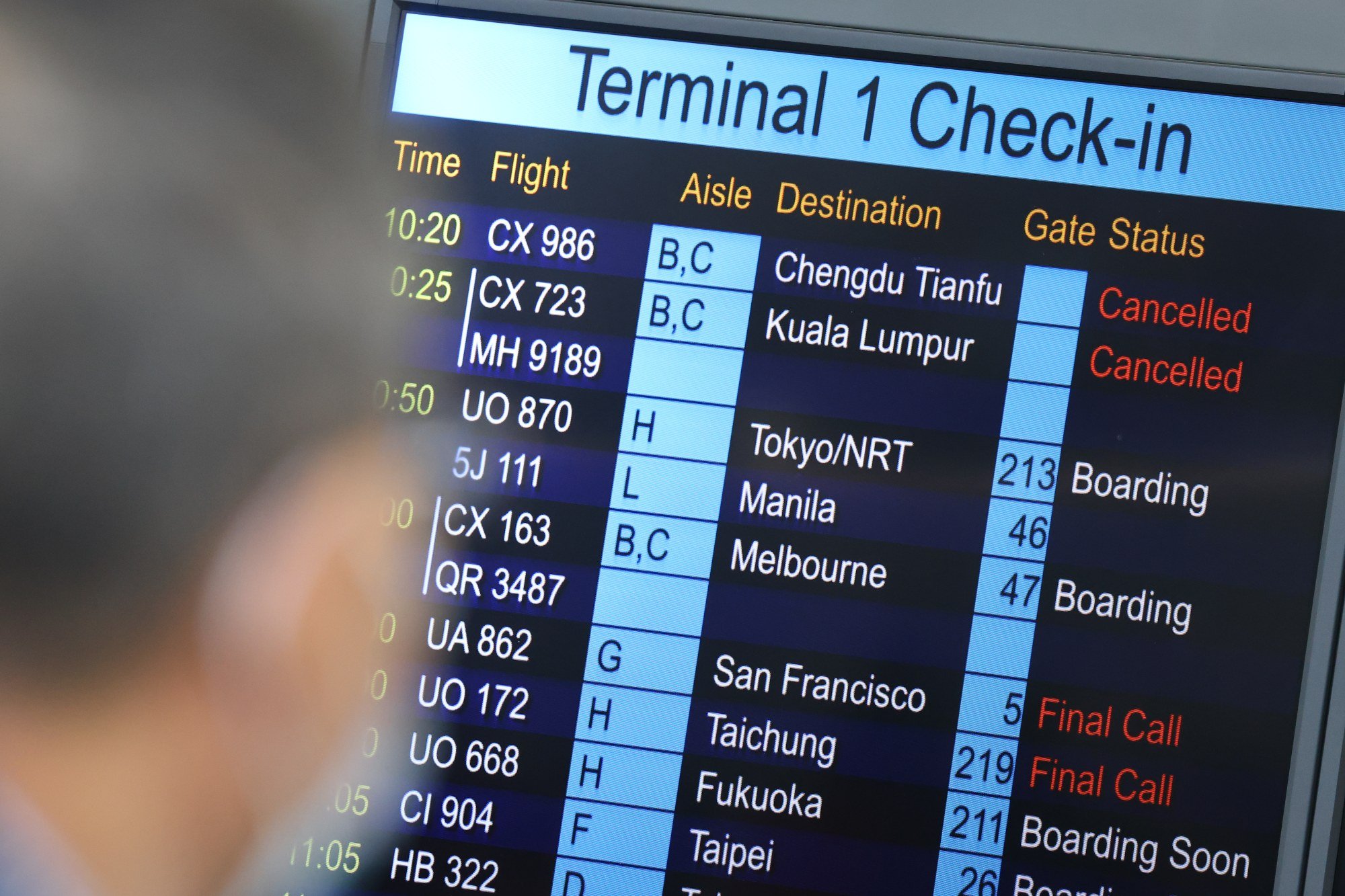
Cathay was recently under fire from the government and the public for poor crew roster planning after it cancelled 786 flights between December last year and February – more than 4 per cent of its total operations.
The flagship carrier attributed the cancellations to factors such as internal planning failures and an underestimation of pilot reserve levels.
Hong Kong government hits out at Cathay over 786 flight cancellations in 2 months
Hong Kong government hits out at Cathay over 786 flight cancellations in 2 months
It promised to work to prevent disruptions during the Easter holiday period after government criticism.
Cathay highlighted an “unanticipated and sustained increase” in pilot absences because of seasonal illness and the high number of flights over the 2023 festive season.
The airline added many pilots were also in line to exceed the maximum 900 flying hour-limit over 12 months and could not cover for absent colleagues.
But the chairman of the Hong Kong Aircrew Officers Association said it was offensive that the airline was trying to blame pilots and added the 900-hour limit was unrelated to cockpit crew falling ill.
The bounce back came after a net loss of HK$6.62 billion in 2022 and signalled a strong post-coronavirus recovery which ended a string of large deficits.
Hong Kong’s Cathay Pacific to reinstate service to Saudi Arabia
Hong Kong’s Cathay Pacific to reinstate service to Saudi Arabia
The annual profit was Cathay’s highest since 2010, when the airline raked in HK$14 billion.
Cathay last week said it had learned a lesson from the flight cancellations and had pushed back its target for restoration of pre-pandemic capacity to early 2025.
The airline’s figures for February showed it carried 1.8 million passengers, up 61.6 per cent, year on year and 107,039 tonnes (117,990 tons) in cargo, a 3 per cent increase.
It also revealed plans on Thursday to relaunch flights between Hong Kong and Riyadh in the fourth quarter of the year, as the government pursues stronger trade and investment links with Saudi Arabia.