


When a white sedan pulled up alongside her Tesla Cybertruck on the side of a road in Culiacán, Sinaloa, social media influencer Nicole Pardo—known to her followers as LaNicholette—didn’t run. Instead, iPhone in hand, she paused. Her reaction, or lack thereof, provoked a common question with any influencer: Is what I’m watching actually real?
The rest of the video doesn’t help. Millions later watched the silent footage recorded by her truck in January this year, in which she feebly puts her hands against the passenger door of the sedan to stop it from opening. But the 20-year-old is seemingly no match for the two young men who emerge from the car. One wears an almost comically large red shirt to cover his face. Still, he has an automatic weapon hanging from his right arm. The other wears a black t-shirt, and his face is bare. By the end of the 41-second video clip, Nicole is forced into the back of the car, which reverses and drives away.
Pardo’s abduction was made for the algorithm and went viral within hours, and for days, she was gone. Formerly known to her 211,000 followers as La Nicholette (her Instagram handle is now simply Nicholettepardo), she was assumed to be the latest in a wave of killings of influencers in the state of Sinaloa, the newest front in the ongoing civil conflict between the Chapitos and Mayiza factions of the eponymous criminal group.
But many questions remain unanswered, most of which swirl around authenticity. And her tribe of social media influencers, whether truly connected to the drug trade or not, are complicit in the confusion surrounding their role, income, and interests.
Sinaloa’s Influencer Deathlist
About a year before Nicole was kidnapped, a small airplane flew low over Culiacán, throwing pamphlets out into the air. Passersby picked them up off the sidewalks and likely wondered if they knew any of the 25 tiny black and white faces on them. Nearly all of them were local influencers. Three were stamped with the word “ELIMINADO” [eliminated]. One of the names on the list was Peso Pluma, the wildly popular, Grammy-award-winning Mexican musician.
“Residents: These people are not innocent,” the text on the pamphlet read. “We ask you attentively to stay away from these YouTubers and to stop supporting and watching their content because they finance the Sapitos. No more abusing the townspeople!”
Local reporting connected the pamphlet to the Mayiza faction of the Sinaloa Cartel, which was and remains locked in a fierce battle with the Chapitos. The fight began in 2024, after a top member of the Chapitos betrayed the head of the Mayiza, hence the reference to sapitos, narco-slang for snitch.
By the time LaNicholette was kidnapped, at least nine of the influencers on the death list had been killed. Among them were Leobardo Aispuro Soto, or “El Gordo Peruci,” who was known for his comedy sketches, and Gail Castro, who was also known as Gail Toys and was the brother of perhaps the state’s best-known social media personality, Markitos Toys. Gail was shot dead in a restaurant by armed men in the city of Ensenada in April 2025 after his family received death threats for three months.
For his part, Markitos Toys—whose real name is Marcos Eduardo Castro Cárdenas—has nearly five million followers on YouTube and more on Instagram, where he can be seen driving luxury cars, gifting his father a small airplane, and generally having a fine time. By the time his brother was killed, he’d already left Sinaloa after two of his restaurants were set alight.
Markitos Toys, like most influencers, keeps close control of coverage of his antics and rarely gives interviews. He prefers statements via his own social channels, some of which are posted by the media. His response to reporting around his connections to key Sinaloa Cartel figures, such as Néstor Isidro Pérez Salas, alias “El Nini,” the former head of security for the Chapitos who was extradited to the United States in 2024? It’s “not a crime to have friendships” and that his friends’ problems and business are not his. Still, Markitos denies ever “doing business” with organized crime.
But in the case of social media personalities, be they criminals, criminally adjacent, or even aspirational like Pardo, who drape themselves in the signage of narco culture, the evidentiary gap around the real interests, connections, and income of this cast of characters remains a major part of the story and leads to rumors and speculation regarding the exact nature of the relationship between influencers and the narcos themselves.
LaNicholette’s Response Clarifies Little
Unlike many of Pardo’s fellow influencers, she survived. But what exactly happened in her case is still not clear. Before she was rescued, another video of her appeared. It was a departure from her daily fare where she pouts, poses, and lip-synchs to narcocorridos— ballads dedicated to famous traffickers. She even had one made for herself by Grupo Arriesgado, a popular narcocorrido band from Sinaloa, called “La Muchacha Del Salado, La Nicholette.” To date, a live version has been watched 28 million times.
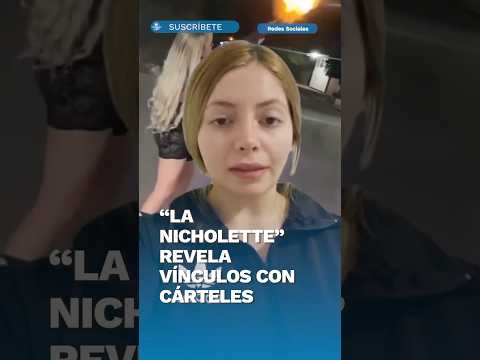
In the video that appeared while she was still missing, she wore a dark tracksuit and had her straight blonde hair tied back. She’d been working for the Mayiza faction of the Sinaloa Cartel and paying off state police, she explains in the video, her eyes darting from side to side as she read from a script.
SEE ALSO: From Fame to Fraud: How Argentina’s Influencers Help Illegal Gambling
“You all know very well that I always helped you move drugs, weapons, and money—I always helped you,” she says.
Her delivery was somber and calm. Professional.
The same day the video of Nicole popped up, she was “rescued” by security forces. When then-Sinaloa Governor Rubén Rocha Moya—who has since taken a leave of absence following allegations from US prosecutors that he helped protect the Chapitos, along with officials in his administration—is asked about her rescue, he shrugs. Nicole has been found alive, he says, and safe. He is grateful for citizen cooperation. But when pressed by reporters on how she was found, he pauses. He doesn’t know, he says. He’s unsure whether she was released or rescued, whether there had been a negotiation, a handover, or an escape. The investigation is ongoing. Details can’t be shared.
A few weeks later, Pardo, who declined to be interviewed for this article and, like her tribe, controls the messaging around her, made her disappearance even less clear. In a two-hour statement on Kick that has since been removed from the platform, she explained how she built a legitimate business selling caps and clothing connected to narco culture and narco aesthetics, which earned her around $400,000 over two years through online sales and a shop.
She was forced to read the video script by her abductors, who were part of the Chapitos, she explained, and who eventually released her because her kidnapping was such a big story. She was taken in the first place, she said, because “[Her kidnappers] also thought that everything they saw on social media was real. Because there’s nothing to it—[they could see] it’s all just rumors.”
“You all made up this whole movie that I was a narco hitwoman … it doesn’t mean anything. I’m just a regular girl.”