


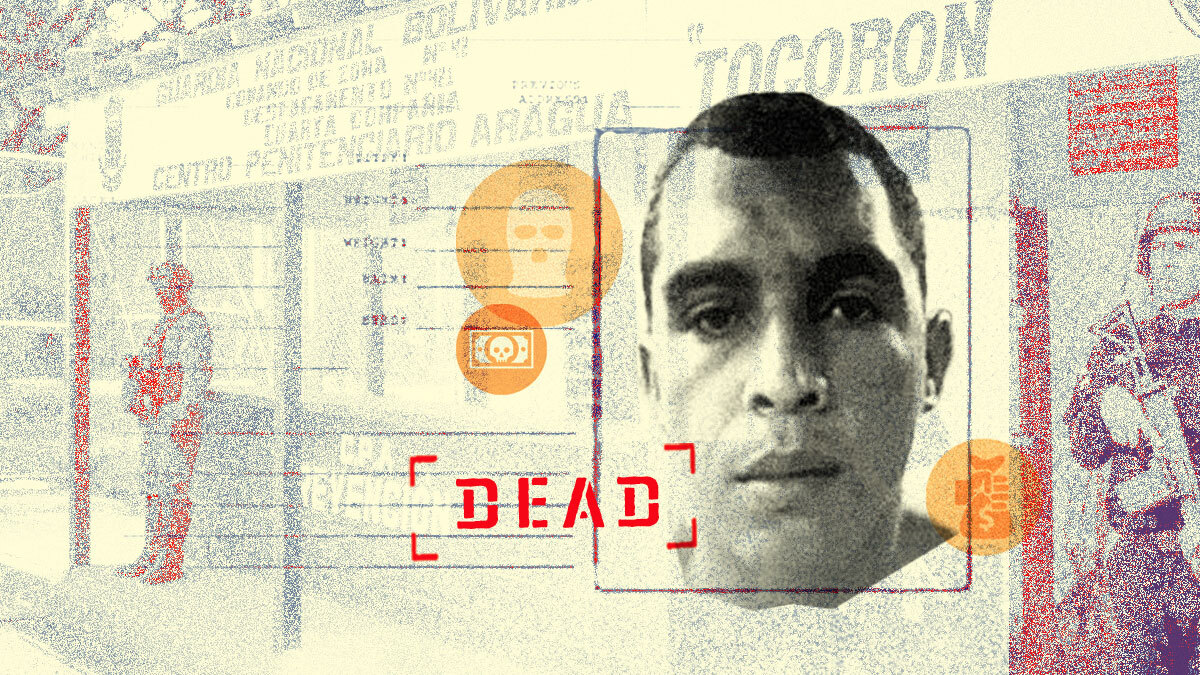
Héctor Rusthenford Guerrero Flores, alias “Niño Guerrero,” top leader of the Venezuelan criminal group Tren de Aragua, was killed in a joint operation between the United States and Venezuela.
The strike, the exact date of which remains unconfirmed, took place in the last week, was announced on June 12, and is being framed as the latest win for the Trump administration’s kingpin strategy. But his death will likely have little effect on Tren de Aragua and organized crime in the region.
SEE ALSO: Tren de Aragua Leader ‘Niño Guerrero’ Killed in Venezuela
Who was Niño Guerrero?
With an Interpol red notice and a $5 million US bounty on his head, this Venezuelan crime lord was one of the region’s most wanted criminals, and his death puts a temporary question mark over the future of Tren de Aragua, a gang Trump claimed without evidence was being used by former President Nicolás Maduro to invade the United States.
Niño Guerrero’s criminal career began in the Venezuelan state of Aragua in the early 2000s. For several years, he dabbled in drug trafficking and dealing stolen goods while earning a reputation for violence.
He was first captured in 2010 and sent to the state prison, Tocorón, on murder charges. Two years later, he escaped and spent a year on the run. When he was recaptured in 2013, his criminal career really took off, and he founded the prison gang Tren de Aragua from within Tocorón.
A few years earlier, Venezuela’s prisons had gotten out of control, creating a massive headache for the Venezuelan government. Between 2000 and 2015, the prison population more than tripled, and a series of massacres put the country in the international spotlight.
So the Venezuelan government made a deal with the devil: in exchange for keeping violence down, the leaders of the country’s prison gangs, known as pranes, were given control over their penitentiaries. Niño Guerrero was one of those leaders.
SEE ALSO: How Venezuela’s Prison System Fueled a Reggaeton Star’s Career
With Tocorón now under his rule, Niño Guerrero turned the prison into his fortress. Within the prison walls, he lived in a two-story house and oversaw the addition of luxuries like a swimming pool and baseball field in the prison. He controlled who entered the prison, charging fees for visitors and demanding a tax from inmates, while he and his lieutenants were free to come and go as they wished.
And as Niño Guerrero’s control within Tocorón grew, so too did Tren de Aragua’s reach.
From Prison Gang to Transnational Menace
From within Tocorón, Niño Guerrero ran Tren de Aragua’s criminal empire. At first, the group focused primarily on smaller-scale activities like extortion, kidnapping, drug trafficking, contract killings, and car theft.
Free to leave Tocorón when they chose, Tren de Aragua members formed new cells outside the prison walls and absorbed smaller criminal groups, expanding Tren de Aragua’s control in Aragua.
Around the same time, a wave of migration was sweeping Venezuela. Fueled by economic and political instability in the late 2010s, millions of Venezuelans moved to other countries in the region. Among these millions were Venezuelan criminals.
Expanding internationally did not appear to be a premeditated plan, but Tren de Aragua seized on the opportunity. Members were sent abroad to create new chapters and ally with local criminal groups. As in Venezuela, Tren de Aragua engaged in extortion, kidnapping, small-scale drug trafficking, and money laundering, but it also expanded its criminal repertoire, controlling human trafficking and migrant smuggling, which really boosted the group’s international reach. Its new cells were concentrated in large diaspora communities, primarily Peru, Chile, and Colombia.
As the group’s reputation grew, so did reports—some exaggerated—of the group’s presence around the region.
At the center of this criminal web was Niño Guerrero, receiving dues and pulling strings from his fortress in Tocorón.
The Fall of Tocorón and the Tren de Aragua Franchise
Pressure built on then-President Nicolás Maduro to take action against Tren de Aragua. Seeking national and international approval in the face of elections, his administration launched a major operation to take back control of Tocorón, sending in thousands of police and soldiers on September 23, 2023.
But when security forces entered the prison, many of Tren de Aragua’s top leaders, including Niño Guerrero, were nowhere to be found.
Without his seat of power, on the run, and with a huge reward for his capture, Niño Guerrero’s hold over Tren de Aragua’s web fractured. And instead of a centralized organization, the group’s cells became more like franchises, forming a loose network of criminal groups that share merely a name.
What Does Niño Guerrero’s Death Mean for Tren de Aragua’s Future?
Despite the Tocorón takeover, leaders and media around Latin America continued to call Tren de Aragua one of the biggest criminal threats in Latin American organized crime, with Niño Guerrero as one of the region’s top targets.
SEE ALSO: Tren de Aragua: Fact vs. Fiction
In 2024, the Trump administration offered a $5 million reward for his capture. Then in 2025, it named Tren de Aragua a Foreign Terrorist Organization.
What Niño Guerrero’s death means for Tren de Aragua’s future is likely very little, given the gang’s fractured and atomized nature. Although he was still the head of a group with an outsized criminal reputation, his power had diminished in the aftermath of the Tocorón takedown.