


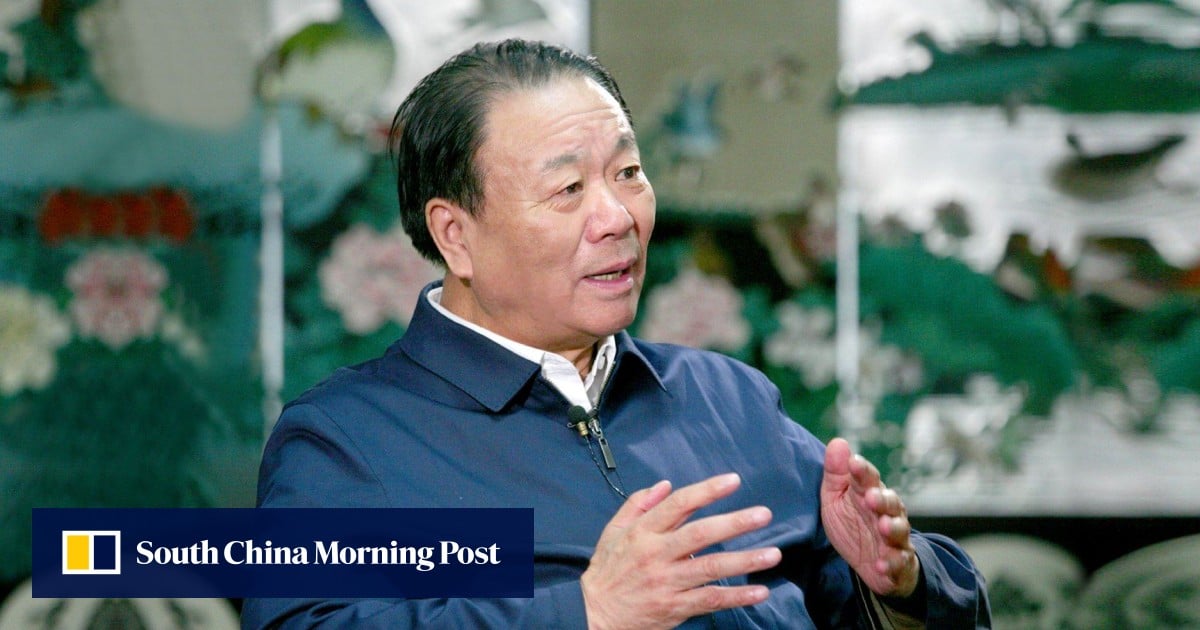

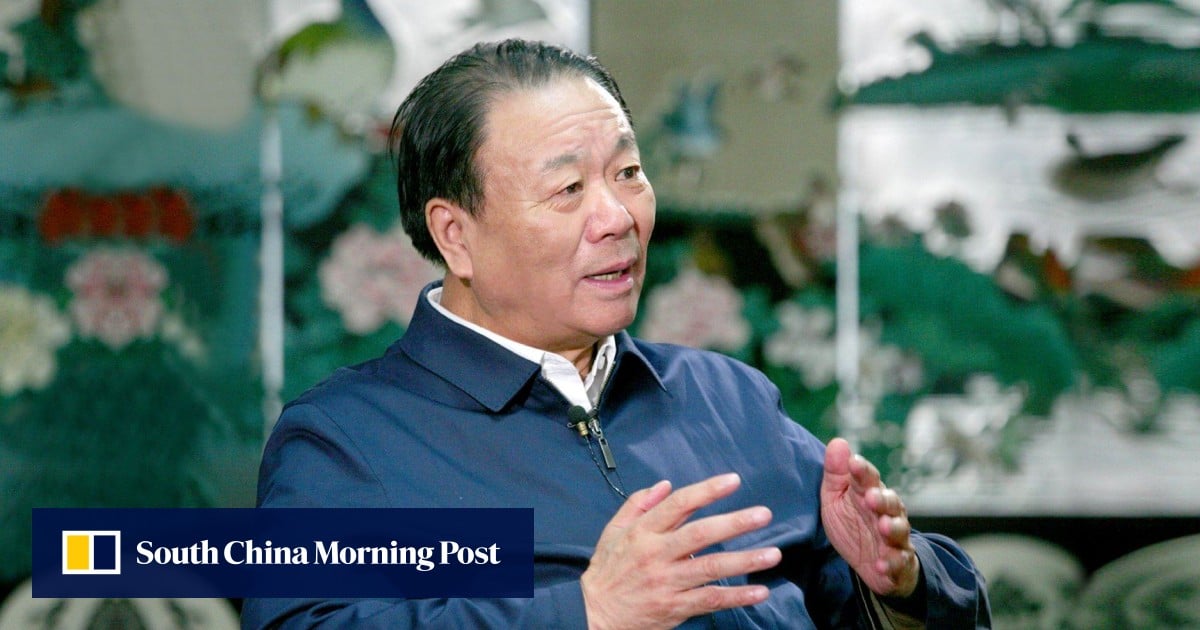
The tycoon, whose net worth was estimated at 3.7 billion yuan (US$509 million) by Forbes, died from an unspecified illness, his company, Jiangsu Shagang Group, said in a statement on Monday.
“Shen led Shagang and the team of cadres and employees to work hard towards their goal, before they successfully turned a little-known small enterprise with an initial capital of 450,000 yuan into a multinational company with total assets of more than 300 billion yuan,” said the statement.
“The Shagang-style growth model has made great contributions to the national and local economies.”
In China, a collective ownership model is often used by small firms in rural areas that deal with labour-intensive industries like construction and textiles.
Many of the businesses struck it rich after China’s opening up and reforms in late 1970s, benefiting from the breakneck growth of the country’s economy.
Shen was at the helm of Shagang from 1996 until 2016, when he handed over control to his son, Shen Bin.
“In its early days, Shagang was a symbol of China’s fast-growing industrialisation as the economy expanded at a torrid pace,” said Wang Feng, chairman of Shanghai-based financial services group Ye Lang Capital. “Later on, the group has been actively pursuing business consolidation and diversification to dilute the impact of economic cycles.”
In 2002, Shen decided to spend 220 million yuan (US$29 million) to acquire a Dortmund-based steel mill from the German industrial manufacturing firm Thyssenkrupp. He famously ordered the mill to be completely dismantled and all its parts shipped to China for reassembly.
The company acquired other domestic and overseas steelmaking assets to enhance its competitiveness. It also invests in the banking, logistics and property sectors.
According to industry consultancy Mysteel, Shagang ranked third among China’s biggest privately owned steelmakers in 2023.
It raked in revenue of 286.5 billion yuan last year, trailing Tsingshan Holding Group’s 368 billion yuan and Jingye Group’s 307.4 billion yuan.
Last year, Fosun backed down on the deal and decided to sell the stake to state-owned financial company Citic Group.
Shagang sued Fosun for the termination of the deal but dropped the lawsuit in October after receiving an unspecified amount of compensation.