


In a year that saw a dramatic reset to the fight against the drug trade and organized crime in the Americas by the administration of US President Donald Trump, the following Latin American criminal groups were rarely out of the headlines.
All of these groups have featured prominently in our coverage over the past decade, and most will remain criminal newsmakers for years to come.
From terrorist designations, to rises and falls, the groups below were the most impacted by one of the most consequential 12 months for security policy against organized crime in Latin America in recent history.

Criminal Newsmakers 2025
Tren de Aragua is Venezuela’s most powerful homegrown criminal actor and the only Venezuelan gang that has successfully projected its power abroad.

No criminal actor made more headlines in 2025 than Venezuela’s best-known gang, Tren de Aragua.
A decade ago, the group was in its infancy. But it has shot to international infamy in recent years as it expanded beyond Venezuela and built criminal power in various parts of South America.
In 2025, the group faced the most significant pressure in its history. US President Donald Trump named the gang a terrorist organization, ordered raids around the country to sweep up suspected members, and carried out airstrikes near Venezuela allegedly targeting the group. Several Latin American nations also labeled the group a terrorist organization and undertook their own anti-gang operations.
Tren de Aragua was already reeling from increased law enforcement pressure throughout Latin America, as well as the Venezuelan government’s decision in 2023 to turn against the gang and seize control of its prison headquarters.
Now, the continued onslaught is furthering the fragmentation of the gang. It is becoming more of a criminal brand than a cohesive group – a catchall term for Venezuelan organized crime abroad.
Criminal Newsmakers 2025
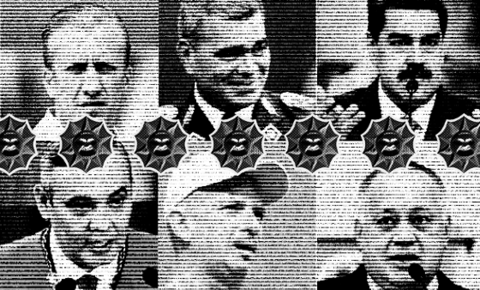
The Cartel of the Suns is a term used to describe groups within Venezuela’s armed forces implicated in a wide range of criminal activities, most notably drug trafficking.
US attention also thrust Venezuela’s so-called Cartel of the Suns into the spotlight in 2025, albeit with an inaccurate portrayal of what it actually is.
The term “Cartel of the Suns” has been around since the 1990s, when it was first used to refer to members of the Venezuelan armed forces involved in drug trafficking. But military drug trafficking networks have evolved significantly over the last decade, and they do not currently operate as US officials have claimed.
The so-called “cartel” is a system, not a cohesive group. The government of President Nicolás Maduro permits members of the military to aid traffickers and take bribes from them in order to supplement their inadequate salaries. But contrary to claims by US officials, Maduro does not centrally manage those activities, and the main goal is to maintain the loyalty of poorly paid security forces rather than an effort to harm the United States by trafficking drugs to American consumers.
The past year saw that system become more deeply entrenched than ever. Municipal elections allowed the Maduro regime to solidify its political control by installing allies in important local areas, giving it more influence over who can benefit from which criminal economies. Still, Maduro now faces mounting geopolitical pressures, including a US military deployment that could cause both soldiers and other officials to rethink these relationships.
Criminal Newsmakers 2025
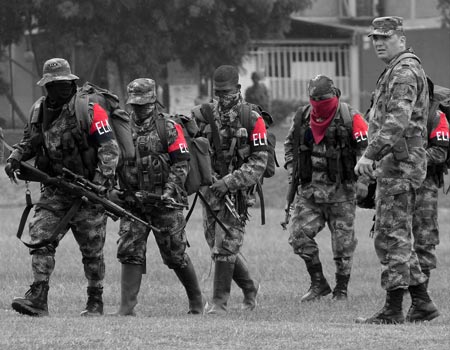
The ELN is Colombia’s last true insurgency and one of Latin America’s most powerful criminal organizations. Due to its expansion and strengthening in Venezuela in recent years, it has established itself as a binational guerrilla group.
The National Liberation Army (Ejército de Liberación Nacional – ELN) made headlines around the world in early 2025 when it caused a humanitarian crisis along the Colombia-Venezuela border with its violent, and ultimately successful, campaign to capture this key criminal corridor.
The takeover of the Catatumbo region from dissidents of the demobilized Revolutionary Armed Forces of Colombia (Fuerzas Armadas Revolucionarias de Colombia – FARC) was perhaps the year’s most consequential criminal realignment and one of the most significant in the region since the FARC laid down its weapons nearly a decade ago.
SEE ALSO: Peace Never Had a Chance: Colombia’s ELN in Venezuela
The ELN enjoys a mutually beneficial relationship with the government of Venezuelan President Nicolás Maduro that has allowed the Colombian guerrilla group to expand its presence in Venezuela to the point that it now acts as a binational organization.
Seizing Catatumbo gives the ELN near-total control of the Venezuela-Colombia border, allowing it to profit from lucrative criminal economies like drug trafficking, contraband smuggling, and illegal mining. With the continued protection of the Venezuelan government and a steady stream of illicit revenues, the group is positioned to remain one of the region’s most important criminal actors.

Criminal Newsmakers 2025
The PCC is Brazil’s biggest and best-organized criminal network. It was born in São Paulo in the 1990s and has forged a bloody path to dominance throughout the country.
Brazil’s biggest gang, the First Capital Command (Primeiro Comando da Capital – PCC), garnered fewer international headlines in 2025 than the other groups on this list. But the gang was big news in Brazil, where authorities are steadily uncovering its expanding operational capabilities.
A decade after a bloody break in a longstanding truce with the rival Red Command (Comando Vermelho), the PCC has evolved into a sophisticated multinational operation. Authorities have made huge money laundering busts linked to the group, and it has begun incorporating new technologies like artificial intelligence into its activities.
The gang’s largely prison-based leadership structure has remained remarkably stable. While there were signs of internal rifts in 2024, in 2025 it appeared that gang boss Marcos Willians Herbas Camacho, alias “Marcola,” still enjoyed the backing of the majority of top leaders.
The PCC is often overlooked outside Brazil and its South American neighbors — and it has not yet appeared on the US list of designated terrorist organizations, which has grown significantly in the past year. But its resilience and sophistication make it a key group to watch.

Criminal Newsmakers 2025
The Sinaloa Cartel, considered the largest and most powerful drug trafficking organization in the Western Hemisphere, is a network of some of Mexico’s most important drug lords.
The Sinaloa Cartel continued to suffer the ramifications of blows to its leadership in recent years, during what has been perhaps its most challenging year so far. The criminal group is much changed, and undergoing a period of evolution as its various factions and networks adapt to new realities amid a brutal internal conflict.
The arrest of longtime cartel boss Ismael “El Mayo” Zambada, apparently orchestrated by Joaquín Guzmán, one of the sons of Joaquín “El Chapo” Guzmán, in July 2024, detonated an internal war in the group’s home state of Sinaloa that continues to this day. The conflict has been so savage and prolonged that it has generated not just deaths and disappearances, but also a business recession.
Meanwhile, Joaquín and his brother Ovidio Guzmán are now negotiating with US prosecutors — much to the chagrin of the Mexican government back home. That is coupled with pressure from the Trump administration on Mexico to do more about the production and supply of fentanyl from Mexico into the United States, and the US designation of the Sinaloa Cartel as a Foreign Terrorist Organization (FTO). With the arrival of President Claudia Sheinbaum came the deployment of thousands of troops to Culiacán in 2025, signaling a change from her predecessor’s more permissive approach to drug trafficking organizations.
The leadership and territorial control vacuums created in the Sinaloa Cartel by recent arrests and extraditions have yet to be filled, and war in Sinaloa continues. Without a clear victor, it remains unclear how and if violence there will eventually subside. At the same time, even if rival organizations like the Jalisco Cartel New Generation (Cartel Jalisco Nueva Generación – CJNG) have continued to expand within Mexico, no other major criminal power has moved into Sinaloa, despite the conflict there – a sign of resilience during these uncertain times.

Criminal Newsmakers 2025
The Jalisco Cartel New Generation is a transnational criminal group that emerged from the Milenio Cartel following a series of killings, arrests, and internal fractures.
With its biggest rival, the Sinaloa Cartel, consumed by internal fighting, this year has been the CJNG’s chance to boom, quietly. Ten years ago, the group was just beginning. Now, its alleged head, Nemesio Oseguera-Cervantes, alias “El Mencho,” is one of the US government’s most-wanted crime bosses with a $15 million bounty on his head. The group was also designated as an FTO in 2025.
There were widespread reports in 2025 of an alliance between the CJNG and the Chapitos faction of the rival Sinaloa Cartel. The CJNG allegedly supported the Chapitos in pushing back against the Mayiza in Culiacán and elsewhere in Sinaloa, as well as in parts of the US-Mexico border, particularly in Baja California.
US prosecutors say that the group is a major supplier of synthetic drugs such as methamphetamine and fentanyl into the United States. But the group is also active in other criminal markets, including illegal mining, fuel theft, and extortion.
There were some gruesome headlines connected to the CJNG this year, particularly a training and extermination camp that was discovered in its home state of Jalisco, underscoring the group’s forced recruitment methods. The CJNG’s home state is one of the epicenters of Mexico’s crisis of forced disappearances, and official records show at least 16,000 people are currently missing in Jalisco alone.


2025 was a year of contrasts for the Mara Salvatrucha (MS13) and Barrio 18 street gangs. The US and Salvadoran governments designated them as FTOs, creating new legal and financial barriers for both groups. But at the same time, the Trump administration started backing away from legal action against MS13 leaders as part of a deal with El Salvador’s president, Nayib Bukele, in order to house Venezuelan nationals deported from the United States in a Salvadoran prison.
And despite the terrorist designations, the MS13 and Barrio 18 have been all but extinguished in El Salvador, their spiritual home. Thanks to the nationwide crackdown by Bukele that began in 2022 and persisted into 2025, around two-thirds of gangs members and collaborators are now behind bars.
On the other hand, the strength of the gangs has evolved and mutated in the other Central American countries where they have a presence, primarily in Guatemala and Honduras.
In Guatemala, the MS13 continues to evolve and maintains a significant presence, dominating bus routes and transportation networks with extortion rackets. There has been a resurgence of gang violence there this year around a rivalry between MS13 and a local gang. Meanwhile, Barrio 18, the stronger of the two criminal groups in Guatemala, staged an audacious prison break in October. And in Honduras, there are some indicators that suggest the MS13 is becoming more involved in the international cocaine business, though their role remains limited compared to traditional drug trafficking organizations.
In this year’s event, we’re looking back at the last year and the last decade to better understand what’s to come in 2026. Our donor-exclusive event will brief you on the most important criminal shifts in the region and what to expect in the coming year from organized crime and the governments tackling it in the Americas.
