


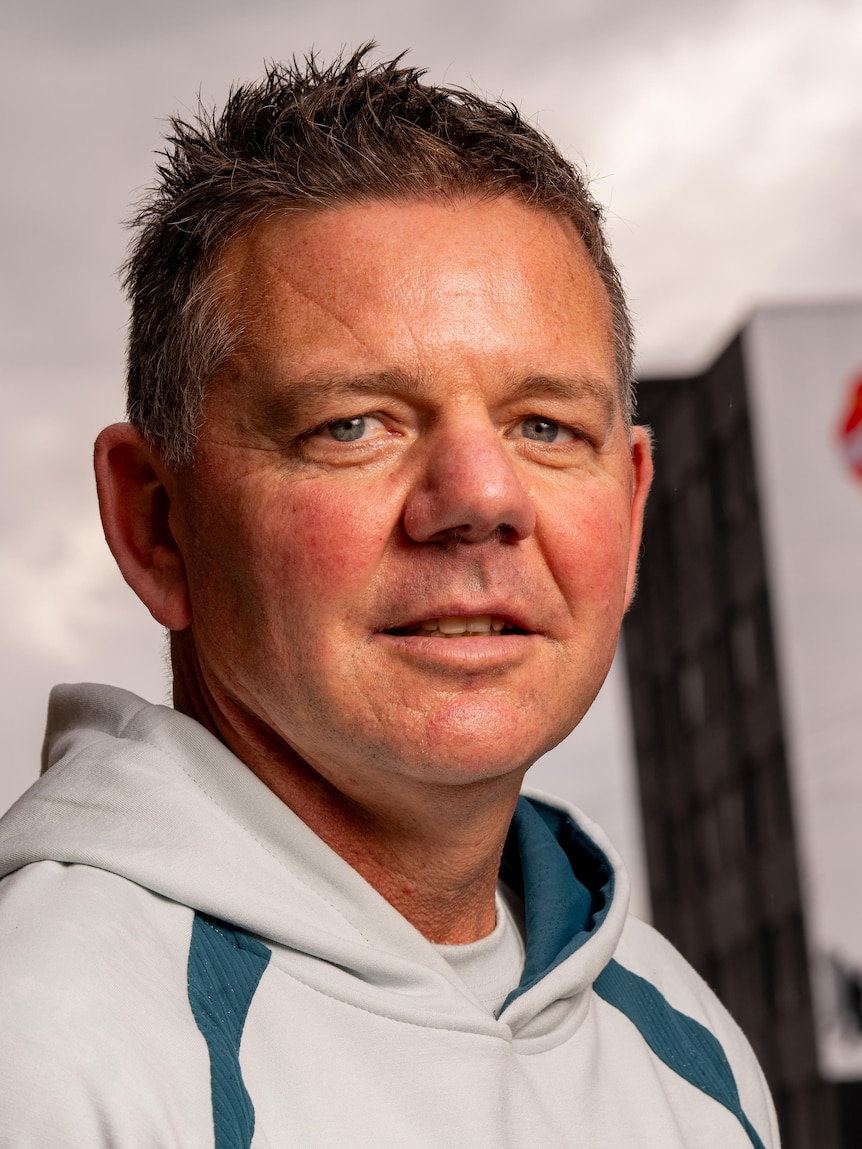
When Kiana Elliott finished fourth for the second straight Commonwealth Games, to say the Australian weightlifter was crestfallen would be an understatement.
Over the Birmingham and Glasgow Games, a combined 11 kilograms of weight on the bar kept the gymnast from back-to-back bronze medals.
After faltering on the 118-kilogram clean and jerk that could have secured her third place on the podium, Elliott sat on the Armadillo stage and dropped her head to a depth only permitted by her background as an elite gymnast.
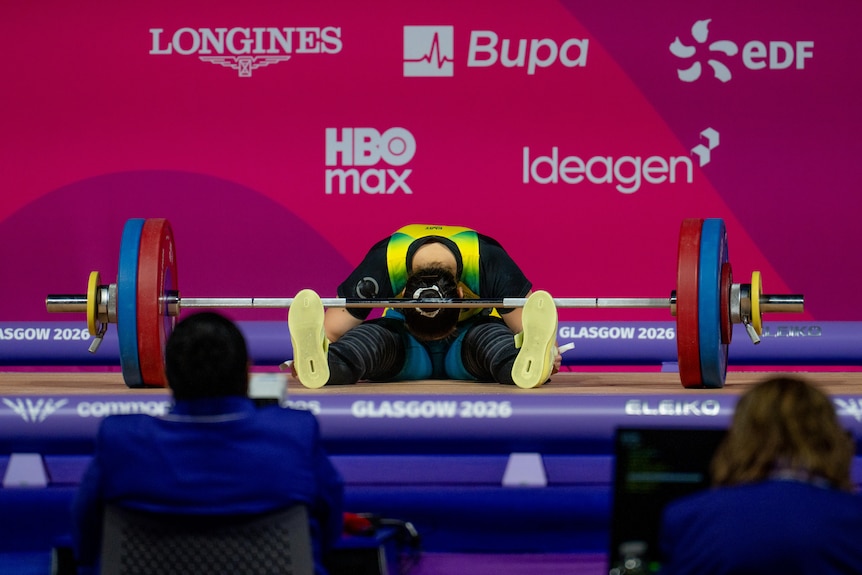
Australian weightlifter Kiana Rose Elliott after missing her last lift at the 2026 Glasgow Commonwealth Games. (ABC News: Che Chorley)
The 29-year-old was distraught to have missed the medals just as she did four years ago in Birmingham, graciously speaking to the media in barely a whisper as she tried to maintain her composure.
For a woman who embodies strength and power, her vulnerability was incredibly affecting.
“It’s just a moment in time, and you’re just hoping that everything will be there,” she said.
“Sometimes it is, and sometimes it isn’t.”
Competition weightlifting is a tricky beast, with athletes having to walk a fine line between lifting the most they can, while also ensuring they can fall into the optimum weight class.
Elliott was in the 71kg weight class in Birmingham four years ago. At last year’s Commonwealth Championships, she won as a 58kg competitor. In Glasgow, she lifted as a 63kg athlete.
She said it was a “really tough decision” to go up to the higher weights where the lifts need to be bigger, but she did it for her mental health.
“In Australia we do sport and we do life, and I needed my brain and my mind for the rest of my life,” she said.
“Pushing my body fat down that low was not a sustainable thing for me, so I chose the competitive option.
“Weightlifting is about lifting weights, it’s about lifting more weights, it’s not about being a smaller person, and I’m proud that I chose the difficult option and fought my hardest.
“This isn’t the end of my story. I’m not done yet.”
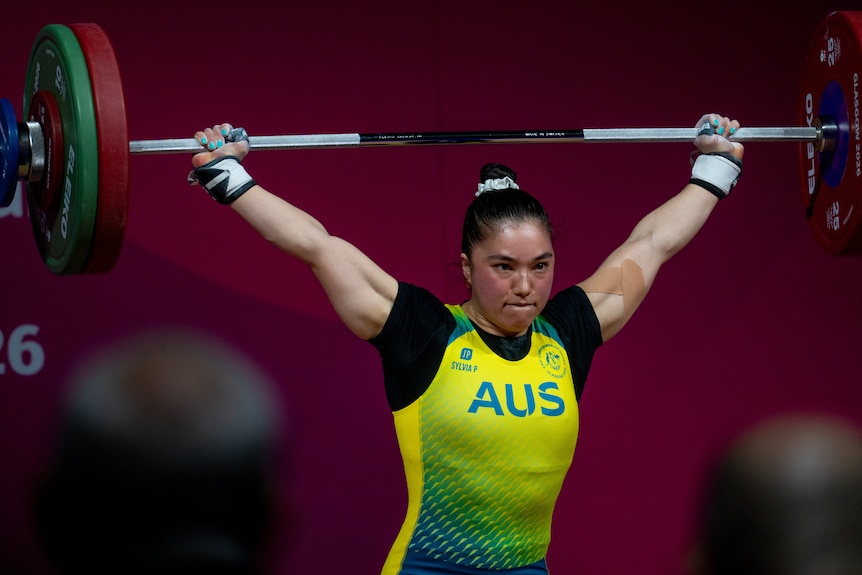
Kiana Elliott is a study in determination while lifting. (ABC News: Che Chorley)
But for this one moment it was. As painful as the result was, she could drop her shoulders and unclench her jaw in an enormous release of emotion.
“So much has gone into this and while I was hoping for a podium result, I think it’s just all a culmination of all that’s gone into this starting to come out,” she said of her reaction after the competition.
“There’s so much to process as part of this; there’s more stuff to do when I get home. I think I just need to breathe a sigh of relief and move on.”
It was five minutes of wholly self-aware introspection, spoken like a woman who has done and will continue to do a lot of work on her brain.
That reflects an emphasis for the entire Australian team, so much so that, for the first time, they have an in-house psychiatrist travelling with the team.
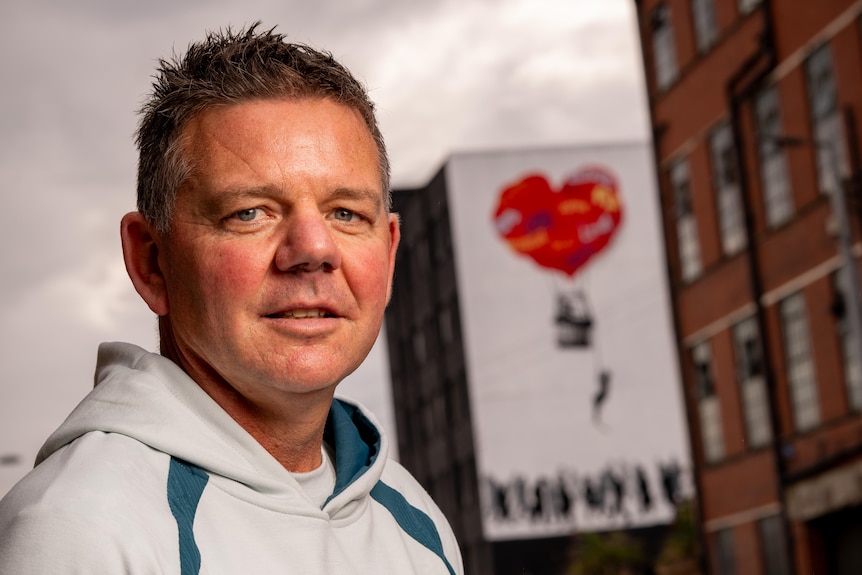
Australian team psychiatrist Adam Deacon. (ABC News: Che Chorley)
Adam Deacon is part of a varied team of experts embedded within the team, with one of the floors of the Team Aus HQ effectively transformed into a mini hospital ward.
“We’d be very surprised if any other country has matched the standards that have been established here in the headquarters,” Dr Deacon told ABC Sport.
“There’s an extraordinary range of talented, experienced people who are able to cater to the broad needs of the athletes.
“It’s really just a pop-up sports medicine clinic where all aspects are covered as it would be in a regular clinic.”
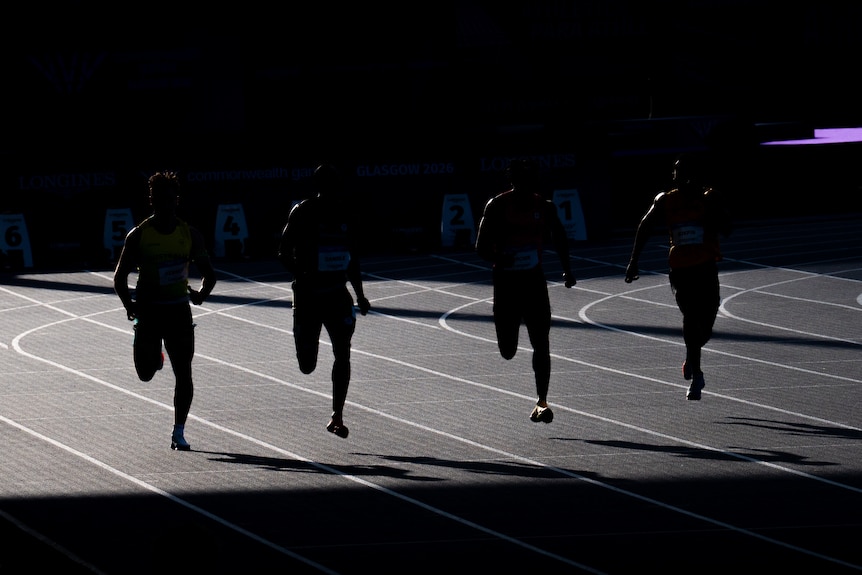
The margins are fine and tension is high at meets like the Commonwealth Games. (ABC News: Che Chorley)
And while massage therapists, physios, nutritionists and dietitians have been working to keep Australia’s 255 Commonwealth Games athletes physically fit over 10 days of intense competition, Dr Deacon is focusing on their minds.
“I think most athletes would argue when they’re in a good mental space they’re more likely to perform at a high level,” he said.
“And you could argue they can’t compete at a high level unless their mental health is well. So I think that’s a necessary focus.”
The team has travelled with sports psychologists before but, after consultation with the athletes, feedback was received that many of them, with their own dedicated psychologists, would like to stick with those programs.
Dr Deacon provides a different, more clinical than therapeutic, service.
“The athletes are people before they’re athletes and they can experience everyday issues and concerns and mental health challenges as we all do,” he said.
“There are particular things that arise in this environment, in terms of performance or lack of performance or perceived failure, and that can be really, really challenging for the athletes and also the staff.
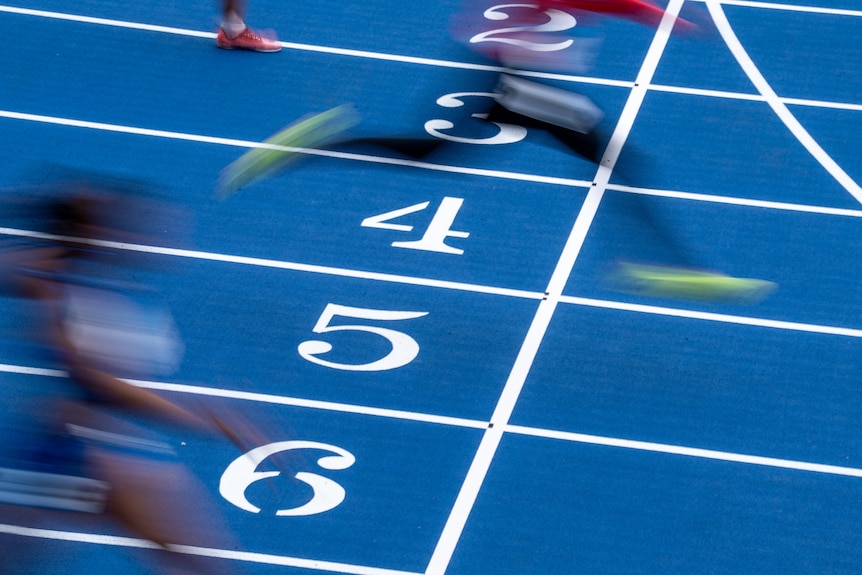
Failure is a part of sport, but it’s still hard to swallow. (Supplied)
“Injuries, illness, these sort of interruptions are not necessarily expected or anticipated, and that can be enormously stressful, and that’s where an acute level of crisis response is sometimes necessary.”
Unlike footy players who get to take it “one week at a time”, for many the Commonwealth Games is the culmination of four or more years of tireless, single-minded work.
Elliott’s teammates Chloe Perkins, who missed her 48kg weight, did not even get a chance to compete, and Brenna Kean and Ridge Barredo, both suffered nasty injuries while on stage at the Armadillo.
Dr Deacon, of course, did not reveal any of the people he had spoken to in the team, but the weightlifters like Elliott, Perkins, Kean and Barredo perhaps best exemplify the risky prospect of this high-stakes quadrennial cycle.
Some athletes seek him out, some are referred to him, and for some he attends their competition for a little extra care.
Whatever form it takes, the Australian team is lucky to have him here.
dan