


By “El Huaso” for Borderland Beat

Mexican authorities found a large workshop for the production of explosives in La Huacana, Michoacán last month, reported Milenio. This workshop was likely operated by the CJNG, a criminal group who have shown a unique ability for developing and employing homemade weapons and explosives.
The Workshop
In total, Mexican authorities deactivated 311 explosive artifacts and seized 95 kilograms of explosive at the site. These could have been used to create about 1,300 Improvised Explosive Devices (IEDs), Milenio learned from Carlos Roberto Gómez Ruiz, the director of Michoacán’s anti bomb unit, a recently formed group necessitated by Michoacán’s position as an IED hotspot in Mexico.
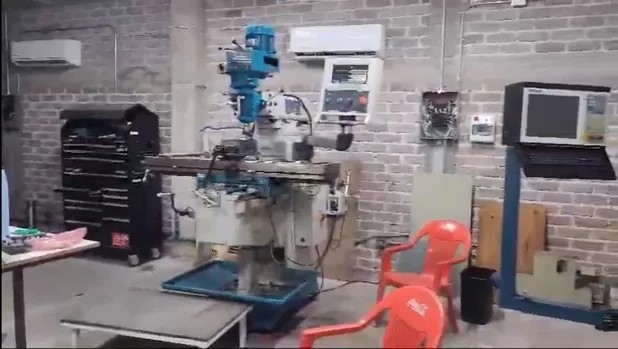
Videos reviewed by Milenio showed the two-building workshop complete with a computer-controlled cutting machine, machining lathes, presses, and soldering equipment. Gómez Ruiz stated that the workshop contained the “entire production line”, from purchased explosive materials, to casing manufacturing, to final painting. This workshop was used to produce 40 mm grenades, hand grenades, drone deployed bombs, and makeshift mortars.
Photos of IEDs found at the scene show the product of the machinery – neatly milled aluminum casings, ready to be packed with explosive.
 |
| Image from Milenio. |
Cartels are using more explosives each year
Criminal groups in Mexico have accelerated their usage of homemade explosives in recent years. Data collected by Mexico’s Secretariat of Defense (Sedena) show that the number of grenades captured has increased steadily during the AMLO administration (see below). Unfortunately, there is no publicly available data for IEDs found in Mexico.
 |
| Grenades found each year by Sedena during AMLO administration. Created by El Huaso. |
However, in 2023, Milenio accessed government figures on the number of landmines found in Mexico by state between August 2021 and July 2023. This transparency request showed that 2,241 landmines have been found in 17 of Mexico’s 32 states. Michoacán led the state ranking, with 833 landmines found. Notably, this count excludes grenades as well as drone deployed IEDs, which are counted separately.
This has been mirrored by an increase in casualties for Mexican security forces. In 2022, 16 soldiers were wounded by explosive devices. Between the start of 2023 until August, 42 soldiers were injured, and four State Police officers and one National Guard agent were killed.
The CJNG are explosive entrepreneurs
The CJNG are central to this increase in use of explosives. The states with the highest number of IEDs are states where the CJNG are active; CJNG members are routinely captured with IEDs in their possession; and the CJNG are known to operate weapons production workshops, including those for IEDs.
In fact, part of the reason for the CJNG’s success is their unique ability to innovate and harness weapons technology, argues organized crime expert Dr. Nathan P. Jones. For example, in 2014, the CJNG operated a clandestine firearms workshop out of Guadalajara, an attempt to supplement their supply of firearms trafficked from the US. Also, they were early movers in using commercial drones for combat by outfitting them with IEDs. In 2023, the CJNG gained widespread attention for a specialized drone operators unit, “Droneros”, who utilize commercial drones laden with explosives in combat against rivals in the states of Michoacán and Jalisco. These offer them a competitive advantage over their rivals.
 |
| A member of CJNG’s “Droneros” or Drone Operators unit. |
Responses to the use of explosives
In response to this rising threat, in November 2023, the Mexican Congress approved reforms to Mexican criminal code which raised penalties for operating commercial drones against Mexican security forces. If this legislation passes the Senate, anyone found guilty of using them for violent ends may be sentenced to up to 30 years in prison, and anyone found purchasing or creating them may be sentenced up to 10 years.
In 2023, US Alcohol Tobacco and Firearms (ATF) agents held a multi-day training for Mexican law enforcement, teaching their counterparts how to analyze various different IED crime scenes. The ATF agents used specific types of IEDs recently employed by Mexican criminal groups; an improvised landmine like those used by CJNG in Michoacán, and explosives with nails and screws for shrapnel like those employed by the CSRL in Guanajuato.
Sources: Milenio 2/12, Notiregion 2/12, Borderland Beat Archives, C/O Futures 5/31/23, Journal of Strategic Security – Dr Nathan P. Jones 4/12/18, Operaciones contra el Narcotráfico, Milenio 8/21/23, AP News 8/21/23, NTV Noticias 2/4/24, El Financiero 11/21/23