


The balance of power in Colombia’s criminal underworld is in flux, as turbulent shakeups see major criminal players competing for control over key territories.
Fighting has broken out in disputed areas around the country in the wake of a January offensive of the National Liberation Army (Ejército de Liberación Nacional – ELN) against the 33rd Front dissidence of the Revolutionary Armed Forces of Colombia (Fuerzas Armadas Revolucionarias de Colombia – FARC) in the Catatumbo region along the border with Venezuela.
At least 29 clashes between armed groups were registered by the UN Office for the Coordination of Humanitarian Affairs (OCHA) between January 1 and February 16, and the number of displaced people has increased dramatically compared to early 2024.
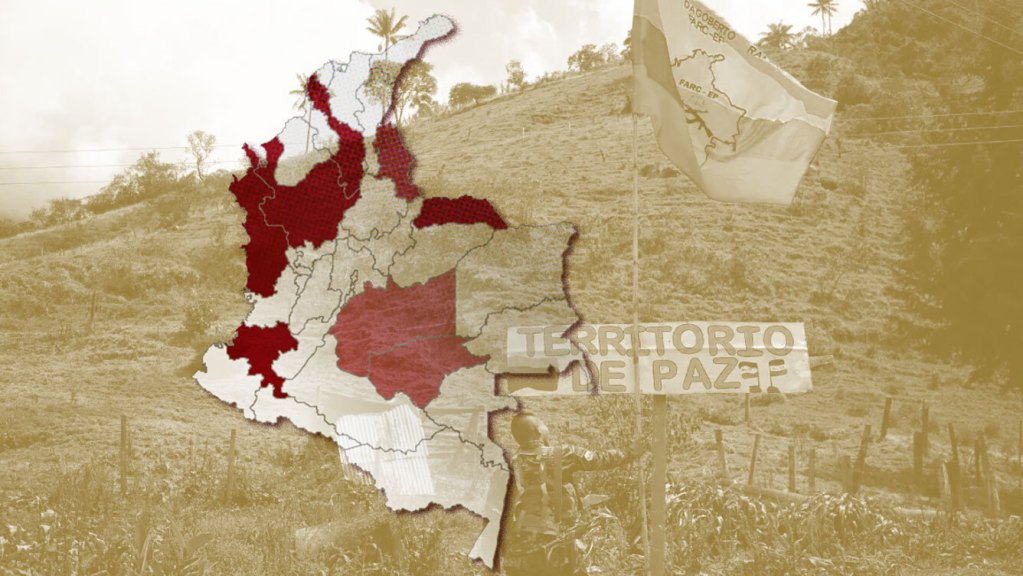
The Colombian Ombusdman’s Office has warned of 11 new violence hotspots in the country as the ELN, FARC dissidents, and the Gaitanist Self-Defense Forces of Colombia (Autodefensas Gaitanistas de Colombia – AGC) renew their struggles for territory and criminal profits.
SEE ALSO: The Sinaloa Cartel to the ELN: Ally or Subordinate?
InSight Crime takes a look at some of these key criminal disputes that are likely to keep driving violence in Colombia.

ELN Looks to Dominate Colombia-Venezuela Border
The ELN looks poised to solidify its domination of the Colombia-Venezuela border, a key route for drug trafficking and a haven from Colombian security forces.
In the Catatumbo region, a hub of coca cultivation for cocaine production, the 33rd Front seems to be losing ground as the ELN’s attacks continue. Meanwhile, the fighting has spread to the neighboring department of Arauca, where the ELN has reignited a conflict with the 10th Front dissidence.
Tensions in this area go back several years. After the FARC signed a peace agreement in 2016, the dissidents who rejected the deal and the ELN coexisted on both sides of the border, until war broke out in Apure, Venezuela, in early 2022. The 10th Front and their allies, the 28th Front, were driven out of the Venezuelan side, and what remained of the group stayed in Arauca.
The ELN has had a symbiotic relationship with the Venezuelan government for years, and is allowed to operate on that side of the border unimpeded, giving it a clear advantage over the FARC dissidents. The support of the Venezuelan government has been key to the ELN’s growing strength, and it is unlikely that the dissidents can win this confrontation against a bigger, better-armed rival.
FARC Dissidents Battle for Colombian Amazon
Clashes have also erupted in the southeastern Amazon region between two FARC dissident groups that were once united: the Central General Staff (Estado Mayor Central – EMC), led by Néstor Gregorio Vera Fernández, alias “Iván Mordisco,” and the Central Staff of Blocks and Fronts (Estado Mayor de los Bloques y Frentes – EMBF), led by Alexander Mendoza, alias “Calarcá.”
SEE ALSO: Renewed War for Colombia Cocaine Center
It is not yet clear whether the EMC or EMBF will gain the upper hand in their battle for control over key drug trafficking routes and territory. The region is home to about 5% of Colombia’s total cultivation of coca crops for cocaine production, and it lies near major trafficking routes leading into Venezuela and the tri-border area with Peru and Brazil.
Beyond drug trafficking, the region holds deposits of gold and coltan, along with vast forests where armed groups control illegal logging and extort loggers. While Mordisco and Calarcá have previously banned deforestation as a goodwill gesture in negotiations with the government, escalating conflict could drive both groups to seek additional revenue, potentially reactivating the illegal logging market as clashes intensify.
The battle for control of this strategic corridor has resulted in at least 20 deaths in Calamar, Guaviare, and 13 in Puerto Lleras, Meta, since the start of 2025.
EMC Fighting Multiple Fronts in Cauca
Violence continues to escalate along Colombia’s Pacific coast, particularly in Cauca, a historically strategic hub for coca cultivation and drug trafficking. The region now faces an increasingly crowded criminal landscape, with multifaceted conflicts making it hard for any one group to establish dominance.
A campaign for control by Mordisco’s EMC helped make Cauca Colombia’s second-most violent department last year. The bloodshed has intensified as an EMC splinter group called the Yair Bermúdez 57th Front has clashed with Mordisco’s forces. The 57th Front, which controls rural areas in southern Valle del Cauca, has moved southward in an effort to extend its influence over northern Cauca, according to the Ombudsman’s Office. Recent fighting between the groups in towns like Corinto has left several dead.
Factions of Mordisco’s EMC are engaged in conflict elsewhere in the department, not only with other criminal groups like the ELN and another FARC dissident faction called the Second Marquetalia, but also with Colombian security forces. As the EMC’s fighting capacity is stretched, the 57th Front could capitalize on this moment to expand its influence.
Mordisco’s factions have increasingly deployed drones to target civilians and security forces, adopting a tactic that other Latin American criminal groups are also using more frequently. The Jaime Martínez Front of the EMC was reportedly responsible for the mid-January bombing of a police station in Suárez, while the EMC’s Carlos Patiño Front carried out two bombings on a temporary hospital facility in rural Algeria on February 18.
AGC Poised to Snatch Chocó From the ELN
The AGC looks set to continue steadily consolidating its power in the Pacific department of Chocó, which is rich in gold deposits and has an extensive coastline vital for drug and arms trafficking.
The AGC’s advance southward from its stronghold near Urabá, Antioquia, has come at the expense of the ELN. The AGC now controls large portions of Chocó, with the San Juan subregion in the southernmost area remaining the last stronghold of the ELN.
The ELN made a show of force on February 18 to reassert its control in San Juan, launching a 72-hour armed strike (paro armado) — the eighth in the department over the past two years. During the strike, residents are prohibited from leaving their homes or traveling between communities, and risk being kidnapped or punished if they disobey.
SEE ALSO: 3 Reasons Landmines Are Making a Comeback in Colombia
Even before the armed strike, around 3,500 people had already been displaced, and more than 2,000 others were confined to their homes due to violence or threats from armed groups in 2025, with the numbers certain to rise.
Despite the demonstration of power in San Juan, a potential alliance between the AGC and the EMC could spell the end for the ELN in Chocó. Factions of the EMC have entered Chocó from Valle del Cauca, reportedly allying with the AGC, according to the Ombudsman’s Office. Already struggling to defend against the advancing AGC from the north, fending off the powerful EMC units arriving from Cauca and Valle del Cauca would likely be nearly impossible for the ELN.
The Fight for A Territorial Nexus
A new alliance between the ELN and the FARC dissidents of the EMBF is attempting to stop the AGC’s expansion in the Southern Bolívar and Bajo Cauca region, located in the departments of Bolívar, Antioquia, and Córdoba. The area is an important connection point between different regions in the country, as well as an illegal mining hotspot and key drug transit route, making it valuable territory for criminal groups.
The three groups have been expanding and cementing their control over the area since the demobilization of the FARC in 2016, and tensions were already running high since 2023, according to reports from the Colombian Ombudsman’s office. The area is key to the ELN, which is likely seeking to connect Colombia’s eastern and western regions to provide support for its Western War Front in Chocó. The region is also an important part of the AGC’s drug trafficking and mining operations, and its connections to the Magdalena, San Jorge and Cauca rivers allow the movement of people and goods to and from the country’s Northern, Eastern and Western borders.