


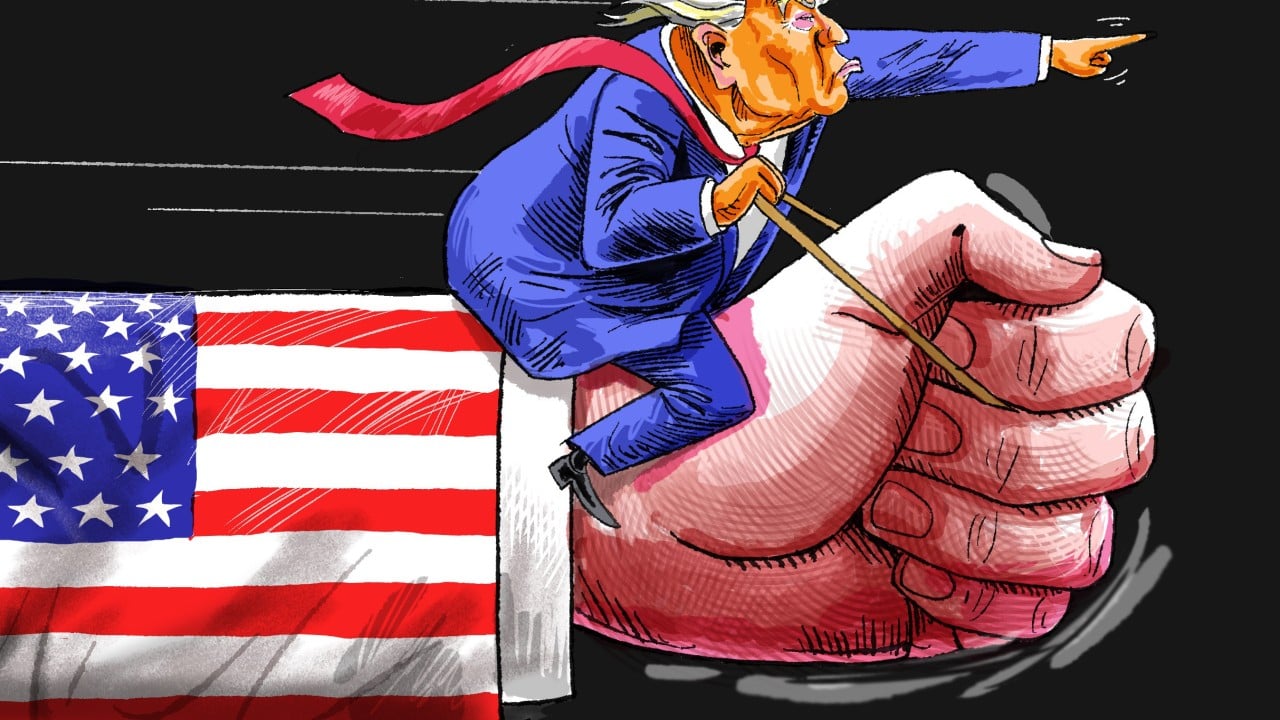
Sun Tzu wrote that “fighting and winning all your battles is not the height of skill; subduing the enemy without fighting is the height of skill”. That maxim offers perhaps the clearest lens to interpret the logic of American grand strategy under US President Donald Trump.
What many dismiss as inconsistency may conceal a patient strategic deception. The aim is not direct confrontation, but the quiet reshaping of the global economy in support of long-term US power.
The US wants to improve its relative position vis-a-vis China for the long game. At the centre lies what might be called positional power – control over the critical nodes through which global economic systems operate. It’s about dominance of computational power (semiconductors), resource power (rare earths, energy) and connectivity power (shipping and maritime chokepoints).
Advertisement
Yet the American response since then may be less reactive than is often assumed. Recent US military interventions can be interpreted as part of a broader geopolitical repositioning that bears down on China’s vulnerabilities. Indeed, the logic of hemispheric consolidation and resource security appears in the US’ 2025 National Security Strategy.
Advertisement