


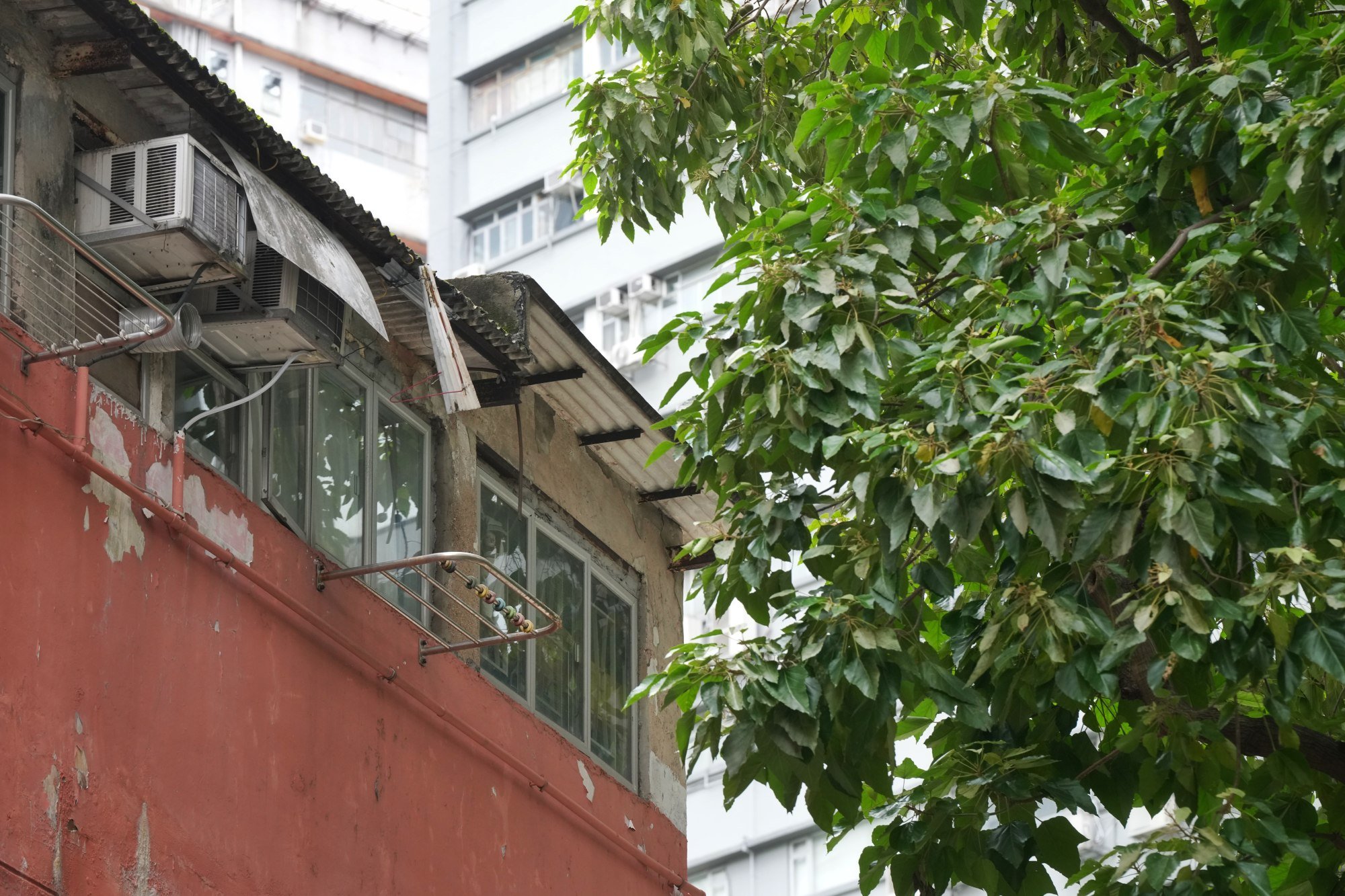
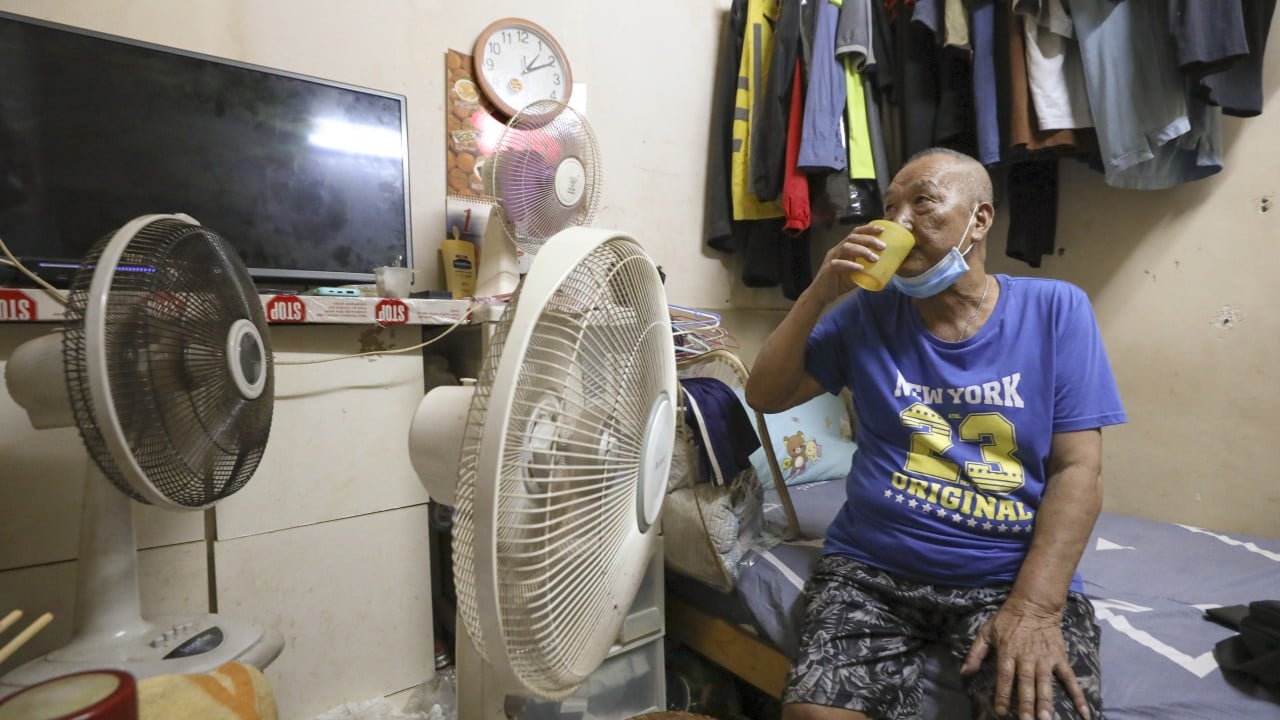
Survey results from the non-profit Society for Community Organisation (SoCO) released on Sunday showed that 90 per cent of those who lived in subdivided flat and cage homes were experiencing health issues caused by the recent extreme heat, including emotional instability, insomnia, dizziness and skin problems.
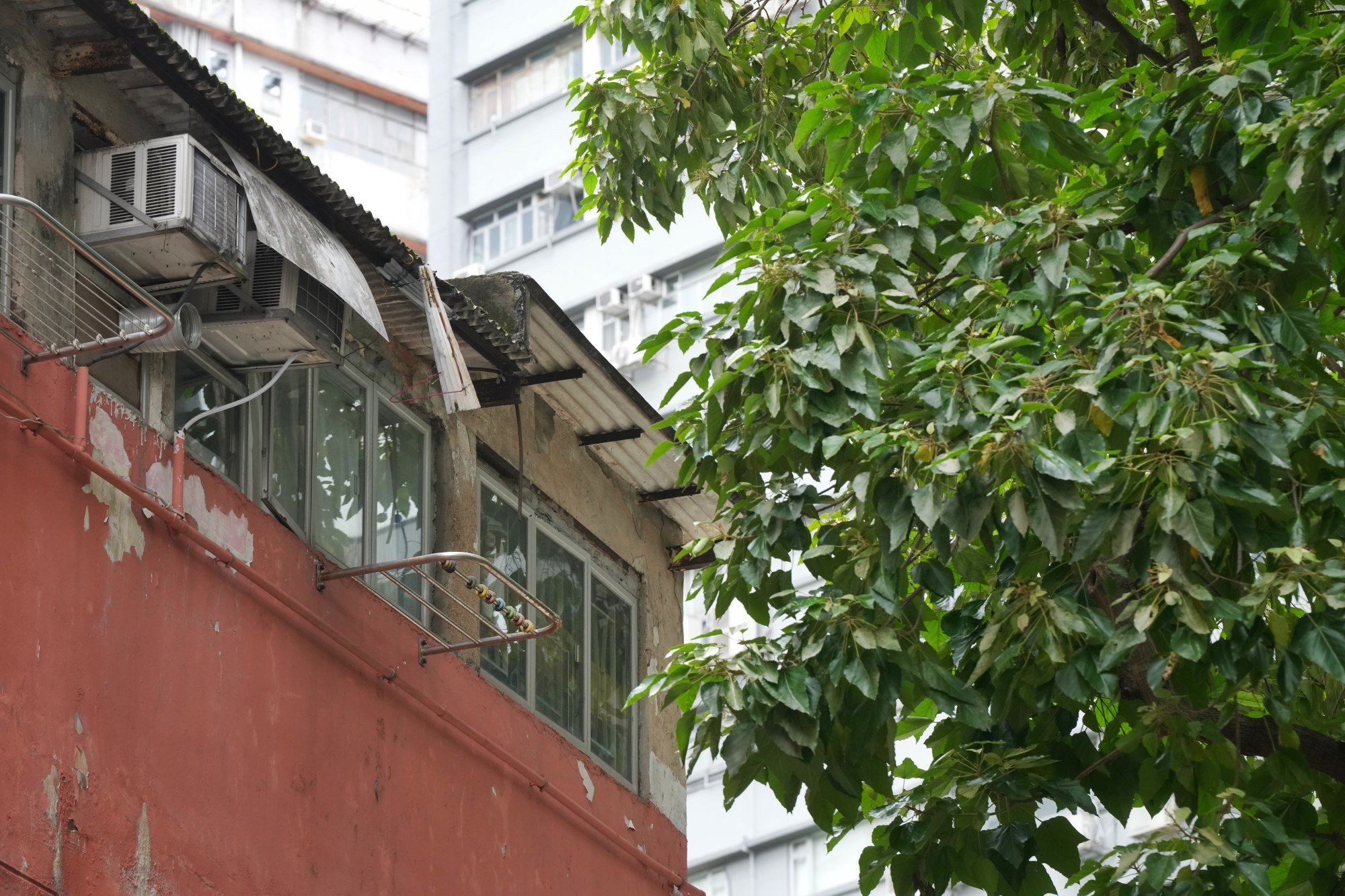
SoCO deputy director Sze Lai-shan explained that “subdivided flats, cage homes and rooftop structures act like ‘ovens’ during the hot summer”, as materials with high thermal conductivity such as iron sheets and aluminium plates were common in such homes, which also lacked ventilation.
She added indoor temperatures could hit 41 degrees Celsius, higher than outdoor temperatures, in such places.
Cage homes are tiny boxlike quarters stacked from floor to ceiling and partitioned by thin wooden boards or mesh wire.
The forecaster said the weather would remain “very hot” over the next few days, with a southerly airstream set to bring showers and thunderstorms to the coastal areas of Guangdong province later in the week.
The SoCO survey was conducted from June to July this year, with 308 residents of substandard housing asked about how the heat affected their physical and mental health, and its impact on their water and electricity bills.
Sze said apart from accelerating the construction of public flats and transitional housing so more residents could get out of their substandard homes sooner, subsidies were also necessary to help with rising water and electricity bills, which took a high toll on low-income tenants of subdivided flats.
She also pointed out that some landlords had used rising utility prices as an excuse to inflate rents. Others registered themselves as the sole utility account holder of flats split into multiple units, but charged tenants amounts that exceeded their share of the bill.
Among survey respondents, 75 per cent said they believed they were paying higher amounts than official charges.
SoCO also found over half were unaware that the Water Supplies Department had regulations to prevent overcharging of water fees, while 58 per cent said they were unclear that landlords could be criminally liable for not following the proper procedures for water and electricity fee billing.
Prosecutions and fines against improper utility charging remained low, the non-profit said.