


A concern group and a planning expert have expressed worries that a Hong Kong government decision allowing more housing to be built near the border with mainland China may create a negative perception among the public that it prioritises the needs of developers.
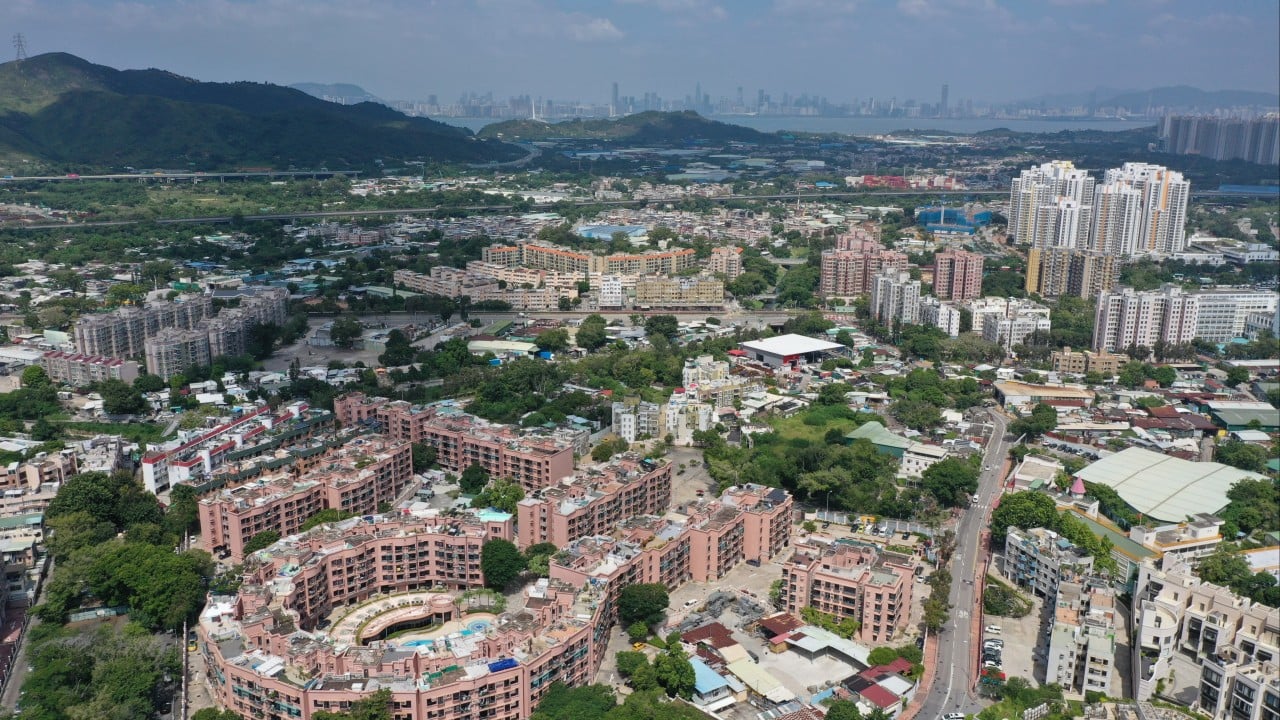
The Development Bureau raised eyebrows this week when it announced that up to 20 per cent of the non-residential floor area of a site near the future MTR station in Hung Shui Kiu, in the northern New Territories, could be converted to residential use, provided it did not compromise the area’s position as a high-end professional services hub.
The move came three months after a major developer, speaking on condition of anonymity, told the Post it might withdraw its land exchange applications in the area if the government did not ease commercial site requirements, citing the smaller demand for traditional offices after the Covid-19 pandemic.
The developer suggested rezoning about 40 per cent of the gross commercial floor area of the site for residential or mixed-use purposes to provide more flexibility.
Following the bureau’s announcement, Chan Kim-ching, founder of Liber Research Community, a local NGO focused on land and development research, argued on Thursday that its move suggested authorities were acting under pressure from a developer rather than responding to market conditions.
“The scale of changes is quite significant. We are concerned that the government may prioritise the needs of developers while neglecting overall planning for the area,” he said.
However, Chan acknowledged the necessity of the adjustments, noting the land-use proportions were established before the pandemic and did not reflect the latest socio-economic realities.
Considering the integrated development of the financial sectors in Shenzhen and Hong Kong, he noted Shenzhen had already converted some commercial sites into residential use.

Hung Shui Kiu and Ha Tsuen fall under the government’s Northern Metropolis scheme, which aims to develop 30,000 hectares close to the mainland border into an economic powerhouse.
Lawmaker Andrew Lam Siu-lo, also a planner, agreed the decision might create an impression the government was succumbing to pressure from developers.
“The government should review their planning on new development areas given the latest economic situation instead of making changes after being urged by the business sector,” he said.
Lam maintained the need for traditional office buildings had diminished as more companies adopted work-from-home policies and the rise of flexible work arrangements.
Veteran town planner Thomas Lee Kin-wah agreed with the changes, noting that cities such as Tokyo and London had adapted their commercial land uses to allow more flexibility in response to societal changes.
“There is a trend of changes in business models so that people now might not work in offices but anywhere they could,” he said.
In Wednesday’s announcement, the government said it would not prescribe floor area requirements for individual uses, such as office, hotel, retail or catering facilities, at any commercial sites in the Hung Shui Kiu development, so as to provide flexibility for the market.
It would break down some sites earmarked for commercial and mixed commercial and residential development into smaller plots, the statement said.
But it stressed the arrangement would be subject to technical assessment and the Town Planning Board’s approval.
Developer Henderson Land said it welcomed the government’s move given changes to the market and it hoped to further discuss the plan with authorities.
The Post has also reached out to Sun Hung Kai Properties.