


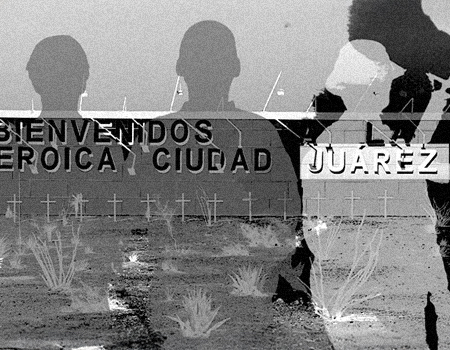
La Línea is one of the top criminal forces in the Mexican state of Chihuahua, engaging in everything from migrant smuggling to drug trafficking. Its home base is Ciudad Juárez, from which it projects its power along an important stretch of the US-Mexico border.
History
La Línea was formed in Ciudad Juárez in the early 2000s by active and former state and local police officers with the intention of offering protection services to drug trafficking groups. At that time, the most dominant transnational criminal group in the region was the Juárez Cartel, which began in the 1970s and grew to dominate cocaine trafficking through this stretch of the border.
However, by 2008, the Sinaloa Cartel had attempted to move into Ciudad Juárez and dislodge the Juárez Cartel. For a time, La Línea taxed both groups to move their drug shipments through the Juárez Valley. While some members eventually aligned with the Sinaloa Cartel, La Línea became known as the Juárez Cartel’s official enforcement wing.
La Línea garnered a reputation for macabre displays of violence. In early 2010, gunmen allegedly affiliated with La Línea and the Juárez Cartel stormed a party and massacred 16 teenagers. Later that same year, gunmen attacked a rehabilitation facility in the city, dragged its occupants outside, and executed 19 individuals. The victims were suspected of having worked with a rival local gang tied to the Sinaloa Cartel. The following month, alleged La Línea members were suspected of orchestrating the first successful car bomb attack of Mexico’s so-called “war on drugs,” which targeted Mexico’s federal police.
The period between 2008 and 2011 became one of the most violent in Ciudad Juárez’s history, and it remains unclear whether the Juárez Cartel or Sinaloa emerged on top. In subsequent years, Ciudad Juárez saw a drop in murders along with dozens of high-profile arrests of key leaders of La Línea.
Despite the blows to its leadership, La Línea maintained an important presence in Ciudad Juárez. It controlled trafficking routes to the US-Mexico border and went on to broaden its horizons, reportedly expanding into street-level drug sales, synthetic drug trafficking, illegal logging, and car theft in the city and across Chihuahua.
In November 2019, La Línea was linked to the brutal massacre of nine dual US-Mexican citizens from a cross-border Mormon community, who were possibly targeted by mistake in an attempted attack on rivals. The killings put a spotlight on the critical role of so-called “small armies” – groups like La Línea that emerged as Mexico’s most dominant crime groups outsourced security and territorial control to more localized networks.
In 2024, La Línea appeared to face internal divisions. Some security officials told InSight Crime that an ascendant criminal group in Ciudad Juárez known as La Empresa, or the Enterprise, is a breakaway faction of La Línea. Additionally, some members of La Línea announced themselves as the New Juárez Cartel (Nuevo Cartel de Juárez), though it is not clear whether this is actually a splinter faction of La Línea or just a change of name.
US authorities also upped the pressure on the group, sanctioning four top La Línea leaders near the end of 2024. US officials alleged that the group was not only trafficking fentanyl into the United States, but that they had also formed an alliance with the Jalisco Cartel New Generation (Cartel Jalisco Nueva Generación – CJNG), which had become La Línea’s main supplier of fentanyl, cocaine, and methamphetamine.
Leadership
At the height of the Juárez-Sinaloa cartel war, La Línea was allegedly led by Luis Carlos Vázquez Barragán, alias “El 20,” who was reportedly taking direct orders from former Juárez Cartel leader Vicente Carrillo Fuentes, alias “El Viceroy.” He reportedly helped the Juárez Cartel move large drug shipments across the US-Mexico border, as well as plan and carry out targeted assassinations. However, Mexican authorities arrested him in Chihuahua in 2010.
Since then, a number of others have moved into and out of the top position within La Línea’s ranks. This includes Jesús Salas Aguayo, whom US prosecutors indicted on drug trafficking charges in 2015. The US Treasury Department’s Office of Foreign Assets Control (OFAC) later went on to sanction him and several other high-ranking La Línea associates near the end of 2024 for trafficking fentanyl and other drugs into the United States. Authorities also identified Adrián Aguayo; Jorge Adrián Ortega Gallegos, alias “El Naranjas;” Heber Nieto Fierro, alias “Ever Nieto;” and Josefa Yadira Carrasco Leyva, alias “La Wera,” as key leaders within La Línea’s ranks.
Geography
La Línea’s primary base of operations is Ciudad Juárez. However, the group has been linked to armed confrontations with Sinaloa Cartel factions in all four corners of the state of Chihuahua, including in municipalities like Ojinaga, Moris, and Guadalupe y Calvo.
The group’s reach does not stretch beyond this strategic part of the border. The US Drug Enforcement Administration (DEA), for example, did not even mention the group in its 2025 national drug threat assessment.
Allies and Enemies
For many years, La Línea was characterized by its shifting alliances with groups like the Juárez and Sinaloa cartels. While the group now operates more as an independent criminal network, it continues to rely on alliances to leverage its strategic position on the US-Mexico border.
In recent years, a bloody battle has resurged in the border state of Chihuahua between La Línea and Sinaloa Cartel factions, primarily over control over key migrant and drug smuggling routes into the United States. Specifically, a Sinaloa Cartel-linked group known as the Salazar operating in neighboring Sonora state has continued battling La Línea in an effort to take control of Chihuahua and the Juárez Valley.
However, La Línea has reportedly allied with the CJNG to facilitate drug trafficking into the United States. That said, La Línea faces ongoing pressure from a growing number of criminal networks affiliated with the Sinaloa Cartel, as well as local street gangs like the Artists Assassins (Artistas Asesinos), Barrio Azteca, and the Mexicles.
Prospects
La Línea continues to be one of the most dominant criminal groups in the state of Chihuahua, and Ciudad Juárez in particular, despite being locked in a years-long dispute with factions and gangs associated with the Sinaloa Cartel. As the criminal landscape in this region fragments further, the group is confronting incursions from a variety of criminal rivals. Still, La Línea’s strategic use of alliances over the years has allowed the group to maintain significant control over Ciudad Juárez for more than a decade.